
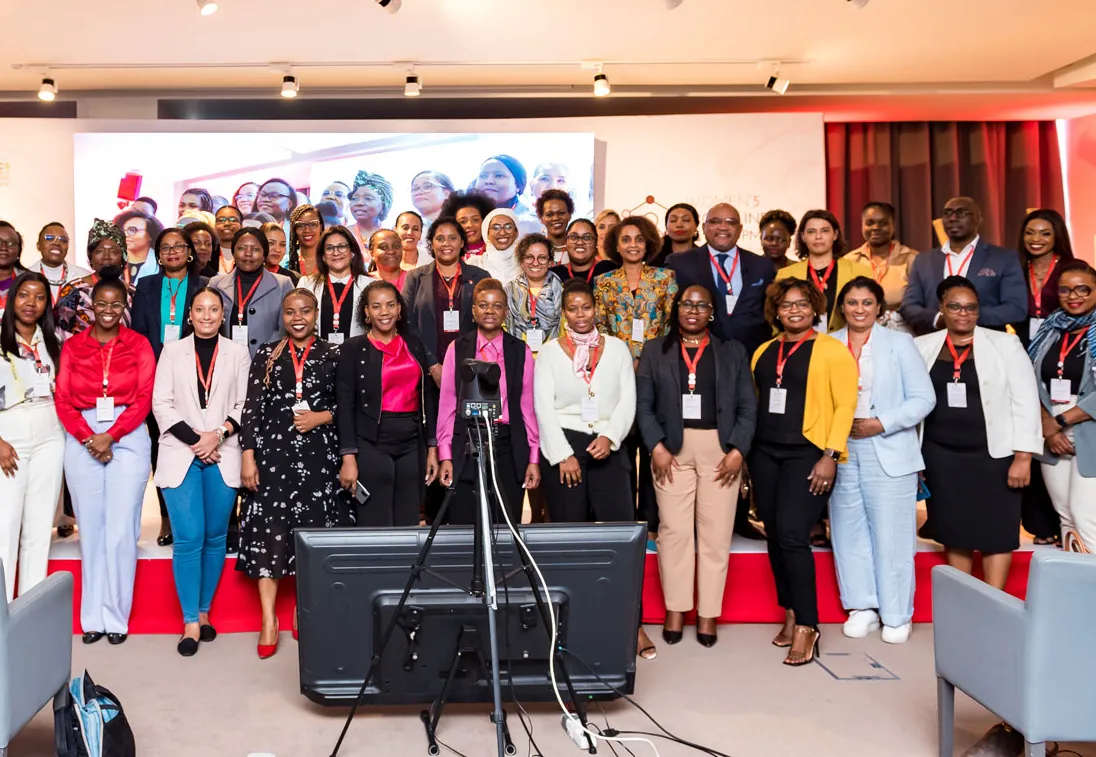
A pioneering event that brought together sector leaders from around the world in Maputo to address the power of women in sustainable development. Echoing UN Sustainable Development Goals 5 and 17, the event put the spotlight on the crucial role of women in society, fostering international dialogue and promoting their rise to executive positions.
The management of Sprowt, the event's organiser, spoke to Xonguila.
In retrospect, which topics stood out during the conference?
There were several. Notable was an audience of people who had clearly come to listen and to contribute positively, finding in the conference a space for dialogue and networking. There was a comfort among everyone there in listening and being listened to. The various contributions also stood out, both from the moderators, who presented a panel format with an initial summary of the theme, and from the national and international panellists (from South Africa, Brazil and Portugal), who gave a broader view of what is happening in their countries. We know from reports by the WEF, the OECD, the UN, the BC, among others, that it will take decades and decades for gender parity to be possible. To that end, we can say that it was unanimously concluded that relationships matter: woman-man, woman-woman, man-man (woman leader - man leader). These are two-way relationships, and each person has the right and the obligation, depending on their role, to work and act consciously for the equity and advancement of women. We consider it to have been a day of sharing knowledge about the importance and contribution of women in society, specifically in economic development and growth, and the impact that women create for the sustainability of companies and organisations.
Did you face significant challenges in organising this initiative?
When one organises an event like the conference, there are always challenges (logistical, unforeseen events, etc.) before and during, but it was possible to overcome them. SPROWT has a working structure (board members, team and volunteers) that facilitates and rewards quality and excellence. And for us that is very important: to feel and witness that the challenges end up dissolving, on the one hand, and, on the other, serve as a force that drives all of us to do better, and to achieve the objectives.
Were there particularly moving or inspiring moments during the conference that you can share?
Of course. When we organised the conference, we knew we wanted to bring the discussion of the panel themes, but also to provide unique moments through culture and knowledge (culture and knowledge being two of SPROWT's strategic axes). That is why inspiring moments were witnessed, such as Lenna Bahule's performance right at the start of the conference, which brought a high level of positive, relaxing energy and created in the room what many considered very invigorating. There was also Sebastião Coana's live painting, in which, for many, it was beautiful to witness the start of the painting and the end, when it was presented to the audience. We shared that Coana's contribution was intended as the official launch of the Inclusive Education Campaign, a SPROWT campaign that aims to help children and young people gain access to formal education. This time, with the inclusive action More Girls in Education. We had on our side partners who took part in the Exhibition of the Women’5 Frontline Development Conference with their programmes that are directly impacting girls and women. This participation showed how national and multinational companies contribute to society, serving as an example that all of us can contribute in different ways, with distinctive models and programmes.
Now that the conference has taken place, what conclusions do you consider most relevant?
First, that the conference featured contributions from leaders of different sectors, public and private, which we consider pertinent and important to retain. We are talking about the creation and implementation of frameworks on equity, diversity and inclusion, regulations that companies and organisations should consider, among others. The paradigm of the family-community-society relationship, and how and in what way each person should take responsibility so that new generations can grow up in a society where change is made normally and naturally, so that the advancement of women becomes a reality. Why leave aside, or rather, why not all work towards the fair inclusion of women, who are almost half of the eight billion people in the world?
How was the event received by the participants?
Throughout the day and at different moments, participants gave very positive testimonials, expressing satisfaction at having found a space to share their opinions and learn, and they highlighted the organisation of the event, the atmosphere on offer and the way the panels were organised (specifically the sequence of themes), which allowed learning and assimilation between facts and context, the business environment on gender equality and alignment with corporate sustainability. They felt that the conference exceeded expectations; some shared that they had come to really understand what it was about and that they left with a perspective and vision that motivates them to want to contribute and make a difference for others too. They stressed the need for Pioneer to continue promoting actions and programmes of the quality of the conference, highlighting the role of the men who were present advocating for gender equality. Other testimonials after the event were also relevant, particularly those of people who heard about the conference and could not be present, and who offered congratulations for the accounts they in turn received from acquaintances, colleagues and so on.
The Memorandum of Understanding signed between the two organisations can be considered a milestone for gender equality in Africa. Can you elucidate this aspect further?
The Memorandum of Understanding signed between the SPROWT Foundation and BRICS WBA SA aims to promote economic development and the empowerment of women. Mozambique is not a member of BRICS, but BRICS WBA SA, in particular, has on its agenda growing the network of women and their areas of business, enhancing the role of women in the economy across the African continent. This enhancement involves creating opportunities for more women to create their micro, small and medium-sized enterprises (MSMEs), making education a reality for girls and women, and promoting training and literacy in matters that equip women with tools that make them competitive in the market, among others.
How did the event contribute to the empowerment of women, specifically in Maputo?
The W5FDC served to make our society take a fresh look at itself and courageously take steps towards paradigm shifts, so that more effective and proactive organisational cultural models are implemented, so that women entrepreneurs and business owners have more knowledge of the legislation and regulations in force, and so that they feel the desire to learn and to share, so that other women also have an opportunity. At the same time, it was also a big step in awakening a new way of approaching the issues of gender inequality, essentially from the standpoint of the relationship between the presence of women in the corporate world and their family context, without neglecting the classic way of viewing these issues at the level of public institutions.
How do you see the future of collaboration between the SPROWT Foundation and BRICS WBA SA in promoting gender equality in Africa?
Collaborations like this are positive. We are living through a period of growing human awareness on various matters, not only equity and gender equality, but also the importance of preserving the planet, the need for companies and organisations to be aligned, ESG and the alignment it brings with it, long-term rather than short- and medium-term profitability, and inclusion and leaving no one behind. If we consider that half of Africa's population are women, how is it that we still live in a present where women's intellectual abilities are questioned, where women are sidelined in decision-making processes at different levels, where conscience is conveniently used in favour of circumstance? If we look at the human, cultural and linguistic diversity that exists in Africa, collaborations like this bring more richness, as they generate more exchange of experiences, and more knowledge and human growth are developed. One of the focuses of debate was precisely the absence, and the need to create, a regional platform that translates and combines the global, continental (Africa) and regional (SADC) instruments of the gender equality agenda for national contexts, as well as the need for interaction between governments, between civil society platforms, between companies, and so on.
What are the next actions planned to maintain the momentum and enthusiasm generated by the conference?
First, there is a commitment to joint actions in a programmatic initiative among the different organisations that were here. This commitment rests on new agreements and extensions of earlier ones, which have been established both unofficially and officially. Next, the international bodies committed to extending the initiative to other regions. Finally, SPROWT, in its strategic plan under the umbrella ‘sustainability through actions’, has projects and programmes to be worked on and, in particular, has as its next agenda item the compilation of the different contributions of the partners present at the W5FDC for its interventional forums.


