
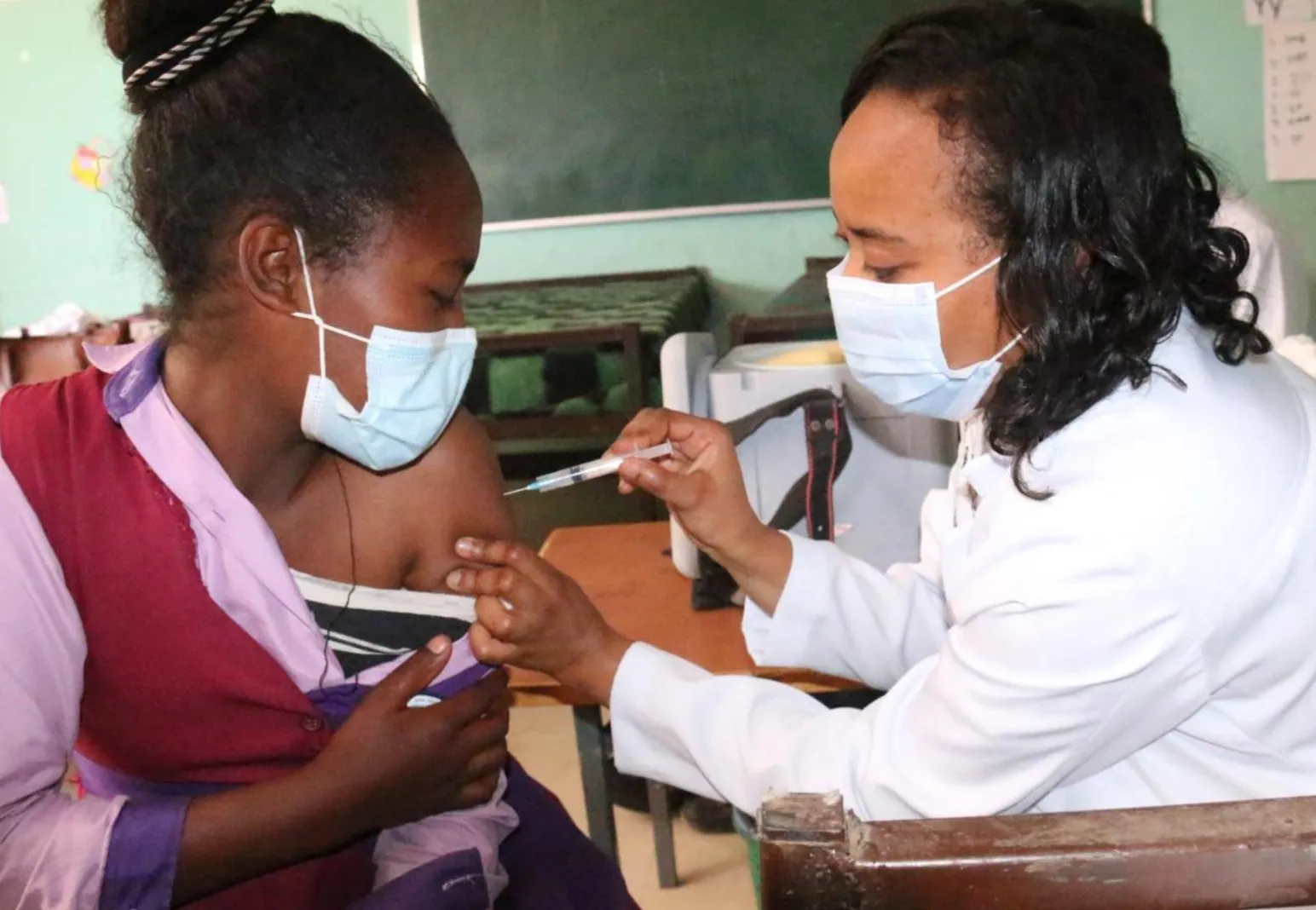
The figure commands attention for its scale and significance: around 2.9 million girls aged between 12 and 18 were vaccinated against cervical cancer during 2025, in a national effort to halt one of the most silent and lethal diseases among women.
The announcement was made this Monday by the Minister of Health, Ussene Isse, during the launch of African Vaccination Week, a moment that served not only to present results but also to expose the weaknesses that still limit the full reach of the campaigns. Among them, the difficulty of access to the country's most remote areas stood out, where logistics remain a persistent obstacle.
The introduction of the human papillomavirus vaccine, begun last year, represents one of the pillars of this preventive strategy. It is a direct response to the high incidence of cervical cancer, a disease that remains among the main public health concerns. By betting on early immunisation, the health sector seeks to reverse a historical trend and drastically reduce future cases.
But the vaccination figures do not end there. In the same period, around 3.5 million people were immunised as part of the cholera response, in an attempt to contain recurrent outbreaks that threaten entire communities. At the same time, 1.2 million children aged between zero and two received essential vaccines, in a continuing effort to reduce child mortality and strengthen protection in the most vulnerable stages of life.
Despite these advances, the minister acknowledged that meeting the targets set remains constrained by several factors. The geographical dispersal of populations, infrastructure limitations and challenges in the storage and distribution of vaccines are some of the obstacles identified, calling for structural solutions and continued investment.
In a symbolic but also strategic gesture, Ussene Isse handed over equipment for storing vaccines in Maputo province, strengthening storage capacity and ensuring better conditions for maintaining the cold chain — a critical element for the effectiveness of immunisation campaigns.
The event was also marked by a new announcement: the introduction of the Hepatitis B vaccine into the national schedule. The measure is another step in the expansion of the vaccination programme, extending the population's protection against infectious diseases with a significant impact on public health.
Between advances and challenges, the picture drawn by the authorities reveals a system on the move — determined to widen vaccination coverage, but still confronted with realities that demand swift, effective and sustained responses.


