
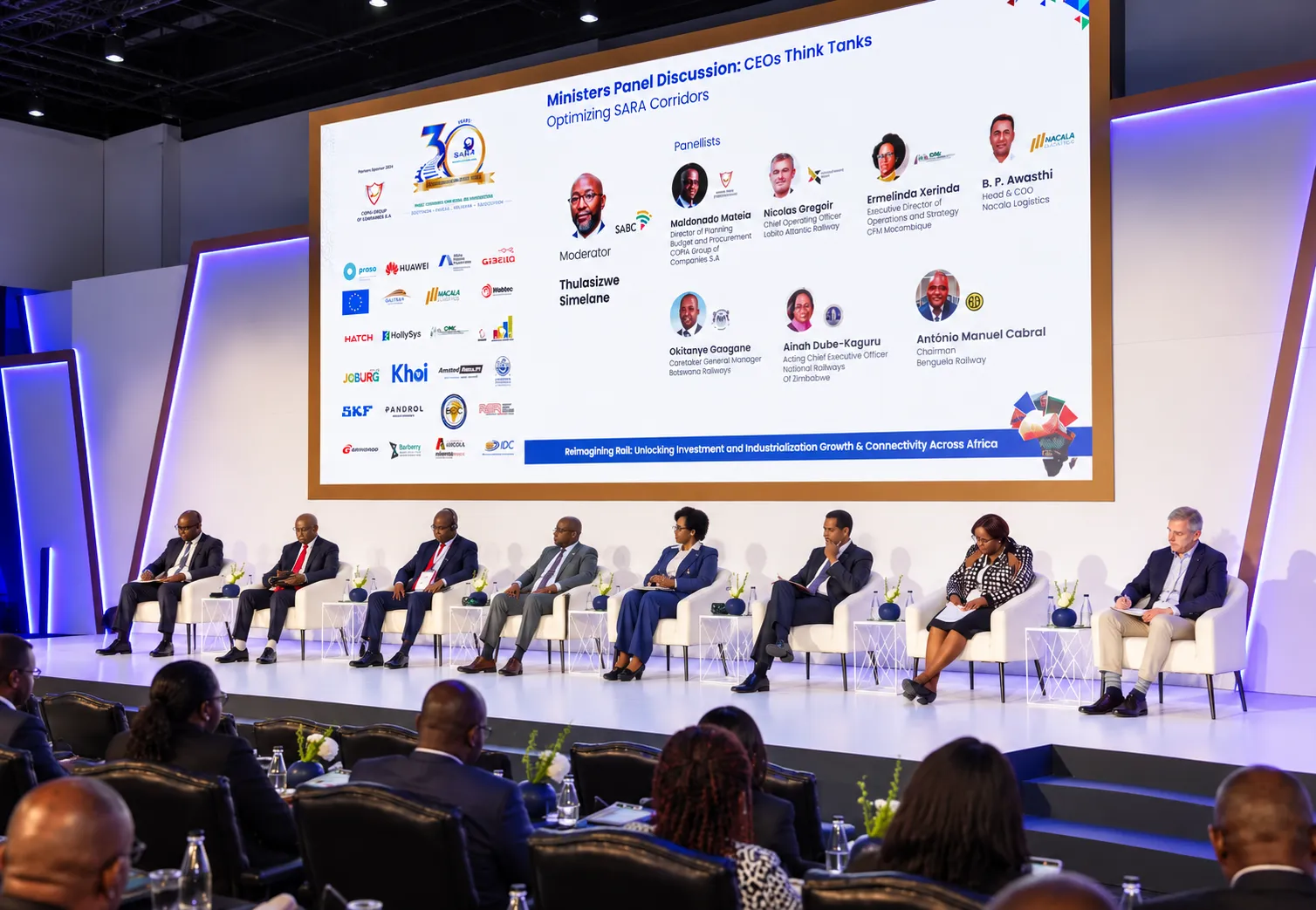
Maputo, 25 October (AIM) – The integration of Southern Africa’s railway networks, the modernisation of transport infrastructure and the removal of barriers to the movement of goods were at the centre of discussions at the 15th Southern African Railway Association (SARA) Conference and Exhibition, held in Sandton, South Africa, with the participation of Mozambique Ports and Railways (CFM).
The event provided a platform for dialogue on the challenges affecting the efficiency of the region’s railway systems, at a time when trade facilitation and the movement of people and goods remain priorities for countries of the Southern African Development Community (SADC).
CFM’s participation focused on identifying solutions to strengthen railway connectivity, with particular emphasis on infrastructure modernisation, the harmonisation of transport policies and closer cross-border cooperation.
The conference brought together policymakers, investors, railway operators and international suppliers to discuss the future of rail and multimodal transport, investment opportunities and the mechanisms needed to improve connections between the region’s various transport systems.
During the discussions, the Mozambican company highlighted the importance of financing railway infrastructure and adopting harmonised procedures, which are considered essential to improving coordination between operators and making the movement of freight across borders more efficient.
The integration of railway networks featured prominently in CFM’s contributions, given the need to reduce logistical constraints that hamper the transport of goods between production centres, consumer markets and Southern Africa’s main ports.
In this context, Mozambique occupies an important position in regional logistics through its transport corridors, which connect the continental hinterland to the country’s ports, facilitating the movement of goods destined for both the Mozambican market and neighbouring countries.
Modernising these connections and improving coordination between the various railway systems are therefore matters of interest to operators and institutions involved in developing regional trade.
As a member of SARA, the association organising the event, CFM participates in cooperation initiatives that bring together railway companies, public institutions and private partners, seeking to keep pace with developments in the sector and identify opportunities for collaboration in infrastructure, operations and logistics integration.
The company’s presence at the event also enabled it to follow discussions on financing models and railway development strategies, in a regional context where the efficiency of logistics corridors depends on coordination between different countries.
Railway safety campaign mobilises workers and communities
Alongside its participation in discussions on regional integration, CFM stepped up its accident prevention activities through the fifth edition of its Railway Safety Campaign, held under the slogan “Think Safety, Work Safely: From the Workplace to Communities, Your Actions Matter”.
The initiative took place in the Southern and Central Executive Directorates, involving company employees, passengers, motorists, local communities, partners and other users of railway infrastructure.
With an approach focused on protecting human life, the campaign sought to promote a culture of safety extending beyond the workplace to reach people who live or carry out activities near railway lines.
Among the main messages conveyed were the need to observe railway signs and signals, use designated crossing points and adopt preventive behaviour to reduce the risk of accidents.
The awareness-raising activities also used various forms of cultural expression, including music, poetry, theatre and dance, as ways of engaging with communities and communicating safety messages.
The campaign also included door-to-door initiatives and direct engagement with residents, seeking to involve different social groups in identifying risks associated with railway operations and adopting preventive measures.
Through these activities, CFM sought to reinforce the message that railway safety does not depend exclusively on employees and operators in the sector, but also requires responsible participation by passengers, motorists and communities sharing the areas surrounding railway infrastructure.
The campaign and participation in the SARA conference reflect two aspects of the company’s activities: on the one hand, the development and integration of railway transport systems at regional level and, on the other, the promotion of safe conditions for using existing infrastructure.
The two initiatives therefore form part of CFM’s efforts to contribute to a more interconnected regional railway network, improve conditions for freight movement and strengthen accident prevention in railway operations and communities along railway lines.
(AIM)


