
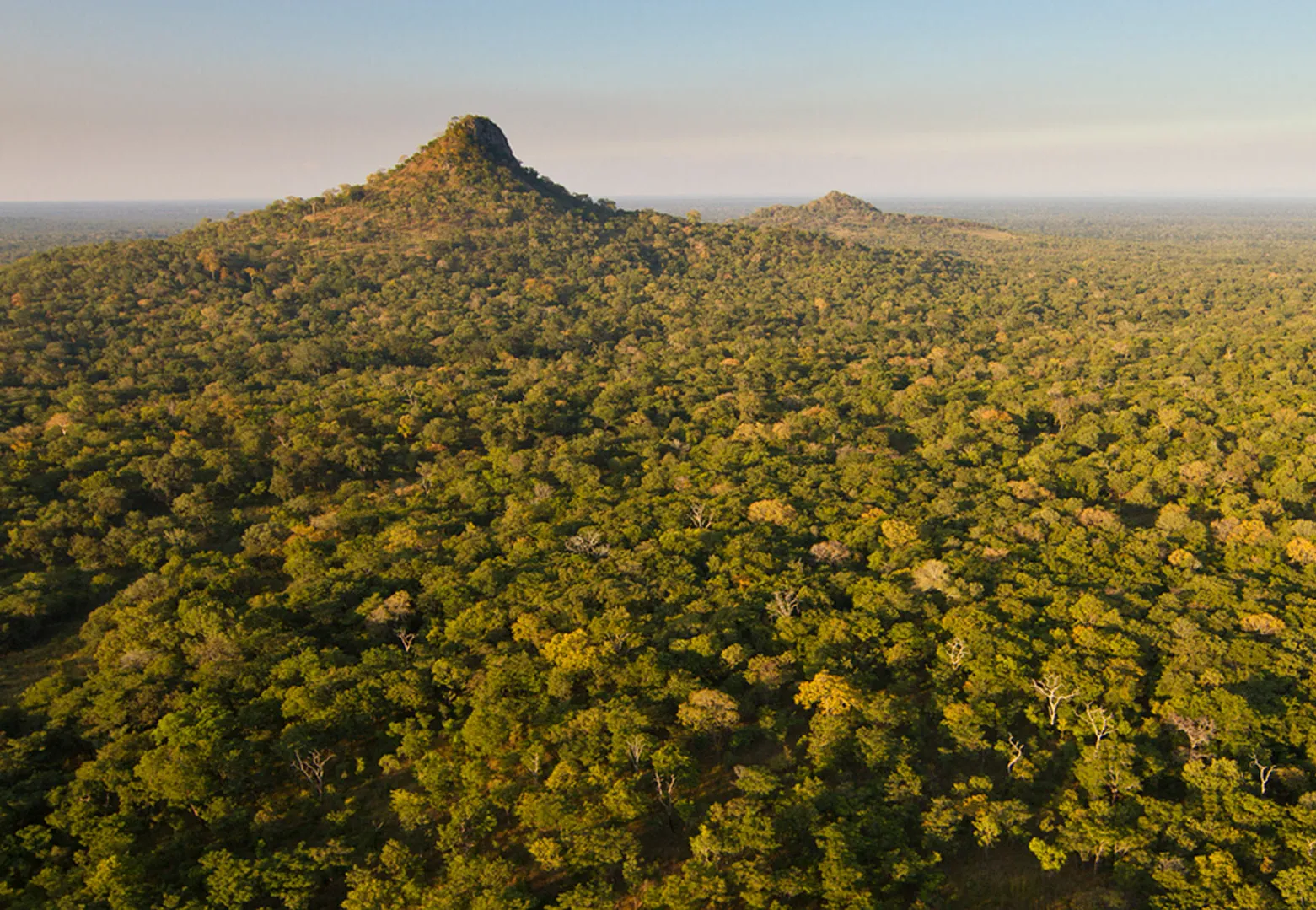
After four intensive exploration campaigns and meticulous research involving innovative techniques for identifying palaeontological sites, the Gorongosa Paleo-Primate Project team is now releasing a series of previously unseen Miocene fossils, from the coastal forests in the southern region of the Great Rift Valley, located in Gorongosa National Park in Mozambique.
The Miocene period, which occurred some 23 to 5.3 million years ago, was a crucial phase in the evolution of African ecosystems. It witnessed not only the emergence of the continent's great apes, but also the progressive separation of the eastern coastal forests due to the expansion of arid zones. The recent study, published in the journal iScience, brings to light remarkable fossil finds in Gorongosa National Park dating back to the Miocene, thus providing a new perspective on an African territory hitherto unexplored from a palaeontological point of view.
The sites where the fossils were found in Gorongosa have yielded a surprising variety of unique specimens, including fossilised woods, such as African mahogany, marine invertebrates and vertebrates, reptiles and new species of land mammals. This distinctive assemblage is not found at any other location in the Rift Valley fault system.
Now located a mere 95 km from the contemporary coast and at an elevation of between 100 and 120 metres above sea level, these sites reveal geological, sedimentological, palaeobotanical and geochemical evidence of the existence of ancient coastal zones, presenting the first proof of coastal woodlands and forests in the south-east of Africa during the Miocene.
The discovery of these palaeontological sites in Gorongosa National Park provides a unique opportunity to better understand the fauna and habitats of the ancient African continent. The finds in Gorongosa, which are now being documented, will form a robust database that will allow important theories about the role of the eastern coastal forests in the evolution of African mammals to be tested and assessed.


