
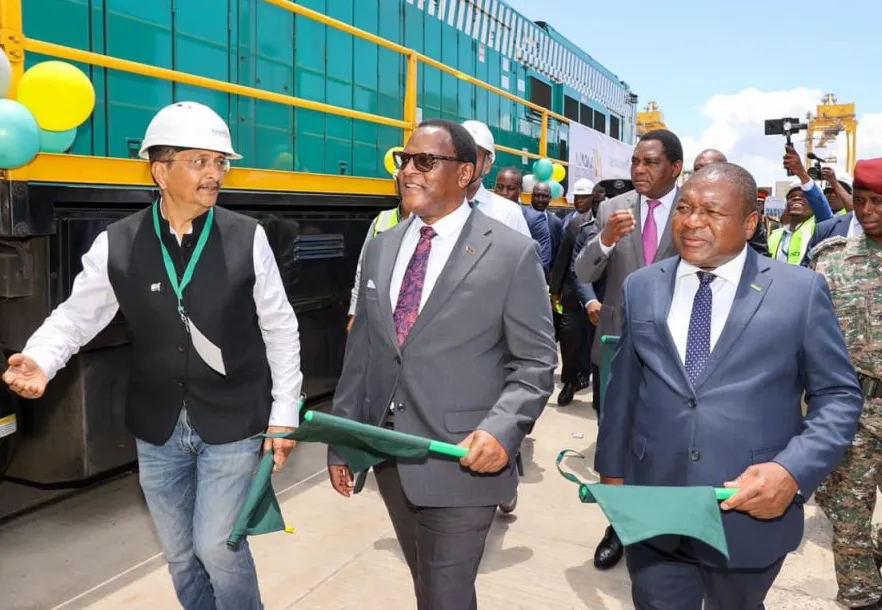
In a show of regional economic cooperation and development, the presidents of Zambia and Malawi, Hakainde Hichilema and Lazarus Chakwera respectively, describe the Nacala logistics corridor, located in Nampula province, Mozambique, as a vital catalyst for economic development in the region.
The port of Nacala, key to the logistics route, has undergone extensive rehabilitation, expansion and modernisation works, including the extension of the quay, improved access roads, the building of electrical substations and the purchase of modern cargo-handling equipment, in an initiative financed by Japan, which granted a loan of 249 million US dollars.
With a view to boosting trade and improving regional integration, tripartite agreements were signed between Mozambique, Malawi and Zambia, notably the Institutional Agreement of the Nacala Development Corridor and Road and Rail Agreements. All of these documents were framed under the Southern Africa Trade and Connectivity project, currently under way in Mozambique.
In his address, Lazarus Chakwera, President of Malawi, emphasised the essential role of the Port of Nacala in the import and export of various products, including fuel, wheat and fertilisers. The corridor's geographical and infrastructural position is considered fundamental to Malawi's connectivity, not only with neighbouring countries but with the world, and he added that the facility significantly boosts economic growth in the SADC region. The Malawian leader also highlighted the corridor's importance for the effective shipment of goods from Malawi, Zambia and northern Mozambique to various parts of the globe.
Chakwera also expressed his gratitude to the Mozambican government, led by President Filipe Nyusi, for carrying out the rehabilitation and modernisation of the infrastructure, which, he stressed, has been crucial for the transport of goods that have driven Malawi's economy for several years.
On the other hand, Malawi, which faces an energy deficit worsened by climate change, is now asking the Mozambican government to speed up the energy projects planned between the two countries.
Hakainde Hichilema, President of Zambia, for his part, highlighted the vital role the logistics corridor plays in trade between Mozambique, Zambia and Malawi, pointing out that, with the modernisation and expansion of the port, it will take on a pivotal role in driving the structuring projects for the development of the three countries.
The rehabilitation of the port is visible and important for the nations, Hichilema declared, as it now plays a fundamental role in structural development projects, thereby boosting import and export operations in the region. The Zambian president also stressed that import and export processes will become more efficient and effective, which will certainly bring benefits to the region's economies, in light of the imposing stature the port now has.
Both presidents, united in their vision of integration and mutual growth, reopened the port of Nacala with optimism, recognising in it a key piece that will undoubtedly stimulate economic activity in the region, creating synergies for the integrated and sustainable development of the countries involved.


