
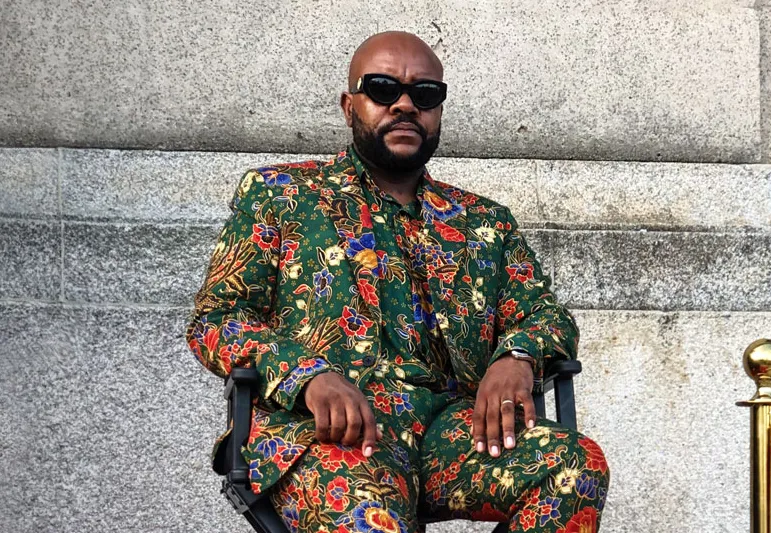
Designer, DJ and entrepreneur, António Macheve Júnior — or simply Toni — is the name behind Xipixi, a brand that has won a prominent place in Mozambican fashion. In this interview, we delve into his creative universe and the references that make him one of the most singular faces of contemporary urban culture.
Between the cut of a piece of fabric and a turn in life, what is the riskiest decision you have ever made — as a man, rather than as a brand — and one you are now grateful to have taken?
I would rather talk about the most important decision of my life: marrying my wife. That choice shaped my personal and professional path. Having an intelligent partner at my side, one aligned with my values, has become a pillar. She takes part in my decisions, especially the riskiest ones. Our children are part of this balance too. Family gives me the strength and inspiration to keep creating and to face challenges with serenity. That foundation has made me more thoughtful, more aware of the consequences of my choices, both at work and in life.
What element of Mozambican culture do you never leave out of a collection — even if only as an invisible symbol?
There is always an invisible but constant element: Chamanculo, the neighbourhood where I grew up. Memories of the church, of the Zixaxa pitch and of the neighbourhood's architectural details influence my pieces — from the prints to the textures. More recently, I have drawn inspiration from the Chamanculo Gallery, where art and local history continue to feed my vision. Even if it is not obvious at first glance, Chamanculo is the discreet soul of my creations.
If you had to create a piece to represent Mozambique in a single silhouette, what shape would it take? And what material would it be made of?
I would choose a duffel bag in hard-wearing polyester. It represents the resilience of the Mozambican people — pliable, adaptable and able to carry weight, both literal and symbolic. Like our people, this bag keeps moving forward, ready to face challenges. On my travels, I prefer this style because it is flexible and functional, just like our collective identity: malleable, yet firm, always on the move.
Sewing is also listening. Are there stories that reach you through your clients' hands? Which one has stayed with you most?
One touching story was that of a young man who had followed Xipixi since he was 18 and, years later, chose the brand for his wedding suit. He had always dreamed of that moment and kept the silent promise he had made to himself. This story showed me how the brand grows with its public, present at the important milestones in the lives of those who have followed us from the start. It was a moving moment and one that revealed the impact Xipixi has on people's lives.
In a country where fashion is still confused with vanity, what has been your role in asserting fashion as language, identity and even protest?
For me, fashion is a form of communication that is silent but powerful. It goes beyond appearance — it is identity, wellbeing and functionality. In our campaigns, we seek to convey messages that go beyond aesthetics, addressing social themes and states of mind. Clothing should be an extension of the person, comfortable and consistent with whoever wears it. As long as there is a need to get dressed, there will be room for Xipixi to innovate and communicate.
Your Coffee Parties bring together fashion, conversation and conviviality. What exactly do these gatherings involve, and how has the public responded?
The Coffee Parties grew out of the international concept that brings together coffee, electronic music and wellbeing. We adapted it to the Mozambican reality, with local rhythms and an identity of its own. They are daytime events that start at eight in the morning and run until four in the afternoon, creating a healthy alternative to nightlife. Fashion is always present, with exclusive T-shirts and accessories that expand Xipixi's streetwear line. It is an accessible, vibrant space, with music, style and community.
On the catwalk of your life, who were the great masters or muses who taught you to walk with a style of your own?
A special mention goes to the Portuguese Ambassador José Filipe Moraes Cabral, for his classic elegance and daring with bow ties. Virgil Abloh taught me creative freedom and inspired me to return to music. Kanye West influenced me with his cross-disciplinary artistic vision. But my greatest reference was my father — for his authenticity and the way he was always true to himself. That shaped my identity and taught me to trust my instinct.
We live in times of fast consumption. How do you resist the rush and create pieces with soul?
At Xipixi, we practise slow fashion. We favour consistency, maturation and a lasting identity. The visual and conceptual elements are repeated strategically to settle the brand's DNA. Some pieces are tested internally for years before they are launched. This slowness is intentional: we want each creation to reflect our purpose and long-term vision well.
If a designer is also a storyteller, which chapter of your own life is still waiting to be stitched?
I would rather not anticipate too much, but I am motivated to encourage collaboration between different sectors of the creative industries in Mozambique. I deeply believe in the power of building together.
What can we expect, in the coming times, from someone so multifaceted?
I want to devote more time to music. I have already started instrumental tracks in the studio, but perfectionism held me back. Now I feel it is the moment to share original music under the name DJ No Requesss. This will be one more extension of my creativity, in harmony with the work I do in other areas.


