
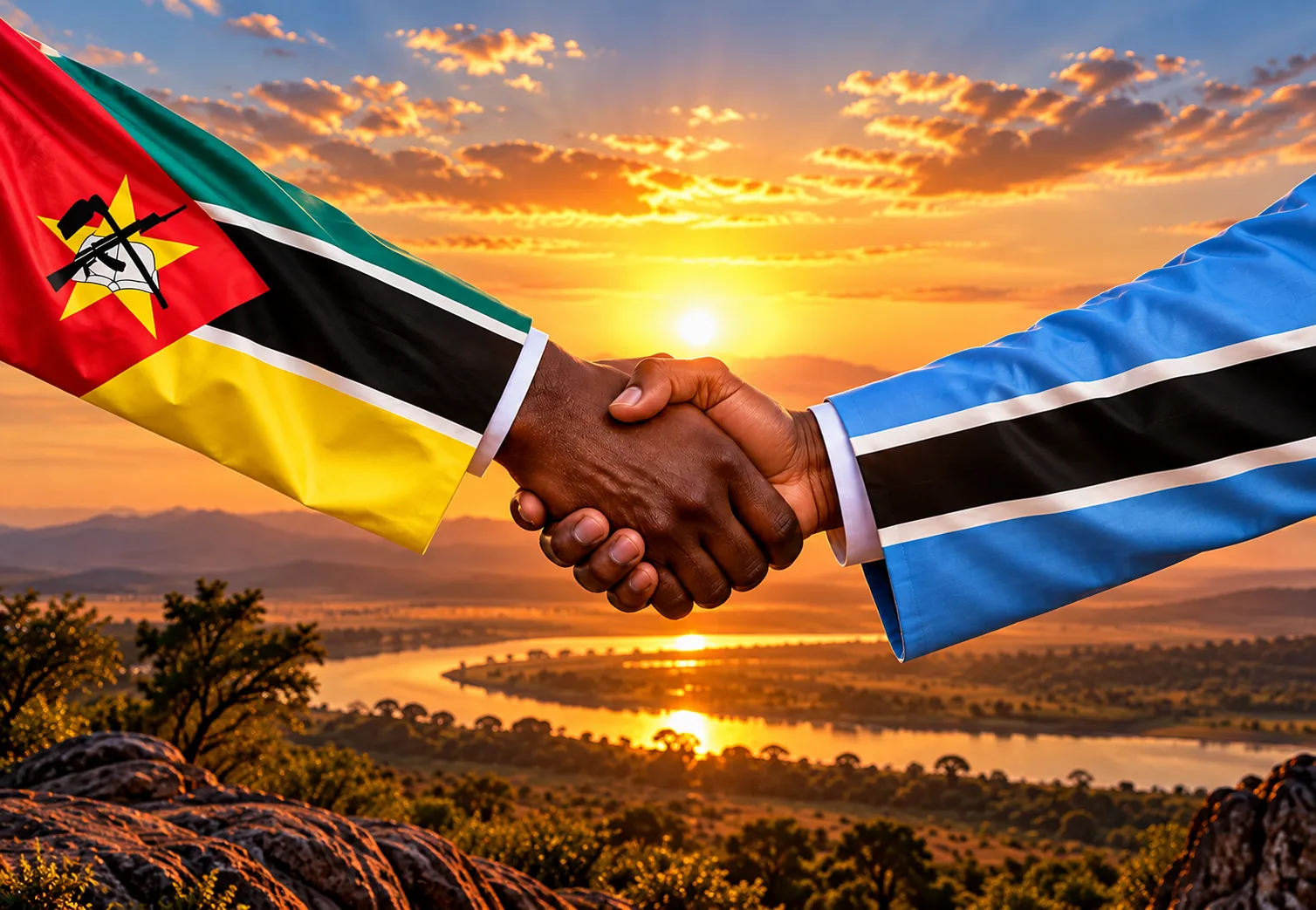
The deep-water port of Techobanine is back at the centre of the regional economic agenda. The President of the Republic, Daniel Chapo, pointed on Monday (28th) to the development of that infrastructure, energy cooperation and the strengthening of logistics links as priorities in the relationship between Mozambique and Botswana.
On a three-day state visit to Botswana, Chapo met his counterpart, Duma Boko, at a meeting in which he argued for the need to move political understandings forward into concrete projects, capable of producing economic results and deepening regional integration.
Among the initiatives considered strategic is the deep-water port of Techobanine, planned for the district of Matutuíne, in Maputo province. Valued at around 6.5 billion dollars, the project involves Mozambique, Botswana and Zimbabwe and includes the construction of a railway line of approximately 1,700 kilometres.
“We have the Techobanine port project, which is a Mozambique, Botswana and Zimbabwe project, so that we can increase the capacity of the Limpopo corridor,” said Daniel Chapo.
For the Mozambican President, the realisation of the project could widen the possibilities for moving goods and, at the same time, strengthen Botswana's access to Mozambique's logistics corridors.
“We must continue to work together to see how to make this project a reality,” declared Chapo, also placing transport and logistics among the sectors that should receive greater attention from the two governments.
In this context, the Head of State also highlighted the importance of the Matola fuel depots for the Botswana economy. “Transport and logistics is an area we must concentrate on,” he stressed.
During the meeting, Daniel Chapo also thanked Botswana for the support it has given Mozambique at different times and in different sectors. Among the examples mentioned are that country's participation, through the Southern African Development Community (SADC) force, in counter-terrorism operations in Cabo Delgado, the solidarity shown during floods and inundations, and its support for national political dialogue.
The bilateral partnership also extends to agriculture, livestock and tourism. In these areas, the two countries have focused on sharing experience, while Botswana has supplied veterinary vaccines for animal health in Mozambique.
“The exchange of experience we are having in the tourism sector, in agriculture, in livestock, above all the vaccines we have been receiving from here in Botswana for animal health in Mozambique,” said the President.
Mineral resources are another front that Maputo wishes to deepen. Chapo said that Mozambique wants to benefit from the experience Botswana has accumulated in exploiting and managing the sector, particularly at a time when the country is updating its relevant legislation.
“We want to learn from Botswana, which has great experience in this sector,” he said, indicating that the ambition is to raise national capacity for the production, export and industrialisation of mineral resources.
Botswana's experience in reforming and digitalising the Public Administration was also highlighted by the Mozambican President as a reference from which the country can draw lessons.
The bilateral agenda is also expected to advance in the areas of security, defence, tourism and culture, extending a historic relationship between Mozambique and Botswana that dates back to the period of the liberation movements in Southern Africa.
Daniel Chapo's state visit, made at the invitation of Duma Boko, seeks to strengthen ties between the two countries and also provides for the signing of bilateral agreements within the framework of the joint cooperation commission.
Source: Lusa


