
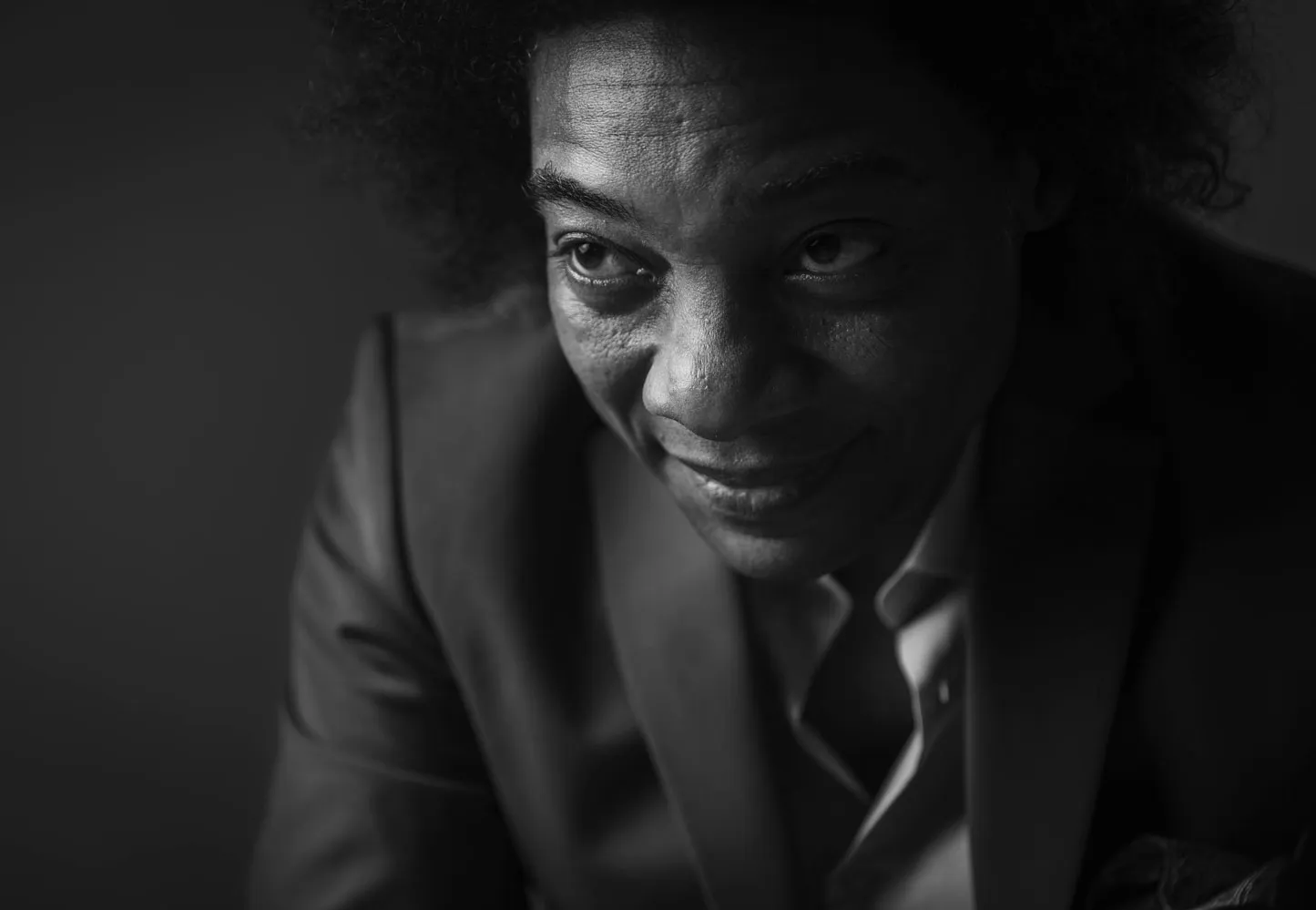
Forty years of career is undoubtedly an emblematic milestone in your life. What do you feel you have learnt over all this time?
To be resilient, to be patient and to wait for the right moment to appear. Someone who prepares in silence and manages to exceed expectations when opportunities arise. The journeys I had the chance to make and the people I met along the way were my school. We only truly get to know ourselves through other people, when we are confronted with other cultures and realities. I learnt that my freedom ends where another person’s freedom begins. I learnt that being unique and original is better than the greatest and best imitation.
Naturally, you have seen many things change since the 1980s. What has changed in the Mozambican arts scene? Are we on the right track?
Everything has changed (laughs). Some things for the better and others for the worse. Well, let us start with technological development, which is certainly the most impactful. Access to digital technology has brought us closer to a broader market but, at the same time, has created the illusion of instant success. Instant success is almost ephemeral, especially when we build it on a fragile base of false knowledge and a lack of general culture. The supply of performers, whether instrumentalists or vocalists, has improved greatly, but it has failed in content. I think that today’s references are, for the most part, completely devoid of content. There is potential, and that potential has to be strongly sponsored and nurtured so that the essence is not lost in the presentation of content, not only for entertainment but also for culture. Today there is always the danger of the trivialisation and normalisation of mediocrity, of the bad, with incredible support from the masses, who often lack adequate grounding in general culture.
My head is still full of ideas and in constant creation. I still have dreams to fulfil. I want to remain active on the various stages the arts offer me: music, writing and acting
What have you been listening to lately? Is your musical taste the same, or has it changed over time?
Definitely, what I listen to today, the result of conscious filtering, includes all genres and musical styles. I think I have adapted over the years, but for that to happen I had to be open to listening to everything, even what I consider bad. I think it is stupid to talk or pass value judgements without knowing the facts.
How has the pandemic affected your day-to-day life?
Day-to-day life? The pandemic, collectively, affected us all, directly and indirectly. It postponed our dreams and plans. It deprived us of the most precious thing: our freedom! We all know the rest. I survived thanks to investments I made in the past through my relationships with business partners. On the other hand, the pandemic strengthened my sense of protection and activated other tools within me that were dormant. I value solidarity much more. Moza Banco and Renault Moçambique were always-present partners in those distressing moments and allowed me to encourage other colleagues not to give up. During that period I took the opportunity to reflect and reinvent myself.
You have a special relationship with Zambézia; is there any kind of action you are preparing at the moment in the province where you were born?
There is a very big difference between what I would like to do and what will happen. I would like to do a great deal for my homeland, which is where it all began. To put right everything that did not work out in my relationship with my origins, and all of that through what I most like to do: singing my tradition.
Over all these years you have always been faithful to your art. Do you have a secret for captivating the interest of younger generations?
I think the secret lies in genuineness. Being true is the most powerful weapon I have. As I said before, the original will always be the greatest differentiator in times of globalisation. Knowing how to listen to the younger ones, getting to know their concerns and responding to them whenever possible. Valuing them and giving them the opportunity that, when I was young, was denied to me by some.
Is there any artist with whom you would still like to collaborate or record an album?
Many! Sharing has always been a trump card for me. I do not rule out that possibility, and recording with musicians who were a reference at the start of my career will always be a certainty. Today I can say, with complete conviction, that a large part of them have become my friends and collaborators.
How do you believe the expansion of the digital world and social media has affected the music industry?
I think the big change in the cultural industries, and the music industry in particular, was precisely in that area. Today social media are an indispensable tool in communicating and publicising our creations. Social media, when used appropriately and rationally, can be the salvation of many independent musicians. Today the success of each musical project is no longer the property of the big record companies.
Over this whole period, is there anything you regret not having done yet?
Learning, when I was still young, the traditional languages and instruments of Mozambique. Not having studied more. Fortunately, all things I still have time to do.
We know you are very close to your family. In what way do your loved ones contribute to your success?
My family has always given me support, often in a quiet way. The mere fact that they accepted me as I am and allowed me to choose my own path was, definitely, fundamental.
What moment has marked you most along your journey?
Recording my first song.
What can we expect from Stewart Sukuma in the coming years?
Renewal and reinvention. My head is still full of ideas and in constant creation. I still have dreams to fulfil. I want to remain active on the various stages the arts offer me: music, writing and acting. To increase and strengthen my philanthropic activities and contribute to greater social justice. I think the balance between different forces is important.


