
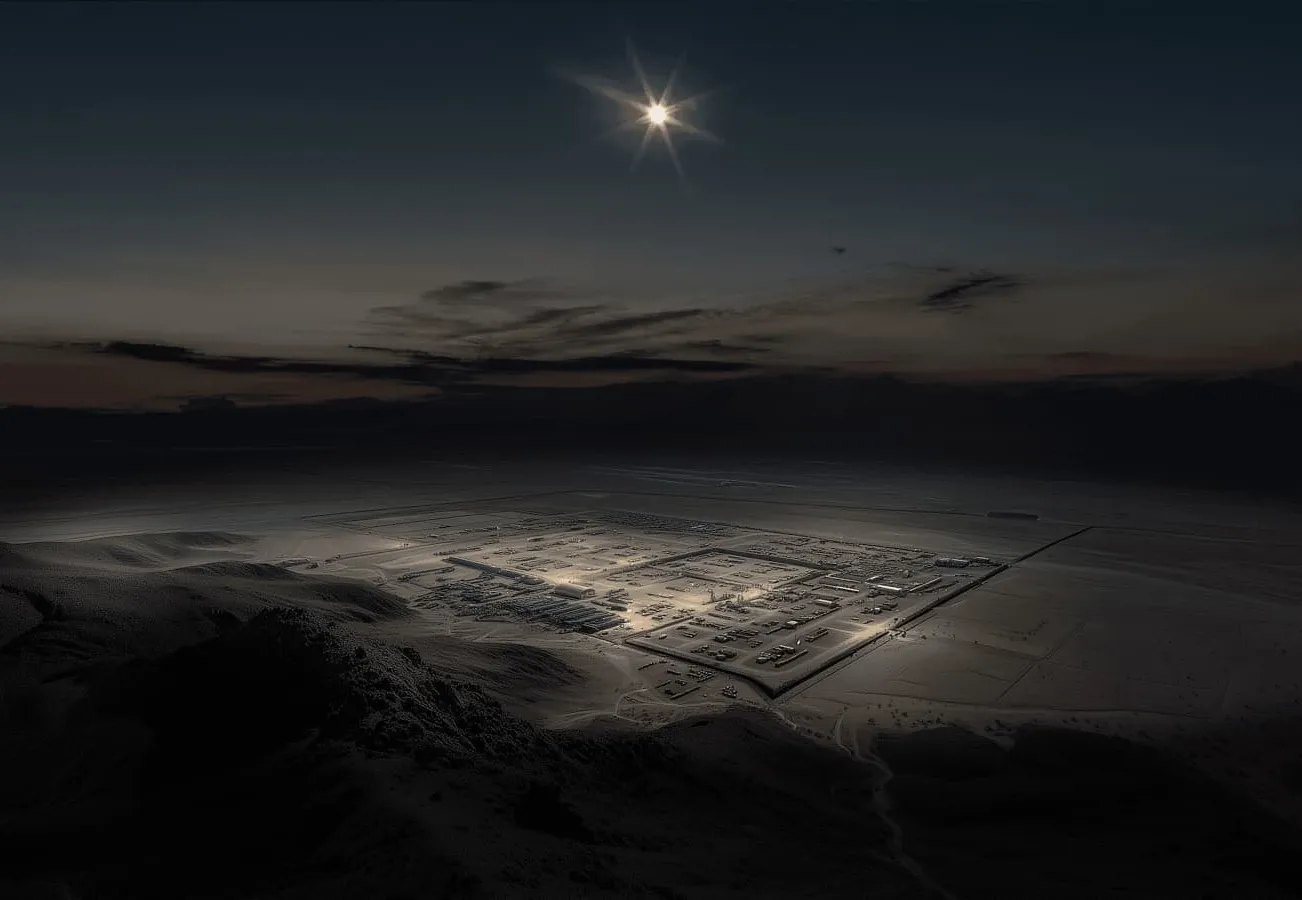
The system aims to keep photovoltaic plants operating even after sunset, ensuring a continuous flow of clean energy. Each satellite, weighing just 16 kg, will be able to illuminate areas about seven kilometres in diameter. Users will be able to request light through an online platform, turning Reflect Orbital into a “made-to-order sun”.
The company recently submitted a licence application to the United States Federal Communications Commission (FCC), with the aim of launching an experimental satellite. The long-term plan is ambitious: to build a constellation of about 4,000 satellites by 2030. The promise is clear — to provide a sustainable and universal source of energy, even in remote areas, reducing dependence on fossil fuels.
On its official website, Reflect Orbital divides its services into two strands:
Light – night-time lighting for urban and rural areas, farms, emergencies and defence operations.
Energy – capturing and redirecting sunlight to power plants.
The company has also announced the launch, by spring 2026, of a series of limited public demonstrations — the “World Tour” — at ten symbolic locations around the globe. The full expansion phase will come later.
A vision overshadowed by concerns
Despite its transformative potential, warnings were not long in coming. Scientists and astronomers have raised serious reservations about the impact of this “artificial sun” on the night sky and on scientific research.
Anthony Tyson, chief scientist at the prestigious Rubin Observatory, warned that lighting up the Earth with thousands of bright satellites could be “potentially devastating” for optical astronomy. Indeed, the intensity of the light reflected by each satellite could exceed the brightness of the Moon, compromising sensitive observations and cutting-edge telescope projects.
At the same time, concern is growing around the so-called Kessler syndrome — a theoretical scenario in which the accumulation of space debris and the proliferation of objects in low Earth orbit exponentially increases the risk of collisions. Reflect Orbital's plan, by introducing thousands of new artificial bodies, could contribute to that orbital chaos.
There is also a more basic obstacle: the sky. The system depends on ideal atmospheric conditions, since the reflected light can only be directed effectively through clear skies, which significantly limits the project's reach in areas with heavy cloud cover.
In short, although Reflect Orbital aims to reinvent the way the planet accesses light and energy, it does so under a cloak of uncertainty, where technological progress collides with the limits of nature — and with the warnings of science.


