
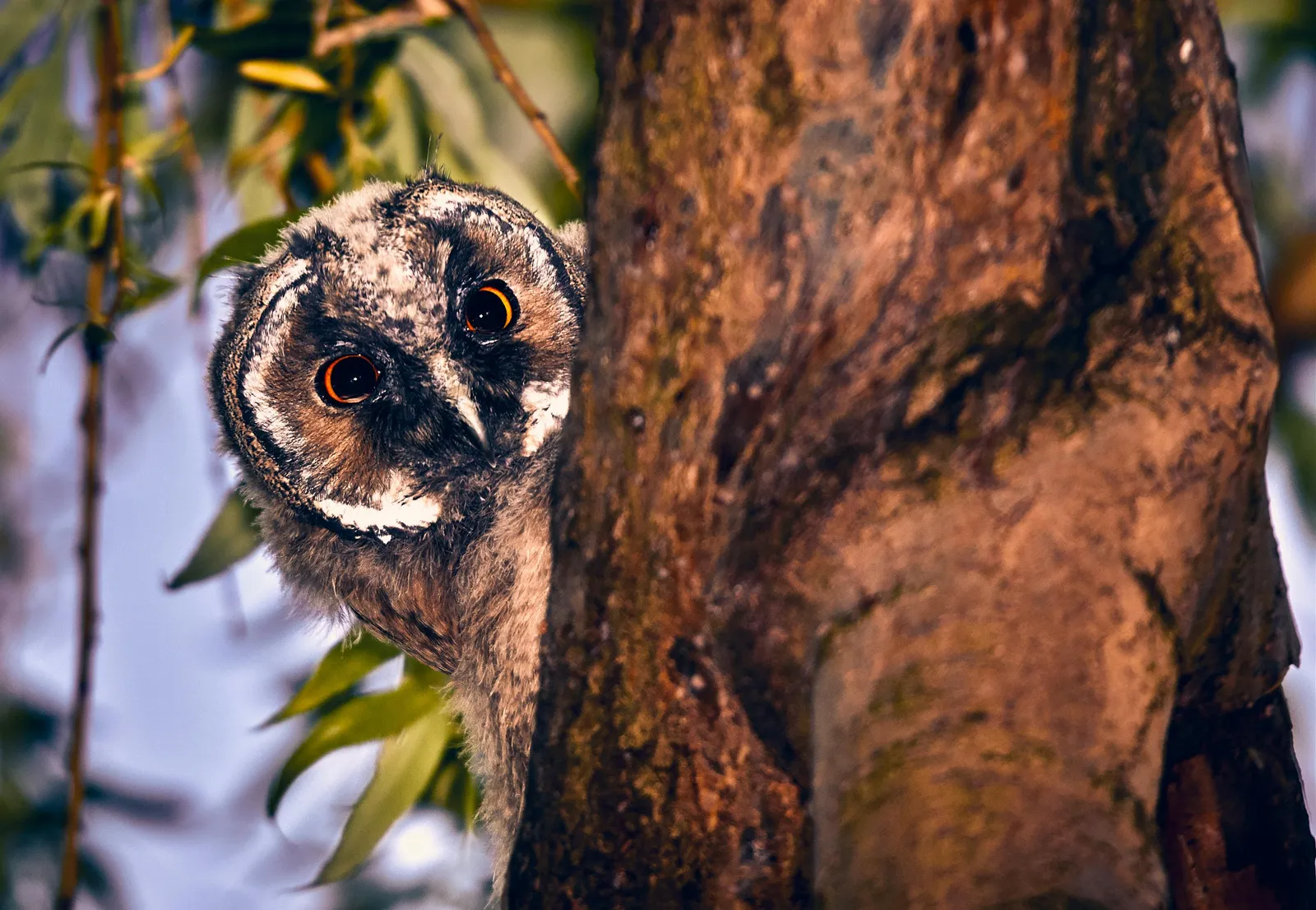
In many Mozambican communities, hearing an owl hoot at night still causes unease. Some associate its presence with the evil eye, dark omens or ancient stories handed down from generation to generation. The mystery of its silent flight, its large watchful eyes and its nocturnal habits all helped to build this aura of superstition. But the truth is very different.
Owls are discreet allies of the natural balance. They feed mainly on rats, insects and small reptiles, helping to control agricultural pests and protect harvests, especially in rural areas. A single owl can eat dozens of rodents in one night, a quiet but essential contribution to human life.
Mozambique is home to several species of owl, adapted to different habitats, from open savannas to forests, taking in farmland and even peri-urban areas. Among them, the imposing Verreaux's eagle-owl, one of the largest in Africa, stands out, as does the barn owl, frequently spotted near cultivated fields. Their presence is often a sign of a healthy ecosystem.
Interestingly, in several African cultures, owls also symbolise wisdom and spiritual protection. They are extremely intelligent birds, with remarkably acute hearing and a rare ability to turn their heads almost all the way round without moving their bodies. Their almost invisible, noiseless flight is the result of specially adapted feathers, a true masterpiece of nature.
Today, conservation specialists warn of the threats these birds face, from habitat destruction to indirect poisoning caused by pesticides. Fear and misinformation sometimes lead to the unjustified persecution of a species that brings only benefits.
Perhaps it is time to change the way we see them. The next time you hear an owl in the Mozambican night, remember: it is not a sign of bad luck, it is nature working in silence. Protecting owls means protecting the balance of our environment and, ultimately, protecting our own lives too.


