
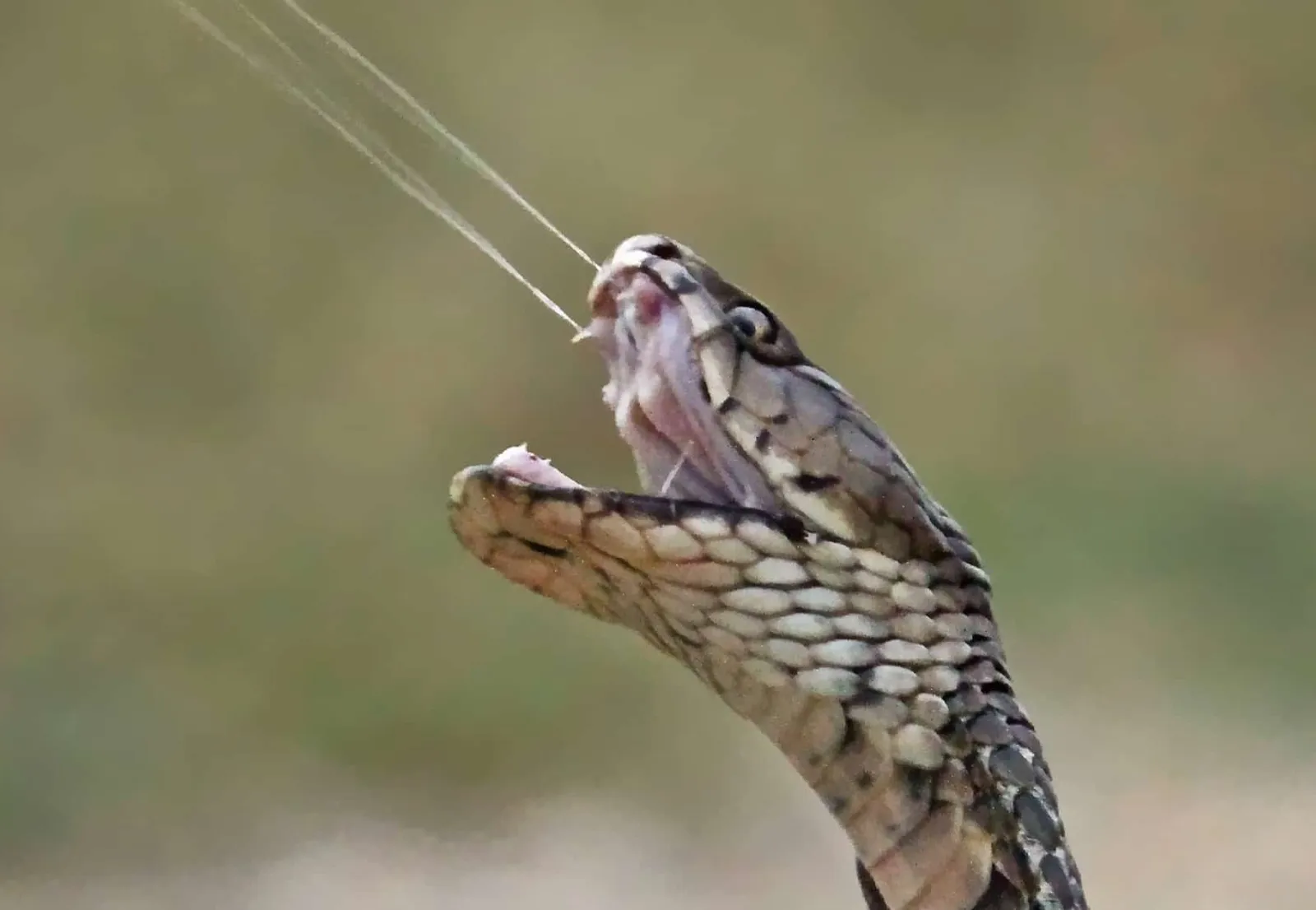
There is an African cobra known internationally as the Mozambique spitting cobra. Its scientific name is Naja mossambica and it is one of the best-known snakes of Southern Africa. The name arose because the first specimens scientifically identified were associated with Mozambican territory. Since then, the species has carried the name of Mozambique in studies, documentaries and wildlife references around the world.
Naja mossambica belongs to the group of spitting cobras and has an impressive defensive ability: it can project venom over several metres, aiming mainly at the eyes of potential threats. The aim is not to attack, but to drive off predators and create an opportunity to escape.
When the venom comes into contact with the eyes, it can cause intense pain, severe irritation and even temporary vision problems. For this reason, this cobra is greatly respected in the regions where it lives.
This species can be found in various parts of Mozambique, especially in the southern and central provinces, including Maputo, Gaza, Inhambane, Sofala and Manica, although it also exists in other parts of the country. It adapts easily to different environments, from savannas and woodland to farmland and places close to dwellings.
On average, the Mozambique spitting cobra measures between 90 centimetres and 1.5 metres in length, with some specimens exceeding that size. Its colouring varies between brown, grey, olive and orange tones, often with the characteristic dark throat that helps in identifying it. Despite its reputation as dangerous, it plays an important role in the balance of ecosystems, helping to control populations of rats and other small animals that can affect crops and spread disease.
Feared by many and fascinating to researchers and nature lovers, the Mozambique spitting cobra remains one of the most emblematic snakes of Southern Africa and a curiosity tied directly to the name of Mozambique.


