
The centuries-old traditional vaccines of Mozambique
At a time when so much is said about vaccines to prevent Covid-19, we think it is timely to bring to this section the so-called traditional vaccines in Mozambique. Not those taken in public and private hospitals and health centres, such as those that protect against measles, tetanus, cervical cancer and the like, but those administered by so-called traditional doctors or healers. Such vaccines are used by countless people, especially rural people, as a weapon of defence against possible ills or to obtain other benefits.
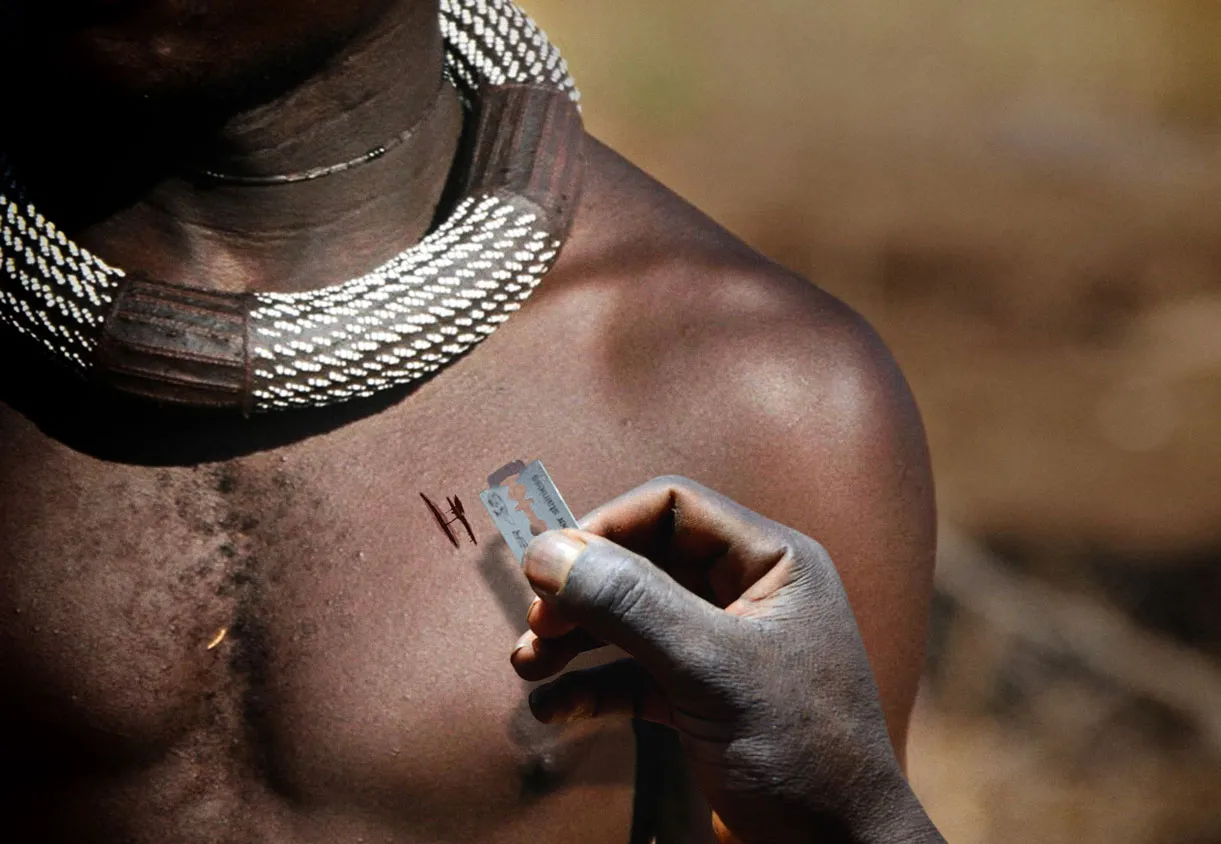
To administer these vaccines, small cuts are made, with a blade or a piece of glass, on some part of the body. When the blood begins to flow, a traditional remedy, in powder or paste form, is applied to the cut so that it mixes with the blood. Normally made from herbs, roots or crushed bones, this remedy is used to treat some illnesses, such as asthma and migraines, among others that may be troubling the patient, but also psychological problems and spiritual or material concerns. Because the heart is believed to be the main organ to be protected against evil, the chest is the most common site of application, but other parts of the body are also used, depending on the intended purpose. Traditional doctors recommend not bathing after the dose, to ensure that the medicine bonds properly with the blood.
This is an ancient traditional practice that still takes place today, and is easily visible on the body of those who have undergone it: scars in the shape of small lines, the famous “elevens”, in a translation of the local terms into English.
As a curiosity, it may be said that, in the 1980s, during the 16-year war in Mozambique, there existed in the central-northern area a group made up of thousands of people who, using traditional weapons such as bows, arrows, spears and machetes, had given themselves the mission of helping the population defend itself against armed attacks. They were the so-called Naparamas, whose supposed invincibility came from a vaccination ritual of the kind we refer to here, which protected them against bullets.
In recent decades, government authorities have been working with traditional doctors, analysing their activity and trying to harness the influence they hold to steer populations towards good health and hygiene practices.


