
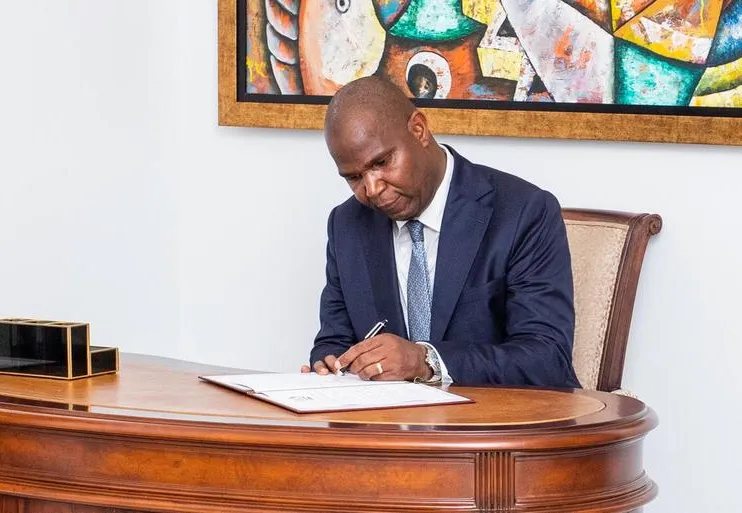
In his first presidential decree, Daniel Chapo, sworn in on Wednesday, made official a far-reaching administrative reform with the abolition of nine ministries and three secretariats of state, as well as announcing the creation of new government bodies. The measure, according to the Presidency, aims to reduce costs, modernise public management and combat corruption.
The abolished ministries include those of Economy and Finance, Transport and Communications, Culture and Tourism, Agriculture and Rural Development, Land and Environment, Sea, Inland Waters and Fisheries, Industry and Trade, Labour and Social Security, Education and Human Development, and Science, Technology and Higher Education. The secretariats of state for Youth and Employment, Sport and Higher Education were also eliminated.
The new structure provides for the creation of ministries such as Finance, Economy, Agriculture, Environment and Fisheries, Transport and Logistics, Education and Culture, Labour, Gender and Social Action, Communications and Digital Transformation, Planning and Development, and Youth and Sport. Among the novelties, the emphasis on digitalising public services stands out, as does the creation of a Ministry of Transport and Logistics, focused on railways and ports.
During his inauguration speech, Chapo pledged to put "the people at the centre of decisions", also promising to reduce the size of the Government and save around 17 billion meticais a year, an amount to be redirected to areas such as education, health, agriculture, water, energy and infrastructure.
Other promises include abolishing the post of deputy minister, reviewing the perks of public officials, and creating courts of auditors and arbitration centres to speed up administrative processes.
However, Daniel Chapo’s victory remains the subject of dispute, with demonstrations in support of Venâncio Mondlane, the second most-voted candidate, demanding "the restoration of electoral truth". The protests, marked by clashes with the police, have already resulted in more than 300 deaths and 600 injuries, according to civil society organisations.


