
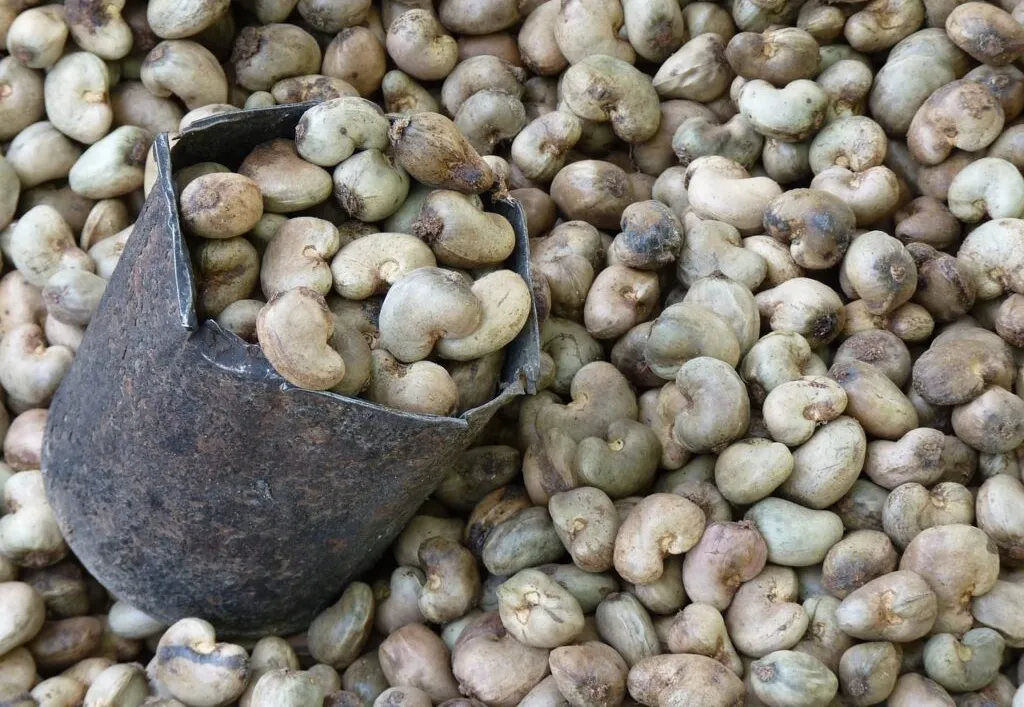
Cashew nut cultivation in Mozambique is going through a phase of renewed vigour, with a direct impact on the lives of farming communities. According to a statement from the Ministry of Agriculture, Environment and Fisheries, the 2024/2025 season exceeded expectations, reaching more than 195,000 tonnes – significantly above the initial target of 160,000 tonnes.
This performance is attributed to good farming practices and the continuous effort of producers. “This growth had a direct impact on communities, allowing many families to improve their living conditions, with access to housing, education and other goods and services that meet basic needs”, reads the official statement issued after Minister Roberto Albino’s visit to the Mozambique Cashew Institute (IAM) last Wednesday.
Despite the progress, the Agriculture minister stressed that “quantity must be accompanied by quality”, identifying the strengthening of the cashew value chain as a priority. During the meeting, an ambitious sector development plan was presented, with a timeframe from 2025 to 2035, led by the IAM. The focus will be on job creation, increasing competitiveness and promoting the export of processed products.
The Ministry also instructed the Cashew Institute to analyse successful models in other leading countries in the sector, such as Côte d’Ivoire, and to adapt those practices to Mozambican reality. “We have to do things differently with what we have – and do them well”, stressed Roberto Albino.
The reference price for producers was maintained at 45 meticais per kilo this season. The decision, taken on 10 October by the Cashew Committee, aims to guarantee the sustainability of the sector. “We will keep the reference price at 45 meticais. And we will monitor the evolution of market conditions”, said the Secretary of State for the Sea and Fisheries, Momade Juízo, during the committee’s first annual session, in Maputo.
With the 195,400 tonnes recorded in this latest season, Mozambique is approaching its former glory, experienced in the 1970s, when the country was the second largest producer in the world, with 210,000 tonnes processed in 1973. After independence, in 1975, production fell drastically to around 15,000 to 20,000 tonnes a year, but it has been gradually recovering.
In the first quarter of the year, cashew nut exports earned the country 38.7 million dollars, keeping the product at the top of the list of so-called “traditional products”, according to data from the Bank of Mozambique.


