
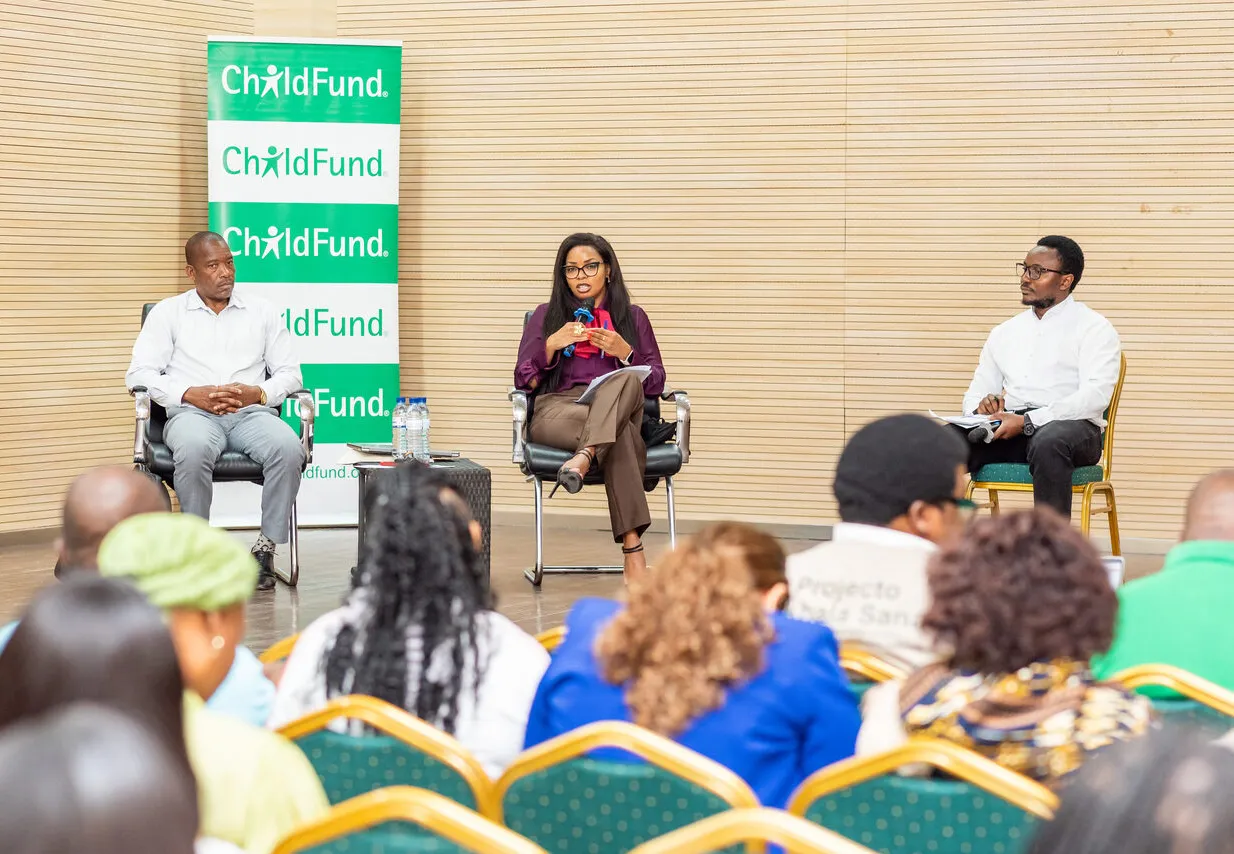
How can institutional partnerships be turned into responses capable of producing concrete change in children's lives? The question was at the heart of a dialogue promoted by ChildFund Mozambique, which brought together representatives of the Government, the United Nations, the private sector, civil society and academia to discuss intervention models based on the needs identified by the communities themselves.
The meeting, held under the theme “Partnerships that Generate Impact: Locally Led Solutions for Children in Mozambique”, put up for discussion the role of different sectors in the search for solutions to some of the social challenges facing the country.
Among the participants was Millennium bim, which presented experiences developed in the areas of education, health and financial literacy, arguing that social interventions should start from a concrete reading of the needs that exist on the ground and involve communities in setting priorities.
During the round table, Christine Ramela, Director of the Corporate Communications and Corporate Social Responsibility Department at Millennium bim, maintained that the effectiveness of partnerships depends less on the mere provision of resources and more on the ability to bring together different skills.
“A partnership generates real impact when it does not start from what an institution wants to offer, but from what communities actually need. More than pooling resources, we need to combine capabilities, knowledge and different perspectives to respond to concrete problems and produce results that endure beyond the period of support,” she said.
In education, the experience of building three classrooms and delivering 150 desks at Matola-Sede Primary School was presented, an intervention carried out in response to needs identified with the school community.
The debate extended to health, with reference to the support given to neonatal care units in hospitals through the provision of equipment and materials intended to improve conditions for caring for newborns and for the working conditions of health teams.
Another experience presented was the joint preparation of a Digital Financial Literacy Handbook with a civil society organisation. The resource covers subjects such as money management, saving, responsible credit and the safe use of digital financial services, seeking to make this content accessible to its intended audience.
Beyond the projects presented, the discussion focused on the conditions needed for partnerships to produce lasting results. Among the aspects raised were setting objectives in advance, a clear allocation of responsibilities and the existence of mechanisms to monitor the results achieved.
The involvement of the communities themselves was also identified as a central element, both in identifying priorities and in building responses. The approach seeks to avoid interventions disconnected from local realities and to increase the chances of initiatives continuing once the initial support has ended.
The meeting also argued for private-sector participation that goes beyond funding projects. Technical knowledge, mobilisation capacity and coordination with public institutions, civil society organisations and other actors were presented as components that can help build responses tailored to the different realities of Mozambican communities.


