
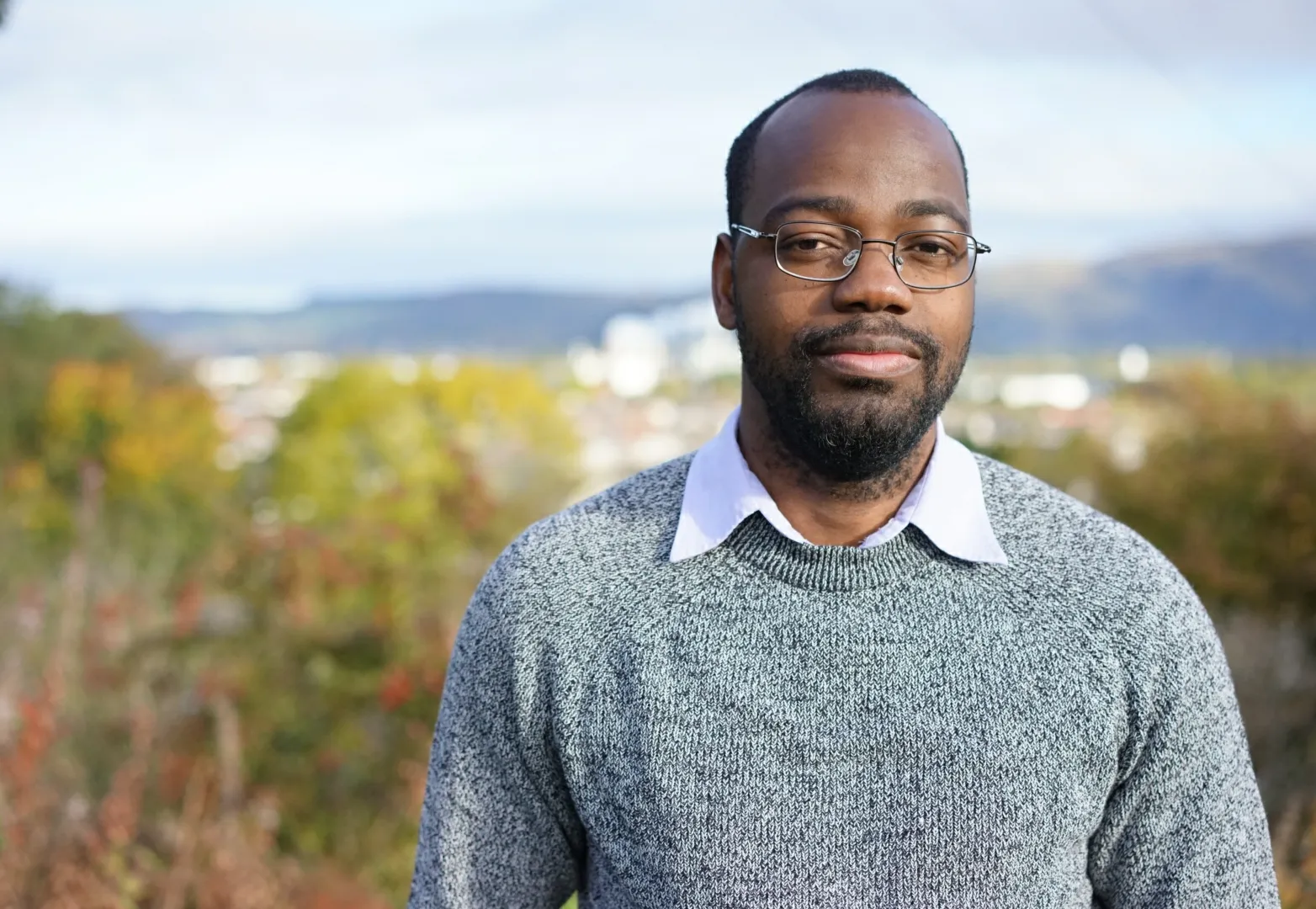
If we were to fictionalise the story of Simão Zacarias, we could say that, as an explorer, he set out from the port of the City of Beira to the icy waters of Scotland. It was not quite like that, but almost, since Simão Zacarias has conquered everything he has set out to do. Shall we get to know this watery story?
Simão Zacarias is an eternal student. At 31, this native of Beira has already travelled half the world exploring the aquatic universe. He began by taking a degree in Marine Biology at the Escola Superior de Ciências Marinhas e Costeiras (ESCMC) of Eduardo Mondlane University (UEM), in Zambézia. And that was only the beginning. He explored the field of aquaculture at the Federal University of Santa Catarina (UFSC), in Brazil, and recently became officially a Doctor, on completing his PhD in Aquaculture at the University of Stirling (UoS), in Scotland.
“One of the biggest dreams I had was to one day be a “Doctor” in the field I decided to pursue. What enchanted me was not the title itself, but the opportunities and research capabilities, and the ability to contribute significantly to society, that a “Doctorate” brings,” says Simão.
He began laying the foundations as soon as he returned from the Land of Santa Cruz, in 2015: “I saw an advertisement for a PhD research project at UoS, which needed candidates like me. I did not think twice about submitting the necessary documents – I knew beforehand that I had the qualifications to work on that research project. In the first week of December I was told that I had been the candidate selected for the project’s place,” the young scientist tells us with conviction.
Zacarias has been the master of his own destiny. Life taught him from an early age to work for what he aspires to and never to wait for anyone. This dedication and commitment have not been in vain, since last year Simão was awarded the Global Aquaculture Innovation Prize. He currently lives in Scotland, but much of his research work is carried out in Central America (Honduras and Nicaragua) and in South-East Asia (Thailand).
Although Simão Zacarias’s work and life are an example today, the chapters of his story have not always been easy. When asked what advice he would give to young Mozambicans who would like to follow the path of research, the scientist is peremptory: “I would like to tell young people and teenagers born into humble families that they should never give up on their dreams, even if everything seems impossible”. I am not the son of any government official or of middle- or upper-class people. I come from a humble family, from one of the neighbourhoods of Manga, in Beira, and I grew up in a family that lived on less than one or two dollars a day. I have sold paraffin, lettuce, sugar and cigarettes in the street to keep myself in school. You need to have a lot of patience and to work hard and smart to achieve your goals. Do not let yourselves be carried away by the emotions of adolescence or youth if that negatively affects your goals,” the researcher informs and advises.
“I come from a humble family, from one of the neighbourhoods of Manga, in Beira, and I grew up in a family that lived on less than one or two dollars a day. I have sold paraffin, lettuce, sugar and cigarettes in the street to keep myself in school”
In reality, Simão always had a taste for science. First for Medicine, and then for Marine Biology. It was in Florianópolis that he deepened his knowledge of aquaculture, where he honed his research skills and learned shrimp production, a subject in which he seeks to improve practices. “That involves doing applied research together with producers, and collaborative work with different partners. It also involves travelling from one continent to another (from Europe to Asia and America) and doing analyses in University laboratories,” explains the researcher.
Anyone who thinks a scientist’s life is boring is mistaken. According to Simão Zacarias, being a scientist means bringing new scientific knowledge and innovations that contribute to the sector’s development. That includes constantly learning new ways of seeking knowledge and keeping up to date with the sector’s developments and challenges.
Although he lives an ocean away, Simão keeps a critical eye on what is happening in his country: “I believe that, first, a scientific culture must be created or improved among the people, and it must be understood that science is one of the main foundations for a country’s development,” he shares. It is with an eye on that development that the native of Beira we present here maintains the desire to create a leading research centre in the field of aquaculture in Mozambique.


