
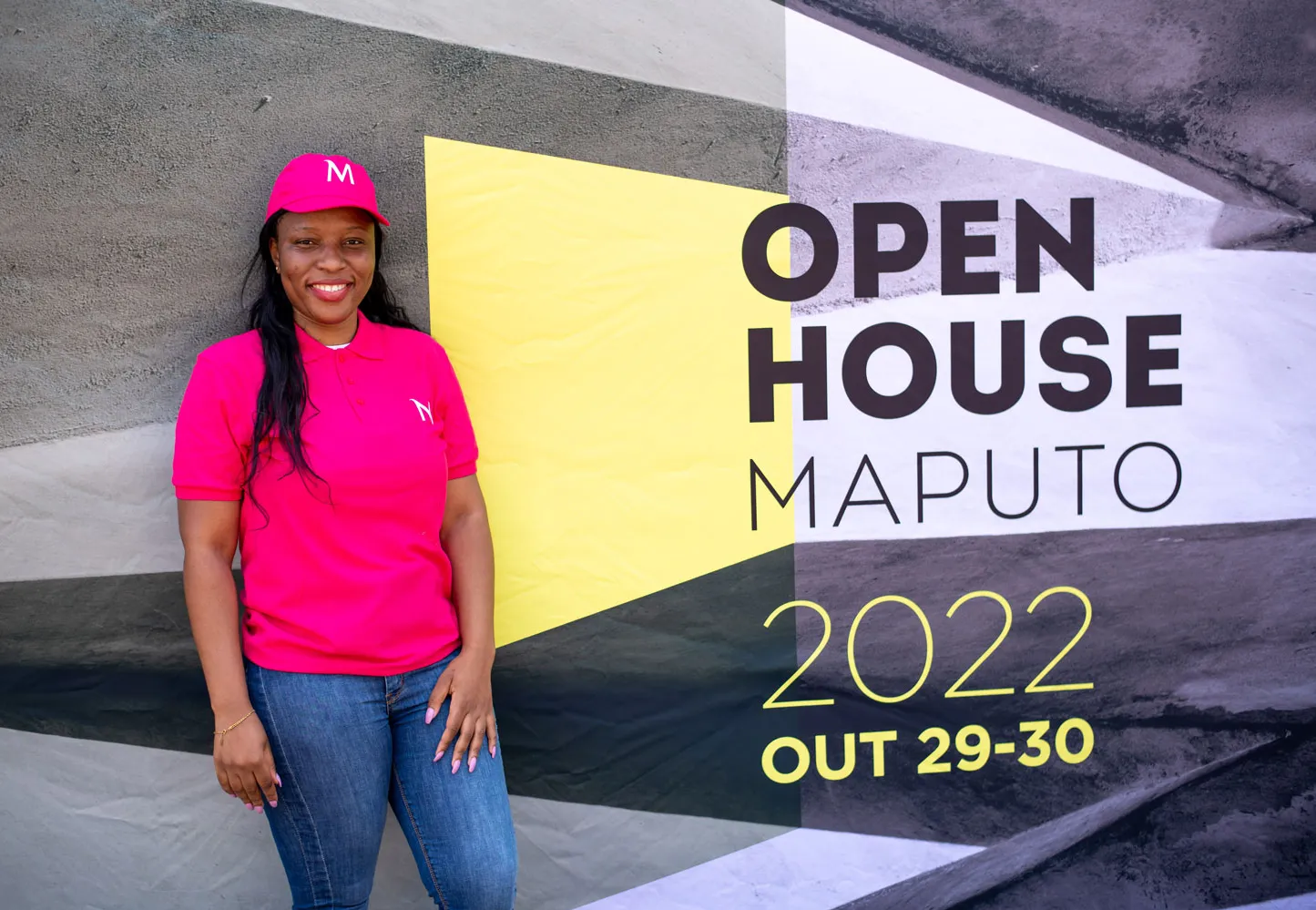
The first edition of Open House Maputo, with Millennium bim among its main sponsors, has just taken place: a public exhibition of more than 20 buildings, in an open-museum experience that aimed to promote city dwellers' connection with their historical and cultural heritage, as well as to extol the value of well-designed and well-built spaces. Everyone was thus able to take part, free of charge, in guided, accompanied and self-guided visits, to get to know and appreciate the architecture and urban design of Mozambique's capital better. The CFM Station, the Church of Santo António da Polana, the US Embassy and the João Ferreira dos Santos Family Residence were some of the buildings visited, all of which can be seen at https://openhousemaputo.co.mz/portfolio.
Here is a brief review of the event, in conversation with Verena Borges, the General Coordinator of this first edition.
How did the idea of holding Open House Maputo come about?
The idea arose from the fact that there was no event in Maputo focused on architecture. There are organised tours and some individual offerings in this vein, but there was no internationally recognised event involving several buildings at once. Another factor that prompted this event was that Maputo is a city extremely rich in built heritage, which is little explored and little known to the general public. To our desire to put on an event like this we ended up adding the missing variables: need, content and the right partners.
Did you have specific goals for the event? Did it go as you expected?
The main goal was, and continues to be, to raise public awareness of the importance of architecture in the everyday lives of residents. Architecture not just from the aesthetic side as a branch of the fine arts, but also from the functional, technical side, which influences how we live and the spaces that surround us. Well-built buildings and thoughtfully designed spaces. And, through an appreciation of that value, to strengthen the concepts of preserving and valuing heritage.
We are confident that we have gained more ground in this area; we are better off today than we were yesterday. It is, however, an ongoing struggle and one that will take time. This kind of awareness has to be instilled from an early age, and it was with that in mind, too, that we ended up involving children and young people in various activities over the OH weekend.
Now that the event is over, we believe the outcome was positive and, above all, a collective gain for the city of Maputo.
What was the response to the event?
It exceeded all expectations. From the audience most specialised in architecture to the general public who took part out of curiosity to see the buildings, everyone responded in a very positive and encouraging way. The managers of the participating buildings, the partners, the sponsors, the volunteers, the staff and the architects involved reached the end of the event feeling that it had been too short. A wave of enthusiasm and collaboration was generated among everyone, creating a real OH community.
And what were the main difficulties you had in organising it?
I would say the main challenge was communicating the concept of the event. It is a new concept in Mozambique, which most people did not know. We invested in social media, but also in conventional media such as TV, radio and the press, through numerous interviews given by our OH Ambassador, the tireless architect Carla Cortês. It is not every day that there are free events in which we invite the public to visit places considered inaccessible. You have to earn a degree of trust until people realise that they can actually go to these places and simply walk in.
Many questions arose up to the day of the event, but we believe that, as it went on, all interested people ended up understanding the dynamic involved.
What can we expect from the next editions?
This edition had several surprise elements that we are very proud of. We made a bilingual audio guide to the 20 buildings, which will remain available online for anyone interested to use, and we made virtual tours inside some of the spaces.
Having passed this 1st edition with flying colours, we have gained the confidence to take more risks in the next ones.
Although it is an annual event, given the response we had this year, we intend to run various activities throughout 2023. Debates, surprise visits, involving the universities more in the programmes, and secondary schools where students are at the stage of deciding which fields they want to pursue, and so on. We are currently drawing up the plan for 2023 and one thing is certain: in any of the activities, we will leave the OH stamp clearly present.
As part of Open House Maputo 2022, those registered for the guided visits had the opportunity to see an exhibition of 20 works of art from Millennium bim's collection, on display at the Bank's Private villa, located on Avenida Armando Tivane.
“The city of Maputo is rich and full of historic sites whose architecture and characteristic features are its unique identity and help to boost local tourism. We are certain that the arts hold a prestigious value in societies because of their capacity to provide representations, instigate feelings and provoke emotions. It is in this sense that, by associating ourselves with this initiative and also by making it possible for the general public to appreciate our art collection, we contribute to promoting and enriching the potential of the Open House Maputo initiative, which embraces the best architectural and urban heritage of the Maputo metropolitan area. - words of José Reino da Costa, Chairman of the Executive Committee of Millennium bim.
It should be noted that, viewed globally, Open House, an initiative of the Open House Worldwide network, is the world's largest celebration of the urban landscape, present in 52 cities. The network is made up of 50 organisations that host festivals and dialogue about architecture, design and cities around the world.


