
The Portuguese language is changing. It is a slow, almost imperceptible transformation, but one that reflects the natural evolution of any living language. New words are entering the dictionaries. And now, besides the usual Brazilianisms, words are also arriving from Angola, Mozambique and other African countries that share Portuguese as an official language.
According to Helena Figueira, a linguist at Priberam, the well-known online dictionary, the criterion for a word to be accepted is clear: "There has to be evidence, whether of frequency, currency or even through suggestions from the users themselves". Everything goes through analysis. It is not an arbitrary process, but a methodical, almost scientific one.
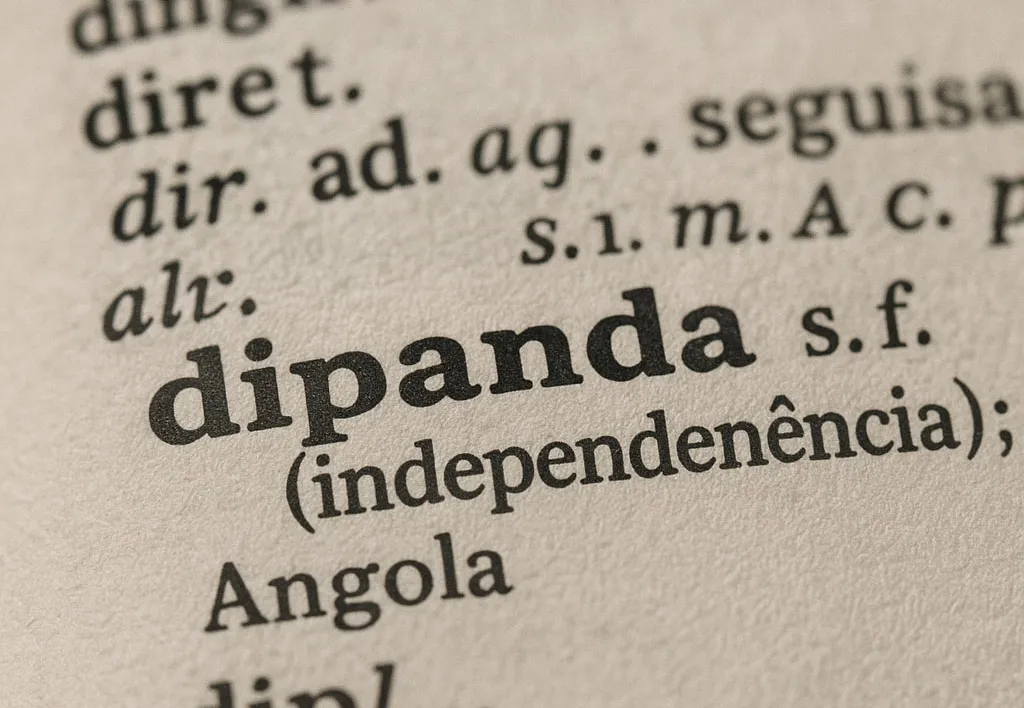
In recent months, words such as dipanda (independence), meninência (relating to boys and girls), manguana (tomorrow) and baiar (to cast a spell) have been added. All of them come from the Portuguese-Speaking African Countries, known as the PALOP.
The explanation for the smaller number of African words compared with Brazilian ones is simple: "The Portuguese have less access to what is produced in the language of those countries", explains Helena Figueira. Cultural exposure to Brazil is far greater, with daily influence through soap operas, music, literature and social media.
The linguist admits she has no data indicating which Brazilian words are most used in Portugal, but assures us that they are few. What really predominates in daily use are simple prepositions, "de" and "em", which give structure to speech. "Sometimes our speech is poor because we always use the most frequent words," she says.
As for the Orthographic Agreement, Helena Figueira recalls that it is limited to spelling. It does not interfere with vocabulary or syntax. And the so-called "Brazilianisms"? Those are a separate matter. "They are interferences that come from contact with other variants of the language, but they have no relation to the Agreement," she stresses. Sometimes misunderstandings arise, such as writing "fato" instead of "facto", a mistake that reveals more confusion than influence.
This Monday, 5 May, is World Portuguese Language Day, established by the Community of Portuguese-Speaking Countries (CPLP) in 2009 and recognised by UNESCO in 2019. The CPLP brings together Angola, Brazil, Cape Verde, Guinea-Bissau, Equatorial Guinea, Mozambique, Portugal, São Tomé and Príncipe and Timor-Leste: nine countries, one language, many voices.
The entry of African words into the dictionary is more than a linguistic curiosity. It is a sign. An indication that the Portuguese language continues to grow. To adapt. To welcome.


