
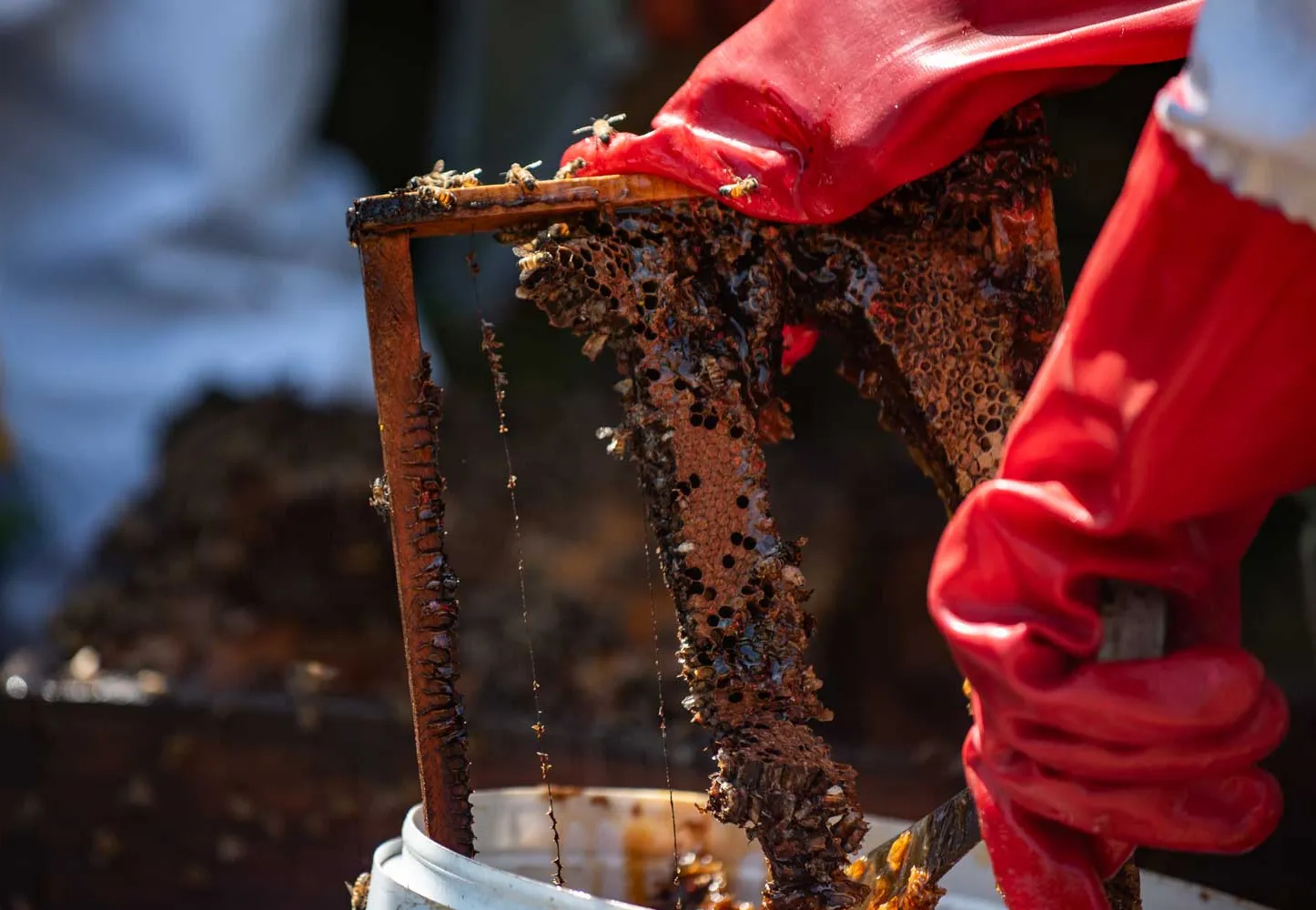
On the Limpopo River in Mozambique, a mangrove forest destroyed by floods has come back to life thanks to the commitment of the local community, which develops sustainable activities such as honey production.
“Along the banks of the river grew a dense mangrove forest. Then the flood of 2000 took everything.” Agostinho Nhanzimo is the chairman of the Natural Resources Management Committee of the Limpopo River estuary. He is the one who tells of the events that first destroyed and then revived the mangrove forest near Xai-Xai, a coastal city in southern Mozambique, about 200 kilometres from the capital, Maputo. Once lush, the riverside forest suffered over the years the combined effects of human action and natural forces that mutilated it. Then came the rebirth, when the commitment of local and international organisations led to the development of sustainable economic activities that today safeguard the health of the mangroves.
Born and raised in Chilaulene, a small settlement surrounded by sand dunes and mudflats, Nhanzimo has seen his country's history pass through the Limpopo mangrove forest. The long civil war, fought between 1976 and 1992, left its mark in this corner too. The forest, surrounded by the waters of the river and the ocean, had only one way in and one way out. “The troops did not enter this area so as to avoid being trapped,” says Nhanzimo. “So many people settled near the Limpopo estuary to escape the conflict, and began to exploit the local resources.” In addition, other factors, such as rising sea levels and the conversion of the land into salt pans, weakened the mangrove forest over time, until, in 2000, Cyclone Eline and the subsequent floods arrived. Submerged for 45 days, the mangroves on the north bank of the river died of water stress and more than 400 hectares of forest were lost.
A future in the roots
It took years to bring the mangrove back to life. Since 2010, with the support of international organisations such as UNEP (the United Nations Environment Programme), USAID (the United States Agency for International Development) and the Nairobi Convention, the efforts of the local population have allowed the forest to be reborn. Under the guidance of the Mozambican Agency for Environmental Quality Control (Aqua), the communities of the Limpopo estuary created a mangrove nursery and planted young seedlings among the meanders of the river, using hydrological restoration, a technique that consists of digging channels through the forest to ensure the circulation of water. With the tide, the seeds and propagules of the young plants spread more easily and settle where they can best adapt. Thus, today, on the north bank of the Limpopo, a forest rich in mangrove species exists once again. But the ultimate goal is not simple restoration.
As Jacinta Laissone, provincial delegate of Aqua, explains to Nuova Ecologia, “Now it is necessary to ensure the economic and ecological sustainability of the mangrove, keeping the forest healthy and promoting the development of alternatives to exploiting the resources the mangroves offer. That is why we thought of honey production. Thanks to the sale of the product, for example, there is no need to harvest timber to earn an income and, at the same time, the mangrove forest that hosts the hives is protected.” Honey production is therefore, for now, only the latest chapter in the long story of rebirth and conservation of the mangroves of the Limpopo estuary.
According to Nhanzimo, “The honey we produce among the mangroves is a great opportunity for our community.”
The cousins Rogério Salomão Mauai and Carlos Macave are also members of the Natural Resources Management Committee of the Limpopo estuary and look after the hives. After the flood of 2000, they had left the riverbanks to look for work in South Africa. But then, thanks to the recovery of the mangrove, they returned to Chilaulene. “For our community, the rebuilding of the forest was important. Here, the mangroves are fundamental to the livelihood of the inhabitants and the protection of the territory,” says Mauai. Every day, the two cousins check the young plants in the nursery and, every week, they visit the bees in the hives. “Honey production is a new activity and the results are already starting to show. It provides economic support when other resources are scarce,” explains Macave. In periods of drought and fishing bans, honey can also represent an additional source of income.
Characterised by an artisanal supply chain, the mangrove honey of the Limpopo estuary is today sold only locally, but the aim is to increase production to reach other markets. “A kilo of honey sells for about 500 meticais (about 7 euros), but in cities such as Maputo the price can rise to 1,000 meticais,” explains Erudito Malate, FAO coordinator, who in 2023 supported the initiative by supplying 200 hives. “Each hive can produce up to 12 kilos of honey a year, thus providing a very useful additional income for the local population.”
In other areas of Mozambique and of the tropical regions of the world, mangrove honey production is establishing itself as a sustainable economic activity capable of reducing pressure on these endangered forests, which grow between sea and land. Still limited to a few markets, mangrove honey is distinguished by its sweet and salty flavour. “It is a different honey from that produced in other tropical forests. It is denser, darker and more flavoursome, thanks to the plants the bees visit to gather nectar,” concludes Agostinho Nhanzimo, as he looks out over the more than 200 hives scattered among the mangroves of his Limpopo estuary.
(This article was originally published in the Italian magazine La Nuova Ecologia and is reproduced here with the author's permission.)


