
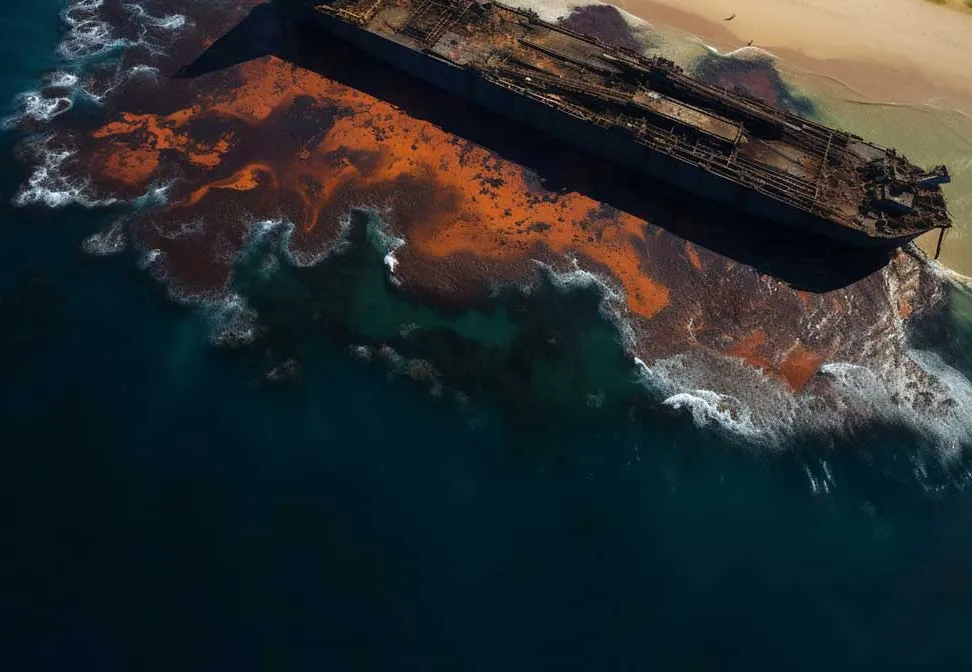
Did you know that, on 16 April 1992, one of the greatest environmental disasters in Mozambique's history occurred? On that date, a Greek oil tanker called the Katina P, carrying 66,700 tonnes of crude oil from Venezuela to the United Arab Emirates, was caught in gigantic waves off Mozambique. Two tanks ruptured, releasing 13,000 tonnes of crude. The next day, the crew ran the ship aground on a sandbank in Maputo Bay, 6 miles from the coast, and another 3,500 tonnes were spilled into the sea. Days later, on the 26th of the same month, the vessel was towed into the Mozambique Channel, where the cargo was to be transferred to another tanker, but, a hundred miles off the Mozambican coast, it sank, releasing all the crude that remained on board.
Several beaches inside and outside Maputo Bay, river estuaries and mangroves were hit by the spills, which caused serious damage to the region's ecosystem, killing countless fish, birds and other marine animals and severely harming fishing and tourism, important economic activities in the region.
It is said that the Katina P, even before the accident, had already been marked for scrapping because it was not in a seaworthy condition. If, on the one hand, it is essential that companies operating in the maritime sector effectively implement measures to prevent accidents like this one, on the other hand, it is up to governments to take measures to ensure that these companies comply with environmental standards and take responsibility for repairing any damage caused.
The Katina P environmental disaster highlighted the importance of protecting and preserving our coastal ecosystems, for ourselves and for future generations. Environmental sustainability is everyone's responsibility, requiring the collaboration of governments, companies and individuals.


