
Nyau
Intangible Cultural Heritage of Humanity
Did you know that there is a dance in Mozambique that was declared by UNESCO, in 2008, an Intangible Cultural Heritage of Humanity? This dance, which is at the same time a ritual, is the Nyau, one of the manifestations of Mozambique's rich artistic heritage. It is practised by the Chewa, who are found in three countries of Southern Africa, namely Mozambique, Zambia and Malawi. In Mozambique, it is predominantly practised in the northern region of Tete province, in particular in the districts of Tsangano, Marávia, Chiúta, Moatize, Angónia, Chifunde, Zumbo and Macanga.
Going far beyond the dimension of a mere dance, the Nyau encompasses arts and techniques, history and culture, which have been transmitted over generations. As an approach to educating young people, it is a means of social integration and of preserving the community's values. Demanding agility, sacrifice, virility and heroism, its practice goes through several stages, among which the following stand out: application, endurance tests, learning the principles of brotherhood and community, and integration into the group.
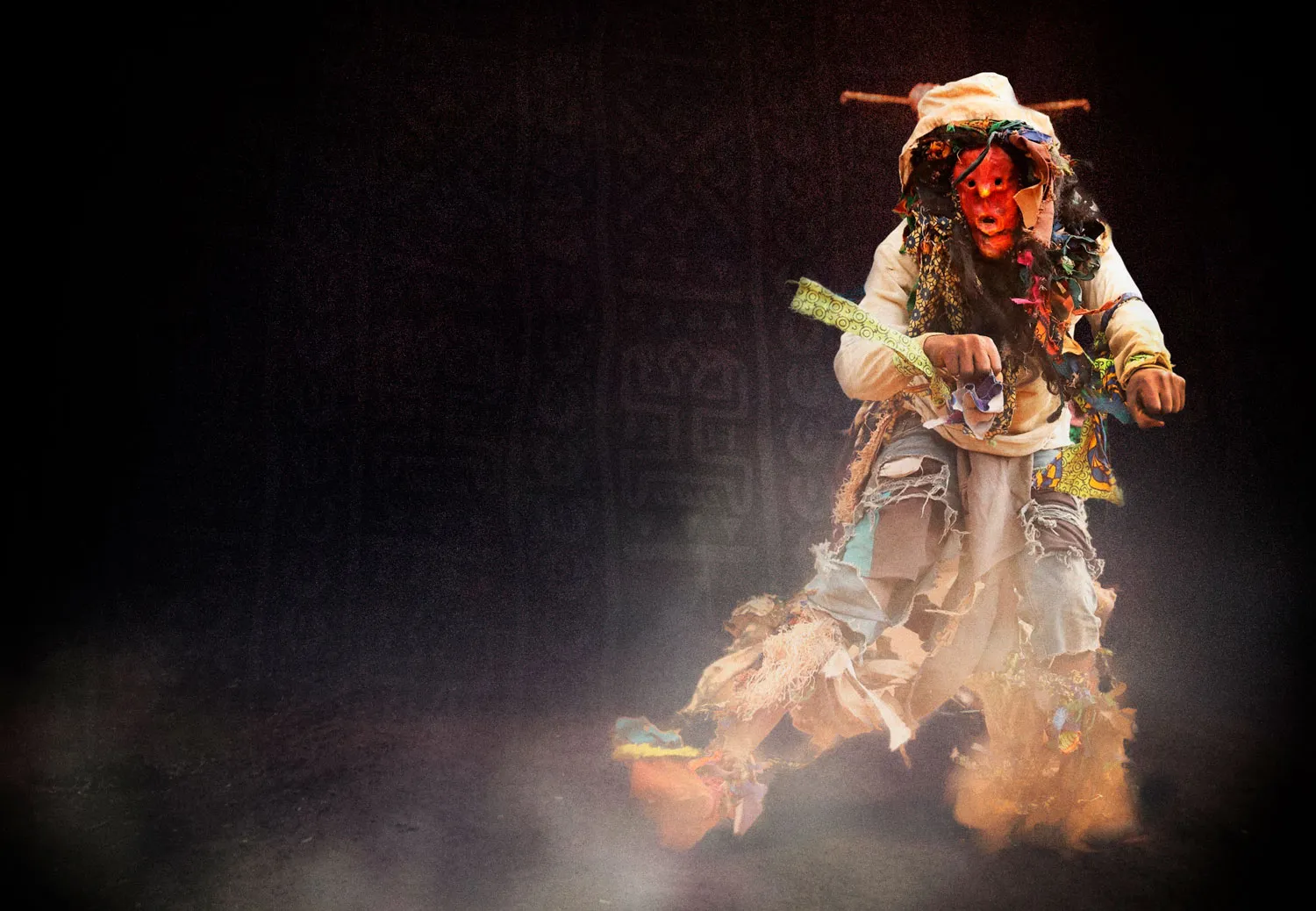
The Nyau is one of the rare traditional dances of Mozambique in which the dancer wears a mask
There are several versions of the origins of the Nyau. One of them states that its genesis is linked to the formation of the Undi State, around the sixteenth century, as a way of demonstrating power over conquered peoples. Another version maintains that the Nyau was created before 1500 AD by herdsmen, who while tending their flocks built figures called Nyama imitating their animals. There is also a version associated with famine: the lack of food is said to have affected social harmony, to the point where men took to cunning practices, such as pretending to be wild animals, frightening the women, in search of sustenance.
The Nyau is one of the rare traditional dances of Mozambique (another is the Mapico) in which the dancer wears a mask. Made of feathers or wood, it serves to identify members of the secret society, hiding their faces to preserve their identity. The brotherhood goes further, believing that the mask absorbs the spirits of the ancestors. The dancer wearing this mask appears smeared with mud and adorned with fibres or pieces of cloth, which form small skirts tied around the waist, forearms, below the knees and ankles.
The proclamation of the Nyau as a heritage of humanity joined those of Mozambique Island (the city) and the timbila (musical instrument), which in 1991 and 2005 respectively likewise obtained UNESCO's highest recognition and distinction, acts that raised Mozambique's name beyond its borders.


