
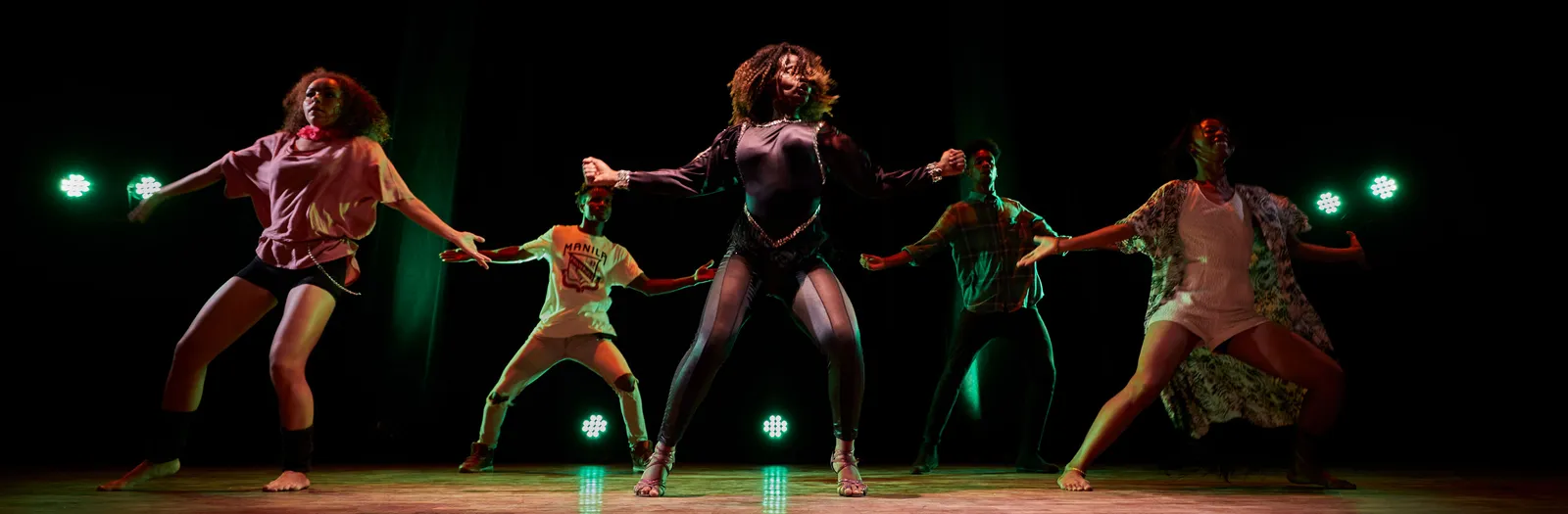
Motus Corporis, by Lulu Sala and Ivan Barros
Is dance, is performance, possible without a stage (and without an audience)?
No! That would probably have been the answer of many artists before the state of public calamity that the country and the world have been living through for more than a year. Today, artists, and all the vital forces of society, have reinvented themselves in the face of the unprecedented crisis caused by covid-19, and have discovered new ways of living. Now without stages, without audiences. How many will hold out, how many will survive the “new normal”? Nobody knows the answer yet. It is an unknown whose key belongs to time. In the meantime, while time does not reveal the answer to us, we decided to speak to a Mozambican contemporary dancer and choreographer, Lulu Sala, who told us about his most recent dance project.
Accustomed to dancing and to designing dance pieces and performances, which he has presented in the four corners of the world, Lulu told Xonguila how he learned the dance steps of the song of the moment: “covid-19”. “Sometimes life begins very early, unexpectedly, at times with certain contours, or else it defines us for the rest of our lives. That is exactly what happened to me,” says the dancer who, in truth, wanted to do something else on stage.
Lulu Sala was only 10 years old when he crossed paths with the arts, never to stray from them again, although he did have to redefine himself. His school, where he learned the ABC of dance, was the Casa da Cultura in the city of Maputo. He did not yet know what his vocation was, but he had many options. He could have been a visual artist, a sculptor, a musician or an actor. First, he tried to be a musician, but the dream did not last long. His true calling was ballet. “I already pictured myself on stage, singing with a guitar. I felt like a rock star,” the artist revealed of one of his dreams, which was frustrated, and just as well, because time was able to turn him into one of the greatest contemporary dancers of all time in Mozambique.
“I gave up the dream of singing, but I never doubted that my life would be on the stage. Because my dance comes from the soul; it is not something superficial, it is not out there, it is something that comes from deep within,” the artist summed up, the owner of a career that many of his peers see as the line between dream and utopia. Lulu Sala is a multifaceted dancer, choreographer, teacher, cultural activist and event promoter. With more than 20 years of career, Lulu has worked with various companies, universities, research centres and others, both in Mozambique and abroad.
Lulu Sala has already staged many performances in more than 60 countries, across the five continents.
At present, the artist has been working on various projects, in partnership with the University of Bayreuth in Germany, the University of Santiago de Cuba, among others. Lulu describes himself as a versatile artist and has no preference for any specific dance technique. He feels comfortable in all of them, from classical and traditional dance, by way of jazz, breakdance, ballet and pop dance, to contemporary dance. “I am lucky to have learned the technique of almost every dance. In my performances, I make a point of mixing the techniques of modern and traditional African dance, and I manage to create a new style. This versatility gives me flexibility and allows me to put on shows for different audiences,” he said, before pointing to the lack of identity among artists of the new generation.
Lulu Sala is a multifaceted dancer, choreographer, teacher, cultural activist and event promoter. With more than 20 years of career, he has staged many performances in more than 60 countries, across the five continents
Dance as an expression of a people’s identity
For Lulu Sala, dance is an element that should affirm the identity of a people, their pride. According to the artist, the lack of it means that the local audience does not see itself in the performances presented.
“I think we lost the Mozambican audience because there came a time when all dance performances, or most of them, were purely contemporary, what I call European contemporary. We somehow failed to prepare the Mozambican audience to make that transition from the traditional to the contemporary. It was just ‘cut’, and something else was put in its place. And people go to those performances and can hardly understand what is happening,” he criticised.
Acculturation is not the only factor behind the poor attendance at dance performances in the country; the “quality” of the performances is another factor to bear in mind, according to the teacher. “Young people are in a hurry to turn professional, without training, without any experience. They easily lose their way; they start dancing and, a year or two later, they call themselves professionals. And when that is the case, the risk of selling things that are very poorly prepared, whether nationally or internationally, is greater. And then they sell the pieces, confident that this is the real thing. The race to earn something means that young people enter the market with no preparation, with no quality to sell,” was how he described the current tendency to seek immediate results. “I think that, of what they are doing (in dance), some are doing it well, while others still have a long way to go. Mozambique was once a reference in the field of dance across Africa, and unfortunately that has been lost over time. However many skills and natural gifts we may have, I think it is necessary, indeed essential, to invest in training as well. I think every practitioner, especially senior ones, should instil in young people the importance of training in dance, in general,” warned the voice of experience.
“Some time ago, we had several international organisations that funded many artistic and cultural projects. We had national companies that also gave financial support to these initiatives. Even in politics, we had leaders who believed strongly in the arts, in culture, in dance, but all of that was gradually lost, until we reached the level where we are today, where, unfortunately, we do not have much quality in dance performances.”
The experienced dancer advocates the creation of more dance festivals in the country, as a way of making room for dance schools and groups to showcase their art and talent, share experiences and spread knowledge for the development of an industry that is still seeking to consolidate itself and, for now, to recover from the effects of the covid-19 pandemic. Kinani is a biennial festival. We need more festivals to show and develop our work. There is no doubt that festivals are pillars for the development of contemporary dance in the country,” he said. Kinani is a dance festival that opens up space for exchange between Mozambique and various countries around the world.
United to save dance (the arts) in a time of crisis
With no stage and no audience, artists had to reinvent themselves in a time of widespread crisis and discovered that, after all, they can bring their performances to audiences sitting on the sofa at home, by video, since it is still not possible to attend performances in theatres, which have been closed because of covid-19 but which, in the meantime, are trying to reopen at half capacity, after the easing of restrictive measures. Thus was born the “Motus Corporis” project, with the video director Ivan Barros, who in recent years has made a name for himself directing contemporary dance pieces. The artistic partnership resulted in a 19-minute video in which the main star is Lulu, who was accompanied by other dancers, in a piece in which “the body expresses what words can hardly reach”. The piece was shown on the YouTube and Facebook platforms of the Centro Cultural Franco-Moçambicano on 30 April, to mark the celebrations of World Dance Day, which falls on 29 April. “This was the first time I had worked with Ivan, but I had admired his work, which is spectacular. He is an incredible professional and the most impressive thing is that he has a passion for dance. He works with enthusiasm and dedication. He has it in his soul; it is part of who he is,” he said, before revealing his life project, the creation of a dance training centre for children and young people.


