
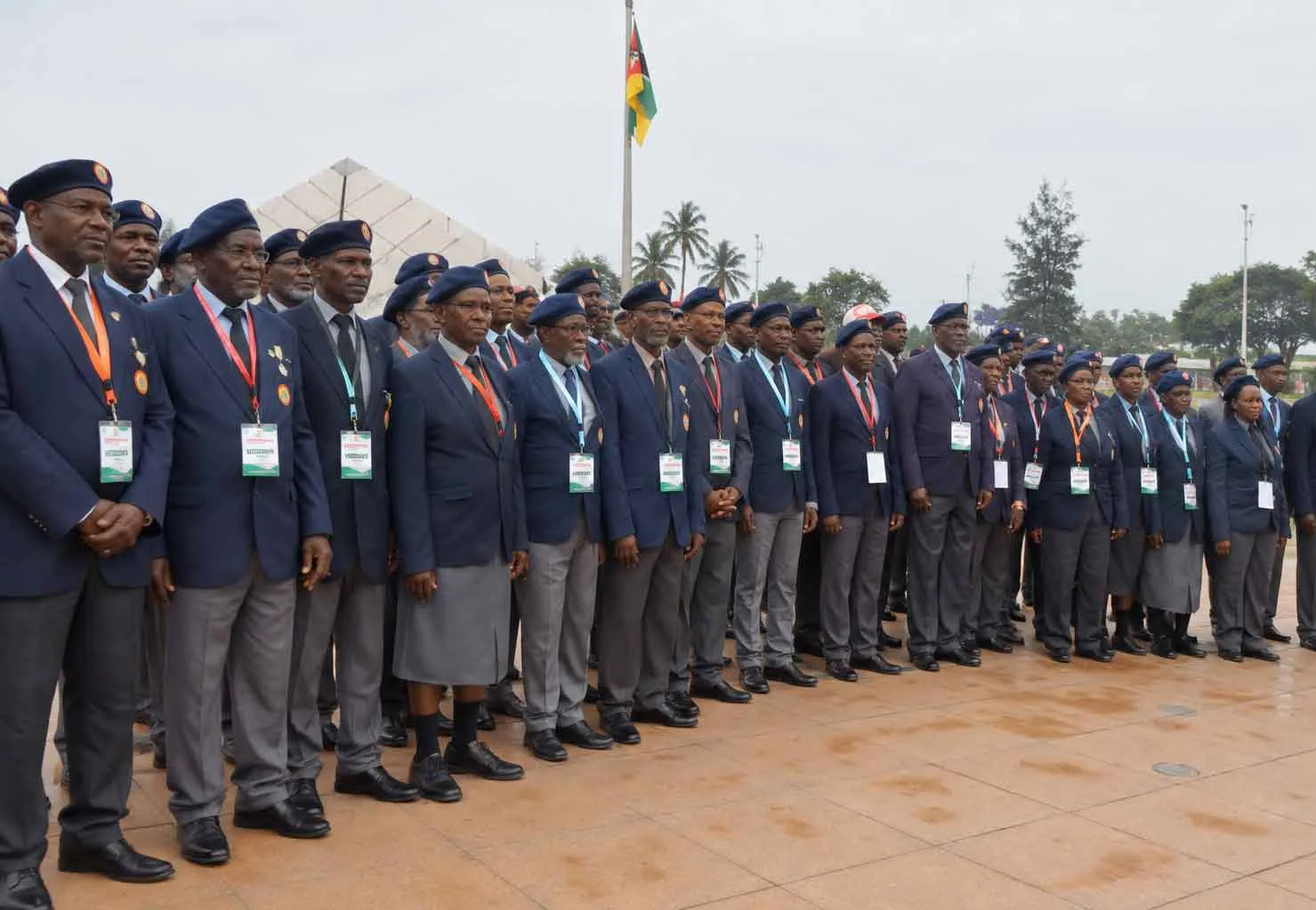
From this year, a share of the agricultural projects promoted by the Government will have a defined destination: the veterans of the national liberation struggle. The decision, announced by the President of the Republic, Daniel Chapo, sets aside 10% and seeks to turn the historic recognition of former combatants into a concrete opportunity to take part in the Mozambican economy.
“The Government has decided that, from this year, 10% of agricultural sector projects will be reserved for veterans of the national liberation struggle throughout the country,” Daniel Chapo announced during the Victory Day celebrations held this Monday, 7 September, in Maputo.
The initiative aims to open a new avenue of participation for those who were involved in the struggle for independence and, subsequently, in the consolidation of the Mozambican State. For the head of state, the contribution of the veterans should not remain confined to historical memory, but should extend to building an economy capable of generating wealth and reducing dependence.
“We want those who helped to liberate the land and its people to also take part in sustainable development on this march towards economic independence,” he declared.
It is in this context that agriculture takes on a central role. In a country where the sector remains decisive for production, employment and the survival of numerous rural communities, the Government intends to use it also as an instrument of economic inclusion for former combatants.
The decision comes at a time when Daniel Chapo is seeking to place so-called economic independence at the centre of the country's new stage of development. After decades marked by the consolidation of the State and the defence of national sovereignty, the President maintains that Mozambique must now concentrate its efforts on building a more productive, competitive economy capable of creating opportunities for its citizens.
This ambition also involves strengthening national companies and greater integration of young people into the economy's value chains.
“We want Mozambican companies capable of competing on an equal footing with foreign ones. We want our young people to take a greater part in value chains because they are the priority of our governance,” said Chapo.
The President also urged young people to make education, science, technology, production and entrepreneurship instruments of economic transformation, advocating a more active role for the new generations in building the country's future.
The announcement was made during the Victory Day ceremonies, celebrated on 7 September. This year, the date marks 52 years since the signing of the Lusaka Accords, reached in 1974 between the Mozambique Liberation Front and the Portuguese colonial government. The agreement opened the way to national independence, subsequently proclaimed on 25 June 1975.
Given the historic weight of the occasion, Daniel Chapo also reiterated his defence of preserving collective memory as an indispensable element of national identity and of understanding the challenges Mozambique faces today.
“A people that forgets its history runs the risk of losing its identity,” he warned.
The decision to reserve 10% of agricultural projects for veterans nevertheless opens a new stage: that of implementation. The challenge will be to turn the political announcement into effective participation, guaranteeing access to projects, financing, means of production and markets capable of sustaining the activities undertaken.
Experts consider that the results will depend, to a large extent, on the ability to ensure that the participation of former combatants goes beyond the formal allocation of opportunities and translates into sustainable productive activity, income generation and the effective creation of jobs.
For the Government, the measure forms part of a broader agenda of economic transformation. In this strategy, agriculture, the strengthening of Mozambican companies and the greater presence of young people in value chains emerge as pillars of one and the same ambition: to increase national productive capacity, reduce external dependence and lead Mozambique towards what Daniel Chapo defines as the country's next great achievement — economic independence.


