
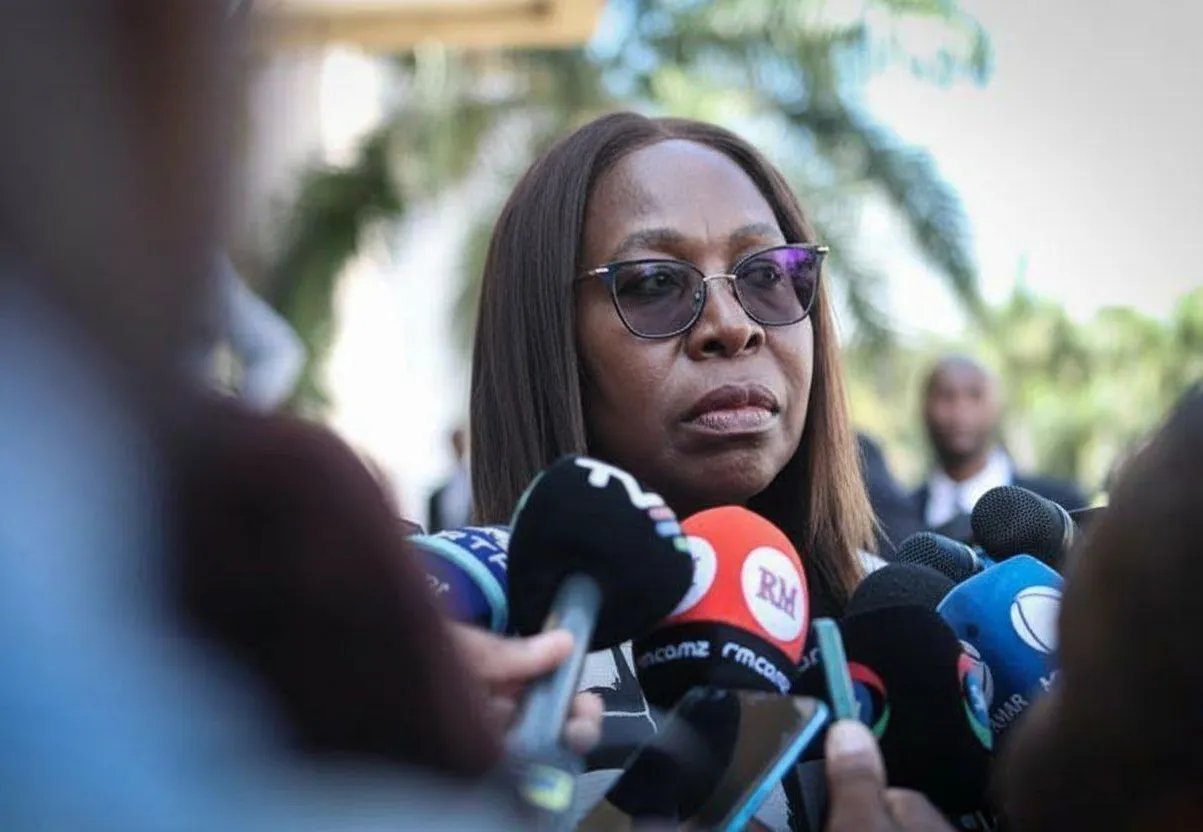
The Mozambican Government has announced a set of strategic interventions for 2026, notably the construction of twelve new water resources monitoring stations and the rehabilitation of at least 15 kilometres of defensive dykes in the Limpopo, Licungo and Búzi river basins — areas especially vulnerable to flooding. The information was given on Tuesday by Prime Minister Maria Benvinda Levi, during the presentation of the proposed Economic and Social Plan and State Budget (PESOE) for next year, in the Assembly of the Republic.
In addition to the interventions in the water sector, the executive plans to build 21 water supply systems and make 20,000 new household connections, as well as rehabilitate and resurface 294 kilometres of national roads, and maintain a further 15,000 kilometres of classified roads.
In the agricultural sector, the Government anticipates growth of 2.5% for the 2025/2026 period, driven by good weather forecasts, technical assistance to 1.3 million households, distribution of agricultural inputs to more than 100,000 families, and the establishment of 96 infrastructure facilities to support crop and livestock production, plus 31 facilities dedicated to agricultural marketing.
In the fisheries sector, growth of 3.6% is expected. 1,400 production units will be licensed, more than 12,500 fish farmers and fishers will receive technical assistance, 12,600 marine and coastal fishing licences will be issued, and 78 million tonnes of fishery products will be given sanitary certification.
However, these targets are set in an adverse macroeconomic context. The Government has revised downwards its economic growth forecasts for 2025, setting it at 1.6% — below the previous estimate of 2.9%. This revision led to a cut of 14.9 billion meticais (about 200.6 million euros) in the revenue forecast for the State, requiring a corresponding adjustment in public spending.
Even with budgetary restraint, the executive points to an economic recovery in 2026, with projected growth of 2.8%. This rebound is expected to be sustained by a combination of the dynamism of the services sector, increased exports of Liquefied Natural Gas (LNG), the recovery of agricultural activity and strategic investments in the energy sector.
According to the proposal, State revenue in 2026 is expected to reach 406,969.4 million meticais (approximately 5,481 million euros), equivalent to 24.9% of GDP. Expenditure, in turn, will amount to 520,634.2 million meticais (about 7,012 million euros), equivalent to 31.8% of GDP, leaving a budget deficit of 7% — 113,664.9 million meticais (1,530 million euros).
Goods exports are estimated at 8,436 million dollars (7,270 million euros), with Gross International Reserves of 3,234 million dollars (2,787 million euros), able to cover 4.4 months of imports, excluding megaprojects.
Faced with the restrictive outlook, the Mozambican Government undertook, at the end of November, to cut spending on investments considered non-priority, as a way of safeguarding the economy's strategic pillars and ensuring the implementation of measures with a direct impact on community resilience.


