
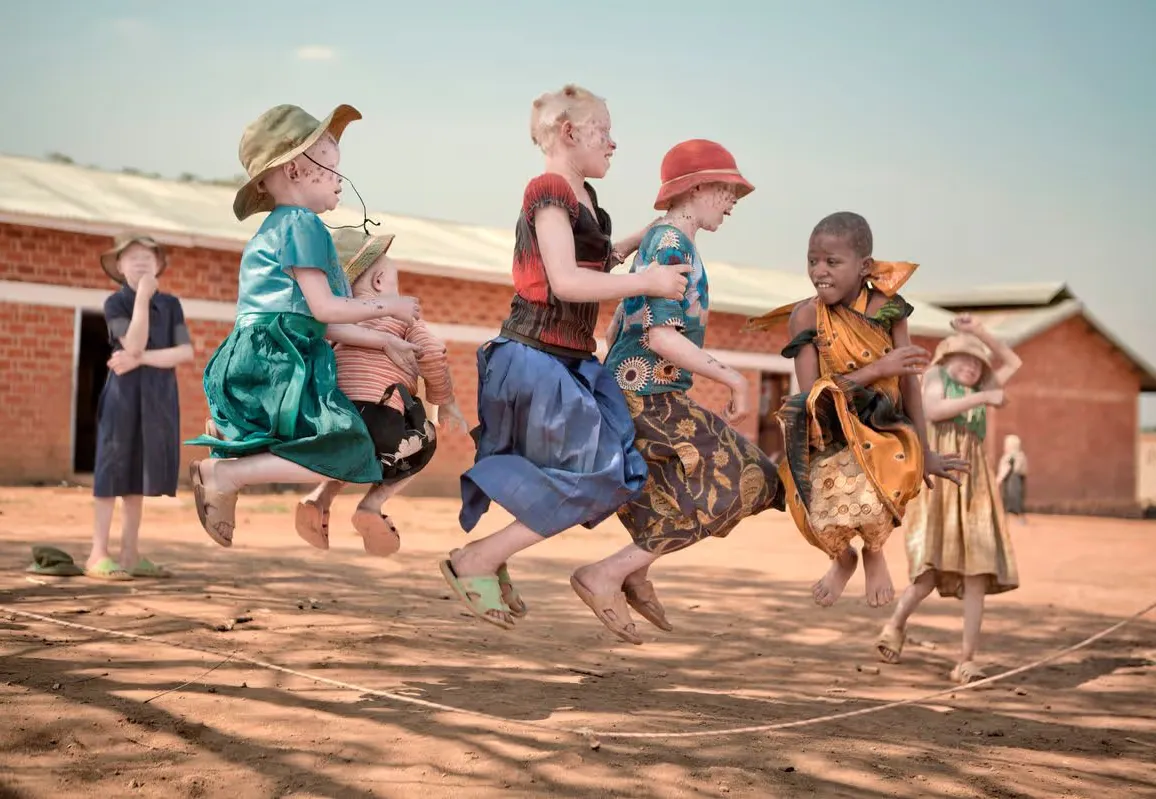
The picture is disturbing. In Mozambique, thousands of people continue to live under the weight of fear, exclusion and beliefs that turn difference into a sentence of vulnerability. It is estimated that between 20,000 and 30,000 Mozambicans have albinism, a genetic condition that, for many, continues to mean discrimination, persecution and even risk to life.
It was in this context that the Government reaffirmed its commitment to defending this population, during the ceremony held in Maputo to mark International Albinism Awareness Day. Before the official event, dozens of people walked through the streets of the capital in a march marked by slogans demanding respect, inclusion and effective protection of the rights of people with albinism.
Speaking at the ceremony, the Secretary of State for Gender and Social Action, Abdul Razak Amuzá Esmail, assured those present that the Executive remains determined to ensure the dignity and full citizenship of this community.
“The Government of Mozambique remains committed to the promotion, protection and effective realisation of the rights of people with albinism,” he said.
The minister acknowledged, however, the scale of the challenge. For years, people with albinism were victims of violence often invisible to society: attacks, persecution, mutilations and murders fuelled by superstitions that attribute mystical powers to their organs and body parts, encouraging criminal human trafficking networks.
According to Abdul Razak Amuzá Esmail, this situation led to the approval of the Multisectoral Action Plan to address the issues faced by people with albinism and strengthen their protection. The instrument provides for concrete prevention measures, mechanisms for responding to human rights violations and legislative amendments designed to strengthen the existing legal framework.
“These instruments reinforce the protection of the rights of people with disabilities, including people with albinism,” he assured.
But this community's concerns go beyond physical safety. Throughout Albinism Awareness Week, rights advocacy associations issued a fresh appeal to the authorities: to make accessible a product that is indispensable to their survival.
The president of the Amor à Vida Association, Milton Mujovo, called for an exemption from customs duties on imported sunscreen and for its reclassification as a medicine, so as to reduce the costs borne by families.
“It is important that, as a Government, as a country, we create conditions to remove all barriers, to ensure that people with albinism have access to sunscreen,” he said.
Although Mozambican legislation provides protection mechanisms for people with disabilities, sunscreen is still treated in practice as a cosmetic product. This classification keeps import and retail costs high, making regular access to a good considered essential for this population difficult.
Milton Mujovo explained that sunscreen acts as a vital barrier against ultraviolet rays, significantly reducing the risk of burns, skin lesions and skin cancer. Without this adequate protection, he warned, the consequences can become serious and, in some cases, fatal.
The association leader added that a suitable sunscreen costs, on average, around 3,000 meticais. As it has to be used continuously throughout the month, the expense is unaffordable for many Mozambican families.
He therefore argues that the product should be included in the national essential medicines list and made available through the National Health System.
“In the long term, what we want is for sunscreen to stop being classified as a cosmetic […] and to be classified as a drug, and to be included on the national essential medicines list. So that it can be purchased and distributed in public hospitals and public pharmacies at a subsidised price,” he said.
According to the Amor à Vida Association, the World Health Organization again included sunscreen on its list of essential medicines in 2025, a decision which, in the organisation's view, reinforces the need for Mozambique to align its tax and public health policies to ensure more effective protection for people with albinism.
In a country where prejudice still persists and where superstition continues to fuel violence, this community's struggle remains divided between two urgent needs: the right to live without fear and the right to basic care capable of preserving life itself.


