
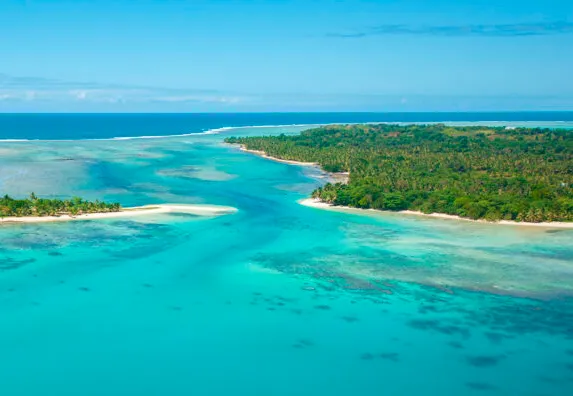
Mozambique is looking for a strategic partner to strengthen the management of the Primeiras and Segundas Islands, an archipelago made up of ten sparsely inhabited islands, with the aim of ensuring its ecological and financial sustainability. The information was provided to Lusa by the National Administration of Conservation Areas (Anac).
“The arrival of a partner with a different vision, different experience and different capacity is always an asset. And together, with the capacity the area itself already has, we will create a more robust management approach, which is why it is always important to have other partnerships”, said Eugénio Manhiça, director of the Conservation Division at Anac.
Located between the provinces of Nampula and Zambézia, the archipelago occupies a conservation area of 10,409 square kilometres, under the direct responsibility of Anac. The future co-managing entity is expected to strengthen administrative and operational efficiency through a shared governance model involving the State, local communities and technical partners.
According to the institution, the aim is to guarantee the ecological and financial sustainability of the area, ensuring the conservation of ecosystems and the continuity of management activities. The partner will also be responsible for ensuring effective enforcement of environmental legislation, promoting equity and social inclusion, and encouraging the active involvement of resident communities.
“The co-manager is really there to support the sector, the area, in building technical capacity and in seeking more funding to ensure effective management of that area”, stressed Eugénio Manhiça, clarifying that the interest is not in individual islands but in “the area as a whole”.
National and international philanthropic organisations with proven experience, inside or outside the country, and with a positive track record in collaborative management models, are eligible for the partnership. The criteria required include a commitment to knowledge transfer and to the institutional strengthening of Anac, the ability to mobilise additional financial resources and a guarantee that the funds obtained are recorded in the State's financial control system.
Anac currently manages nine areas under a co-management arrangement and intends to extend this model to all the zones under its authority. The process includes an exploratory site visit and bilateral meetings, and culminates in the signing of a memorandum of understanding. The agreements may run for up to 25 years, depending on the nature of the partnership established.
The Primeiras and Segundas Islands Environmental Protection Area, washed by the Indian Ocean, was officially established in December 2012. According to Anac, it is a vast system of marine influence, marked by an extensive chain of deep reefs and high biological diversity.
The archipelago includes mangrove forests along estuaries, seagrass beds, coral reefs and large sandbanks that form part of the Sofala Bank, in central Mozambique, as well as distinct water gradients that sustain multiple plant and animal species.
“It is this combination that allows for the existence of vast fishing resources which, if managed in a balanced way, could guarantee an economic return for fishing communities”, Anac concluded.


