
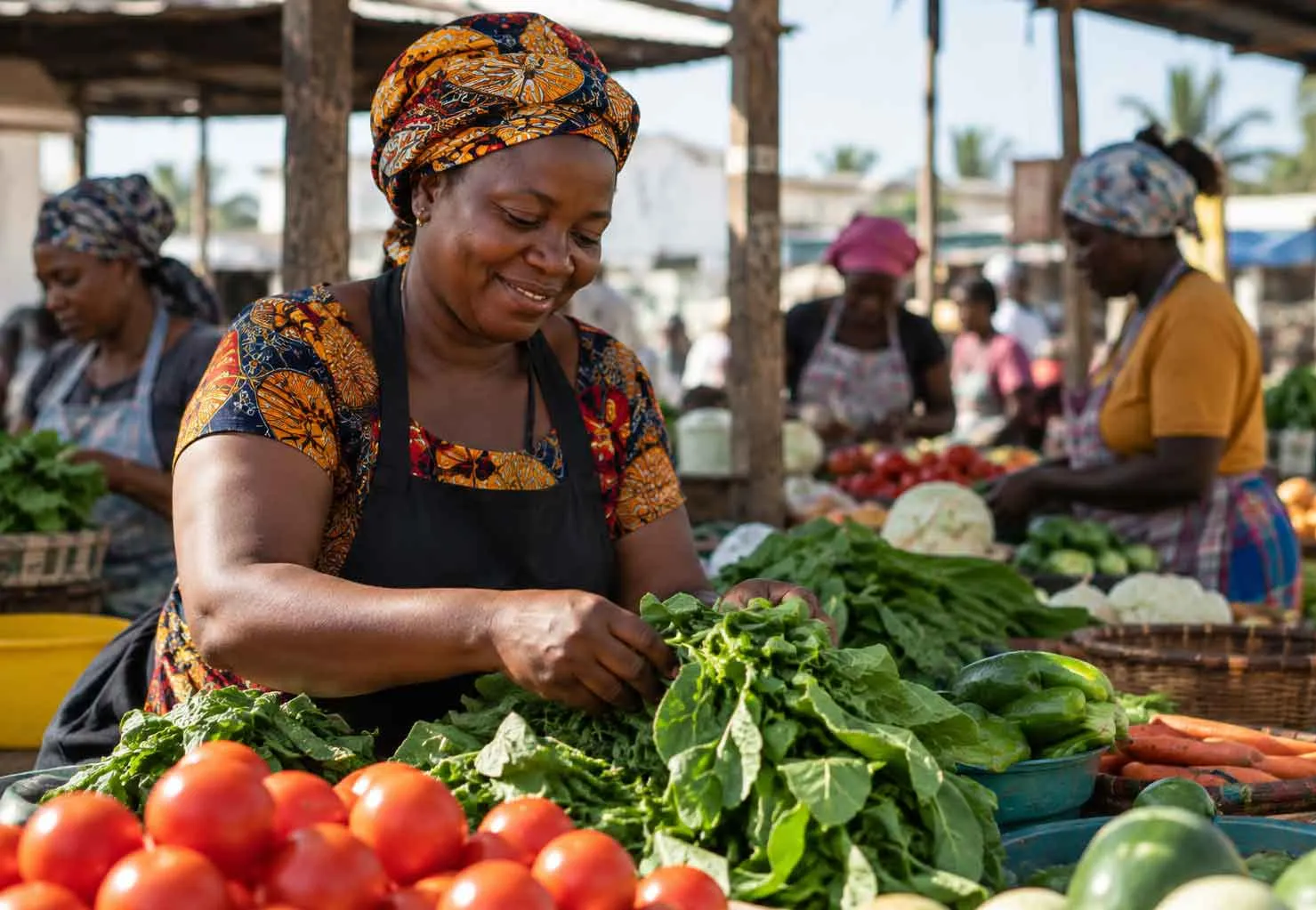
Access to finance, one of the main barriers faced by many women seeking to start or expand small businesses in Mozambique, will be at the heart of a new public mechanism. The Government is preparing to implement the Fund for the Economic Empowerment of Women (PRO-MULHER), designed to finance women's business initiatives and stimulate income generation, production and employment.
Created through Council of Ministers Resolution No. 71/2026, PRO-MULHER will grant repayable loans with subsidised interest to micro and small women-led businesses, at district and municipal level. The initiative forms part of the government's strategy to promote inclusive economic growth and the economic empowerment of Mozambican women.
The distribution of resources will follow four criteria: female population, territorial size, poverty index and repayment capacity. This last variable, however, will only begin to be considered from the fund's second year of operation.
The formula aims to channel financing to territories where economic needs are most acute, preventing resources from being concentrated exclusively in the areas with the greatest business dynamism.
The regulation stipulates that the money must be used in economically viable projects, capable of generating income, increasing production and creating jobs. In this way, support for female entrepreneurship is linked not only to the creation of businesses, but also to the broader goals of reducing poverty and promoting inclusive economic development.
Access to PRO-MULHER may be individual or through collective structures. Associations, cooperatives, women's groups and women-led micro and small enterprises are among the potential beneficiaries.
The model also provides for the formation of solidarity groups made up of three to seven women. Preference will be given to participants who live close to one another, share an economic affinity or have some associative or residential link, creating a collective structure around access to financing and its repayment.
The decree does not, however, reveal how much money will be made available to launch PRO-MULHER. It nevertheless defines a broad universe of potential beneficiaries: women who already own small businesses, low-income entrepreneurs involved in micro-enterprises, members of women's cooperatives and associations, and informal-sector workers interested in expanding or formalising their activities.
Women who do not yet have a business but wish to start a new one will also be able to turn to the fund.
The investment possibilities extend across different sectors of the economy. According to information released by Lusa, activities eligible will include those linked to food production and sales, catering, pastry-making, baking, retail trade, agriculture and horticulture.
The production of cereals and pulses, agro-processing and the transformation of agricultural products are also among the activities that may benefit from the financing.
The creation of PRO-MULHER thus places access to credit at the centre of the policy to stimulate female entrepreneurship in Mozambique, where a significant share of small-scale economic activity remains associated with the informal sector.
By opting for loans with subsidised interest, the Government seeks to reduce one of the barriers that make it difficult for women to access finance. At the same time, the introduction of criteria relating to poverty, female population and territorial size aims to distribute resources more broadly across the country.
With no initial amount announced, the financial scale of the programme remains unknown. The design set out by the Council of Ministers does, however, establish the ambition of the new mechanism: to turn small women-led businesses into sustainable sources of income, employment and economic inclusion.


