
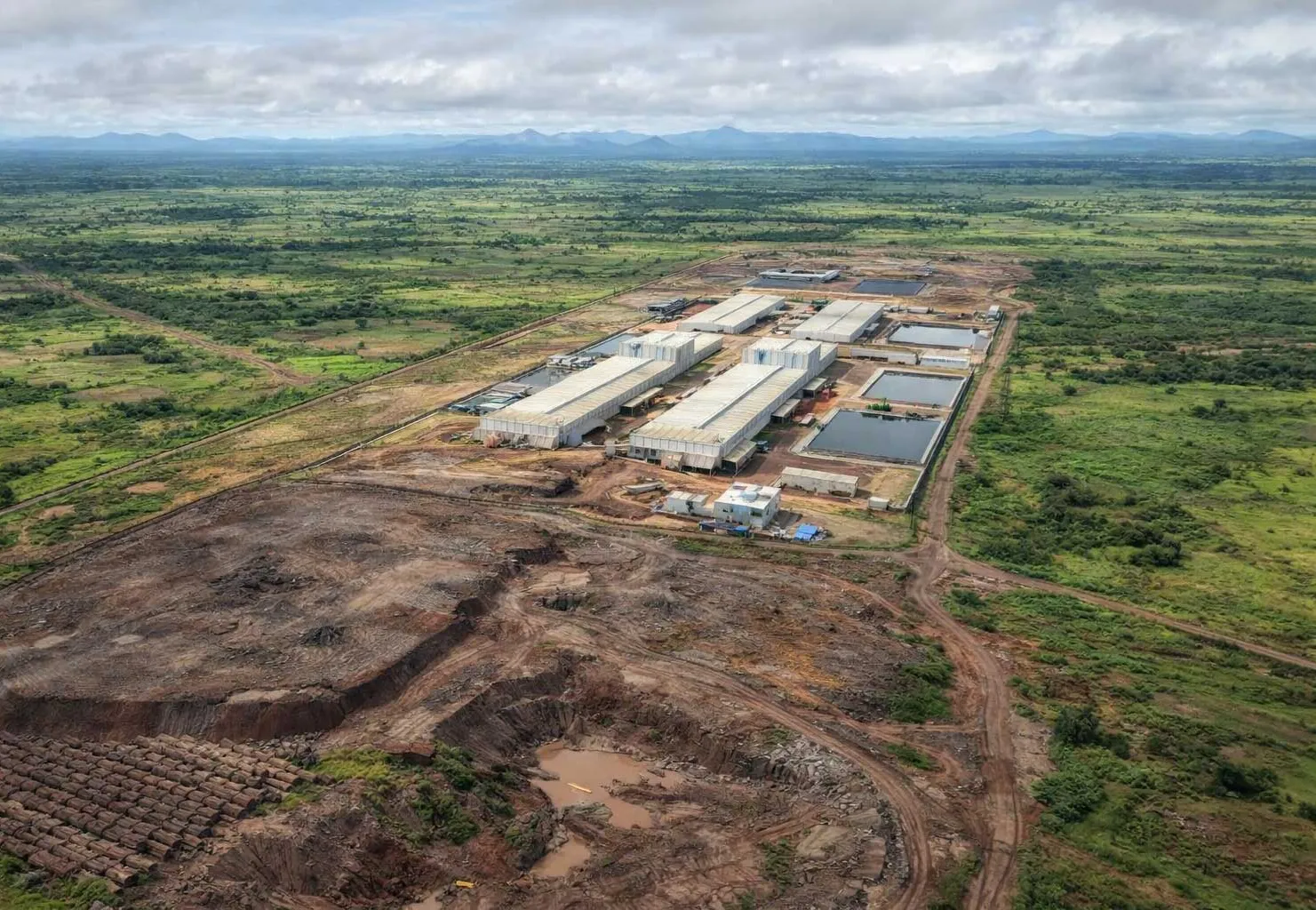
The Mozambican Government this week inaugurated the country's first graphite processing plant, located in the district of Nipepe, Niassa province. Valued at about 200 million US dollars, the DH Grafite factory puts Mozambique on the global map as a producer and processor of value-added graphite.
During the inauguration ceremony, the President of the Republic, Daniel Chapo, highlighted that this is “one of the best and largest graphite factories in the world”. The Head of State stressed that the undertaking reflects “a vision geared towards transforming natural resources into economic, social, environmental and human development”.
The project, an initiative of the company DH Grafite in partnership with Chinese investors, forms part of a new paradigm of industrialisation that seeks to reduce dependence on exporting raw materials. “It is a true act of national affirmation and of Mozambique's economic sovereignty”, Chapo declared.
The industrial facility was built in the village of Muichi and covers all stages of the graphite value chain: prospecting, extraction, processing and marketing. Its proximity to the ore deposits helps to reduce logistics costs, making the product more competitive in both national and international markets.
The factory comes into operation at a time when the south of the country is facing floods and inundations, a phenomenon that, according to the President, “does not compromise the development agenda”. On the same occasion, Chapo announced the reopening of traffic on National Road Number 1, on the 3 de Fevereiro–Incoloane stretch, recently cut off owing to overflowing water.
The investment also includes infrastructure with regional impact: the bridge over the Lúrio River, a road of about 110 kilometres linking Nipepe to Nampula province, and a power line of approximately 100 kilometres, strengthening mobility, access to energy and the economic integration of the territory.
On the social front, the factory currently employs about a thousand permanent workers and more than 200 temporary ones. The project was accompanied by a resettlement process that included the construction of 125 homes, a school, a hospital, a police station and a new, modern residential area — ensuring that industrial development has a direct bearing on the well-being of local communities.
Closing the ceremony, the President of the Republic called for greater involvement of the private sector, national and foreign, in Mozambique's industrialisation, and officially declared the Nipepe Graphite Processing Plant open.


