
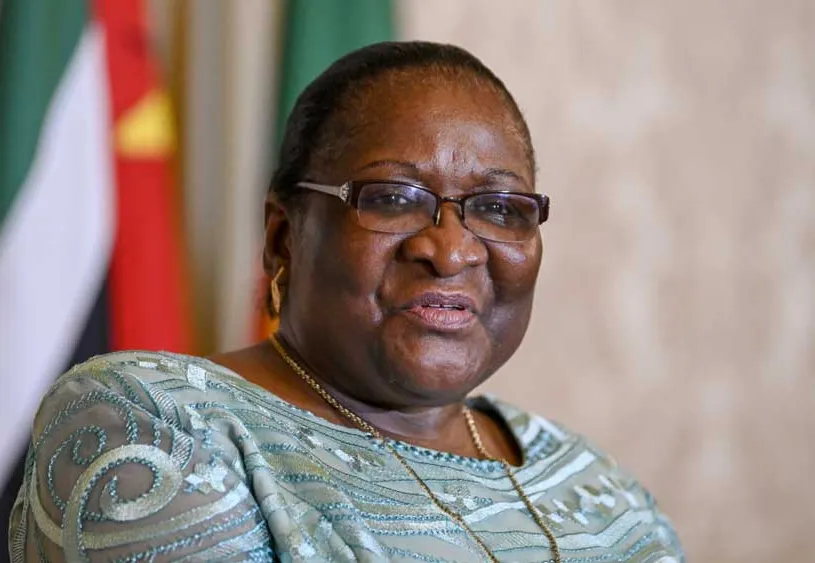
Verónica Macamo, Mozambique's Minister of Foreign Affairs and Cooperation, highlighted the country's promising journey of disarmament, in line with the continental goal of silencing the guns in Africa by 2030. She reiterated the vital need for sincere dialogue and political will on the part of leaders, supported by a joint effort from society to achieve peace and national reconciliation, highlighting Mozambique's trajectory as a valuable model on this front.
At the opening session of the "Africa Amnesty Month", promoted by the African Union, Macamo stressed the crucial opportunity this initiative represents for promoting disarmament on the continent. This year, the event is taking place in Maputo, where participants are analysing and discussing the lessons learned from Mozambique's experience in implementing this initiative, launched in 2017.
Last June, Mozambique concluded the Disarmament, Demobilisation and Reintegration (DDR) process for the Mozambican National Resistance (Renamo), the main opposition party. This operation, which began in 2018, covered 5,221 former Renamo guerrillas, including 257 women. The phase was marked by the closure of the Vunduzi base, Renamo's last stronghold, located in the district of Gorongosa, in the central province of Sofala.
In her address, the minister reflected on the added responsibility that comes with the progress achieved so far, stressing the need to keep working for the country and for the continent as a whole. She also highlighted the importance of learning from the experiences of other nations to improve Mozambique's efforts in this direction.
Macamo acknowledged that the completion of the DDR is a significant milestone in the collective efforts towards lasting peace, stability and reconciliation among Mozambicans. However, she stressed that the government remains focused on collecting all categories of weapons, considering that their misuse could pose a potential threat to peace and security in the country. The minister praised the vital role played by civil society, faith groups and local leaders in the process of voluntary weapons surrender.
The Minister of Foreign Affairs highlighted the growing spread of illicit weapons as a factor that fuels the persistence of armed conflict and violence not only in Africa, but throughout the world, with serious humanitarian repercussions and undermining the achievement of the goals set out in the initiative to silence the guns in Africa by 2030.
Macamo also stressed the honour it represents for Mozambique to host the ceremony organised by the African Union Peace and Security Council, an occasion that serves to deepen reflection on the country's contribution to the continental vision of a peaceful African future for present and coming generations.
In Mozambique's recent history, there have been significant periods of armed conflict, including a 16-year war and politico-military tensions that ended recently. The process of eliminating illicit weapons began in 1992, with the signing of the General Peace Agreement between the government and Renamo, under the supervision of the United Nations Mission in the country.
Mozambique, a non-permanent member of the United Nations Security Council, reiterates its commitment to continue collaborating with the African Union's efforts to achieve the goal of silencing the guns in Africa by 2030.


