
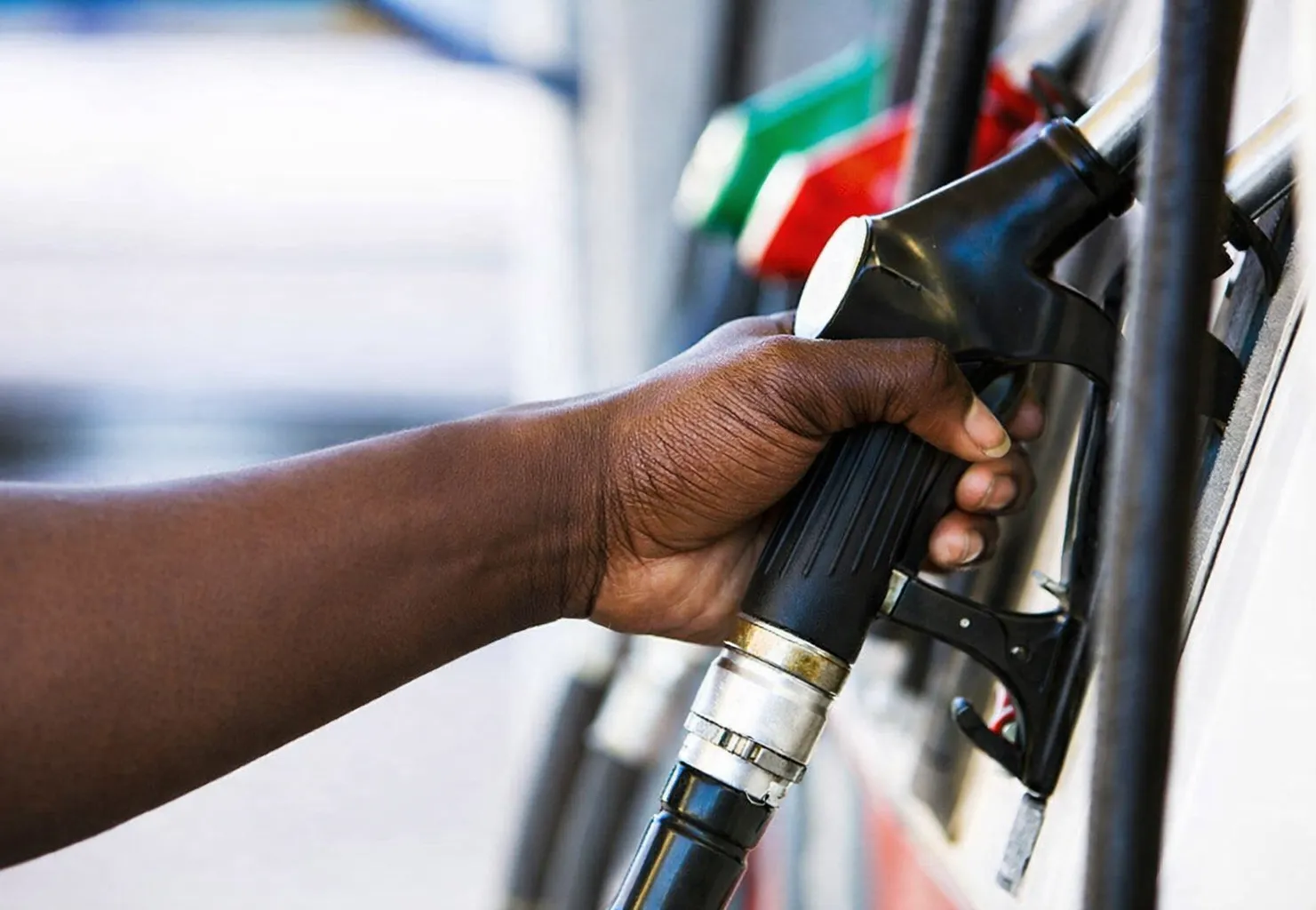
Mozambique currently has fuel reserves sufficient to ensure the regular functioning of the national economy until early May, at a time when the worsening conflict in the Middle East is rekindling fears of disruption to the world's energy supply.
The assurance was given in Maputo by the Secretary of State for the Treasury and Budget, Amílcar Tivane, at the end of a Council of Ministers meeting devoted to analysing the possible economic impacts of the geopolitical instability affecting that region.
According to the official, the country holds about 75,000 tonnes of liquid fuels, a quantity considered sufficient to guarantee supply to the domestic market over the coming months.
Amílcar Tivane explained that the import process is carried out well in advance and involves close coordination between importers' associations and distribution companies. This management model has made it possible to maintain stock levels considered adequate to meet national consumption needs.
Dependence on the Strait of Hormuz worries government
Despite the relative stability in the short term, the Executive acknowledges that the evolution of the conflict in the Middle East may come to affect the country's energy supply.
According to the official, about 80% of Mozambique's fuel imports pass through routes linked to the Strait of Hormuz, one of the most strategic maritime corridors in the world oil trade.
Any interruption on that route could compromise the flow of petroleum products from the Middle East, a region that continues to play a central role in supplying energy to several African countries.
In this scenario, the Government says it is closely following the evolution of the international situation, while at the same time examining possible logistical alternatives to ensure supply should the crisis intensify.
Prices expected to remain stable until April
On the domestic front, the authorities indicate that fuel prices should remain stable until the end of April.
According to Amílcar Tivane, the fuel currently available in the country was imported before the recent escalation of the conflict, which makes it possible to preserve the prices currently charged on the market.
At present, petrol sells for about 85 meticais per litre, while diesel is around 80 meticais per litre.
Even so, the Government admits that a prolonged rise in international oil prices could feed through to the domestic market.
Economic scenarios depend on the evolution of oil
The Mozambican Executive is also working with different economic scenarios, taking into account the possible evolution of the oil price on international markets.
In a moderate scenario, in which a barrel exceeds 120 dollars, the impacts are expected to be felt mainly in the cost structure of micro, small and medium-sized enterprises, especially in sectors heavily dependent on transport and energy.
In a more severe scenario, with a barrel approaching 140 dollars, the official acknowledged that the Mozambican economy could face a more adverse situation, and could even record negative economic growth.
In this context, the Government considers that the intensity and duration of the conflict in the Middle East will be decisive factors in determining the scale of the economic effects.
Government considers stabilisation fund
Faced with international uncertainty, the Executive is studying mechanisms to cushion any shocks to the domestic market.
Among the measures under consideration is the possible activation of a stabilisation fund, an instrument intended to offset any loss of profitability for distribution companies and to avoid sharp rises in fuel prices.
According to the Government, this mechanism could play a significant role in protecting particularly sensitive sectors of the economy, such as transport, trade and industrial production.
Even so, the authorities stress that all projections remain contingent on developments in the geopolitical situation in the Middle East, whose impact on global energy markets continues to be closely monitored by the Executive.


