
KINANI
People no longer dance as they used to. KINANI, a festival that goes beyond dance
Written by: Jaime Álvaro
The KINANI Festival (a word from the Ronga language meaning ‘dance!’ in English) is not only about dance; it goes far beyond a combination of rhythmic body movements. KINANI is an international platform for research and training of professionals from the various fields that make up a performance. KINANI is experimentation and exchange. KINANI is the very spirit of Mozambican contemporary dance.
This International Contemporary Dance Platform contributes to the development of choreographers and dancers, giving visibility to their work and opening doors to its internationalisation. Created in 2005 with the aim of broadening the contemporary dance scene in Maputo, the performing arts showcase it offers us every two years has consolidated itself and is today a reference in Africa and in the world. It is our product, it is homegrown, and Xonguila magazine values everything that is made in Mozambique, by and for Mozambicans, and everything that raises the country’s name beyond its borders. In that spirit, we spoke to KINANI’s creative director, Quito Tembe, co-founder of the platform, who shared his experience of organising an edition of the Festival in the midst of the covid-19 pandemic, whose impacts were felt directly in the performing arts and in the lives of those who make them, in particular.
KINANI IX: The "reunion"
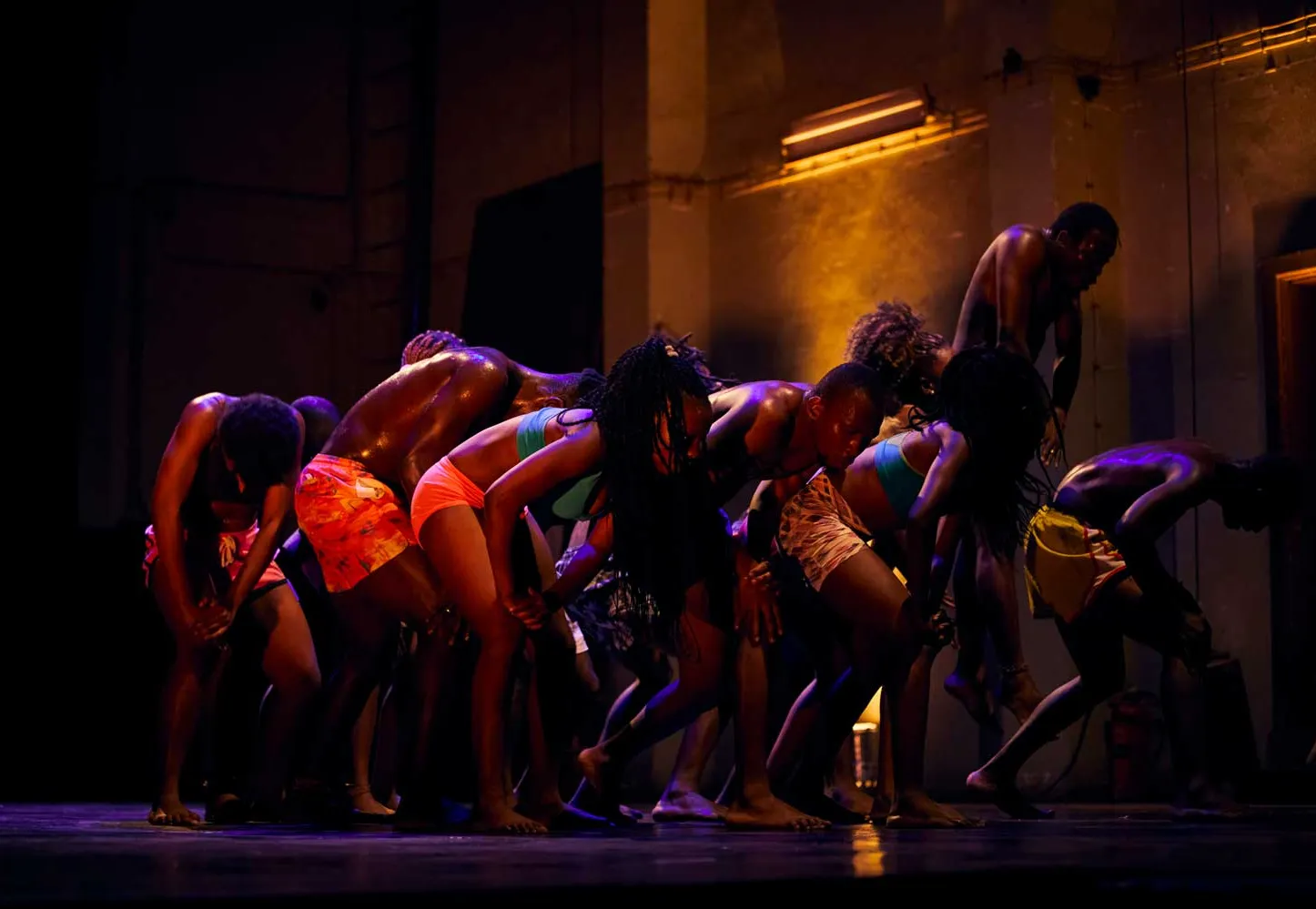
The 2021 edition of KINANI – Maputo International Contemporary Dance Platform took place from 23 to 28 November, bringing together more than 100 professionals from all over the world, including directors of major theatre and dance companies, dancers and international creatives. The organisers delivered 20 performances, all presented with an audience present. Some were in public squares without a stage, but always with eyes attentive to the magical moments that have characterised KINANI.
"Our aim was to respond to the need for artists to leave their homes to present their work to the public, and in person, after a long period of confinement," explained the director of KINANI and also curator of the ninth edition, Quito Tembe. "We organised KINANI 9 in the midst of uncertainty. Both we (the organisers) and the audience did not know what to expect, and that had never happened to me as a curator. Even so, it was a really good surprise how all of us welcomed the show." "Reunion" is what this edition of the KINANI Festival was named. A reunion of the artist with the stage and with their audience; of the audience with the artist; and of lovers of the performing arts. "It was very beautiful to see the emotion of the artist on stage, and the emotion of the audience watching the show. So this edition was one of the most special, simply because we managed to hold it, confronting all the setbacks imposed by the covid-19 pandemic. We have never felt an energy as vibrant as that of this edition," he revealed, trying to convey the feeling by describing it as best he could.
"At the beginning, in the first editions, we had an average of three to four professionals (theatre and dance company directors) from South Africa, but today we have a range of 100 professionals, from all over the world. Having the scale and importance that this platform has come to acquire internationally is a source of great satisfaction and pride for us," was how Quito Tembe summed up the Festival’s evolution over its history.
The gateway to the world
According to its mentor, the main aim of the KINANI Festival is the professionalisation of young choreographers and dancers, and likewise their internationalisation. "Without wishing to be pretentious, KINANI is the main gateway to internationalisation. Many agreements are concluded and many tours are created from the Festival, many tours around the world. A large part of the Mozambican choreographers who are out in the world were discovered, or signed agreements, or were promoted, through this event," he stressed. Quito laments the fact that KINANI is the only place par excellence for promoting national contemporary dance. The enthusiastic lover of the performing arts, modern dance in particular, argues that "more platforms must be created for the development of the performing arts in the country. In a single week, directors of theatre and dance companies from all over the world come to Mozambique looking for projects, choreographers or dancers. And the only place where they can be found is at KINANI," he said.
And if KINANI did not exist...?
Quito Tembe has no doubt that without KINANI, national contemporary dance would not be at the place and level where it is today. "What other place could help and contribute to this question of the professionalisation of the arts?
A place from which our professionals could promote their work, sell their work; where else would our artists do so?" asks Quito, before demystifying the true spirit of KINANI. "So KINANI, in a way, comes to complement what we might call a possible cultural industry in the country. And because an industry without a market is not an industry, the Festival, in a way, also contributes to creating the market; this fact cannot be ignored," he said, before describing the process of building the Festival’s audience.
"The greatest difficulty we faced in conceiving KINANI was building an audience, which was my great dream, my 'hobby horse'. The whole initial phase of this festival was geared towards that," he revealed. "We felt that the Mozambican public was still unfamiliar with contemporary dance, in the sense of thinking dance, creating dance, dance that puts thought and creativity above movement. This was still somewhat unknown,'' he considered. For that reason, in its initial phase, the Festival devoted itself entirely to building an audience, according to Quito. The process consisted of agreements with secondary schools, which lent their halls to choreographers taking part in Kinani for rehearsals. In return, KINANI let the student community watch the rehearsals and held seminars with the students on contemporary dance. "The school pupils asked simple questions like: What is this contemporary dance? Why these strange, slightly uncoordinated movements? What is this thing that looks like madness?" he recounted.
Quito says he solved more than one problem in one fell swoop. "It was very interesting, because it helped not only in building the audience, but also in making the choreographers themselves fearless in front of an audience, in conversation with those students, which trained them to speak in public, which trained them to debate their own art. That helped us a great deal," he said happily.
In 2023, the KINANI Festival celebrates 20 years on the road. Until then, the hope is that the covid-19 pandemic will be a thing of the past, and that dance will carry on being dance, naturally, even if it is possible to bring the movement of the body to people by means of technology, because it is physical contact that makes us human.
Kinani (dance!) always.


