
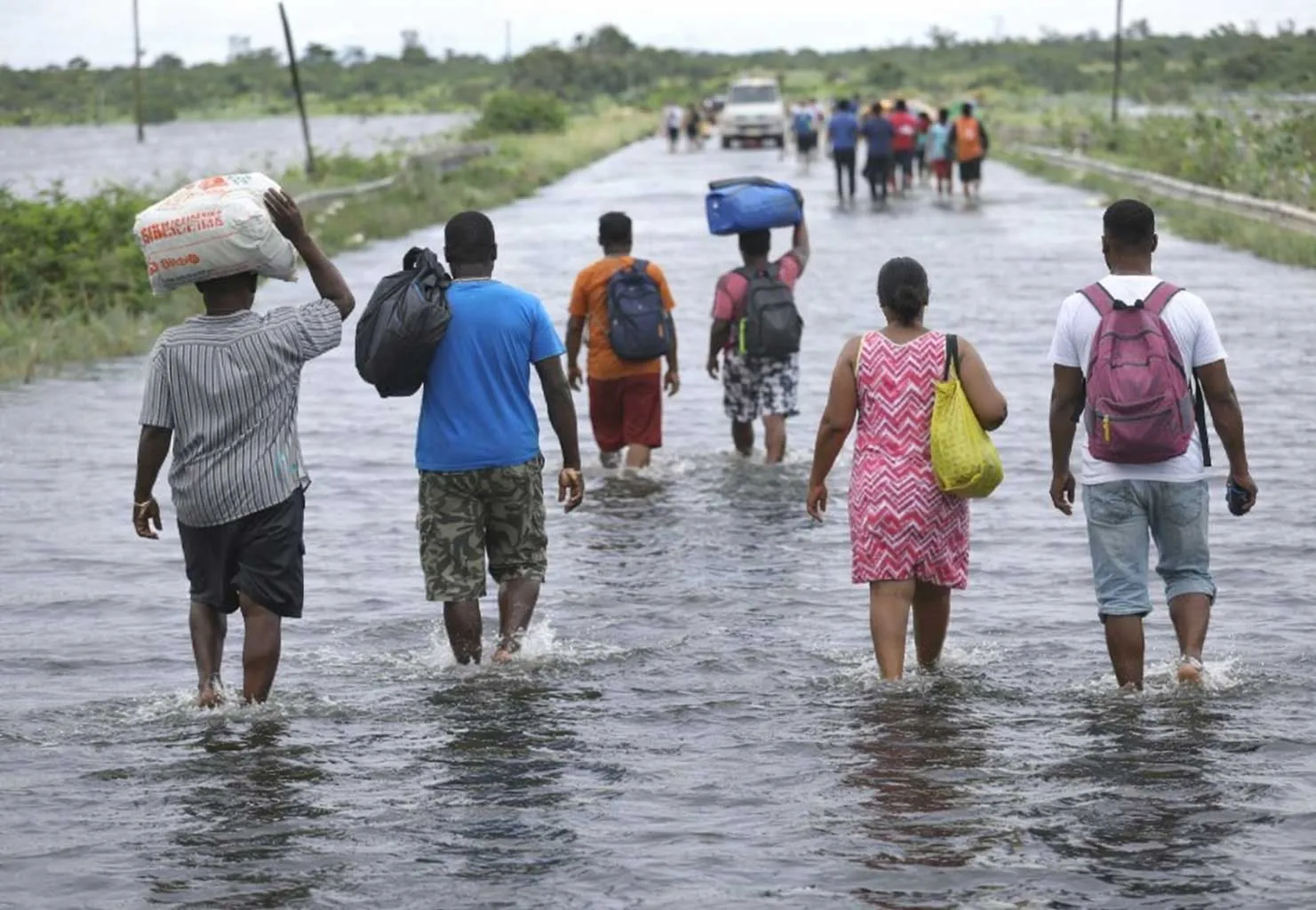
In a gesture of solidarity prompted by bilateral ties and evident humanitarian concern, Japan announced on Thursday the immediate dispatch of emergency aid to Mozambique. The action comes in response to the devastating floods that, in less than three weeks, have already affected more than 650,000 people in various regions of the country.
According to a statement from Japan's Ministry of Foreign Affairs, the assistance responds directly to a formal request from the Mozambican Government. Through the Japan International Cooperation Agency (JICA), essential supplies will be provided, including tents, blankets, plastic tanks, water purifiers and tarpaulins.
“Taking into account the humanitarian perspective and the close relations between Japan and Mozambique, Japan has decided to provide emergency assistance to the Republic of Mozambique to support the people affected by the heavy rains”, the official statement reads.
The scale of the crisis is dramatic: according to updated figures from the National Institute for Disaster Management and Risk Reduction (INGD), the floods have already affected 652,189 people, equivalent to more than 141,000 families. A total of 3,445 homes were recorded as partially destroyed, 767 as completely flattened and 153,417 as flooded.
The impact has also spread to the health and education sectors, with 229 health facilities and 364 schools damaged, in addition to three bridges and 1,336 kilometres of road affected. The scale of the disaster led to the activation of 99 accommodation centres, housing almost 100,000 people, among them more than 19,000 who were rescued from risk areas.
The total figures since the start of the rainy season in October are even more alarming: 131 deaths, 144 injured and 779,528 people affected. The Government declared a national red alert on 16 January, when deaths stood at 103 and the number affected totalled 173,000.
Agriculture has also suffered a harsh blow, with 285,720 hectares of productive land submerged and 325,578 head of livestock lost. It is estimated that 214,046 farmers are in a critical situation owing to the loss of their livelihoods.
On the ground, rescue operations continue today. Hundreds of families remain besieged, some on rooftops, especially in the provinces of Maputo and Gaza, in the south of the country. The situation has worsened with forced releases from dams, both in Mozambique and in neighbouring countries, owing to the inability of the hydraulic infrastructure to hold the water.
More than a dozen aircraft, including South African helicopters, as well as private vessels and Navy boats, have been mobilised for the rescue operations.
Communication routes are severely compromised: National Road 1, which links the north and south of the country, and National Road 2, which gives access to Gaza, remain impassable, cut off by the fury of the waters.


