
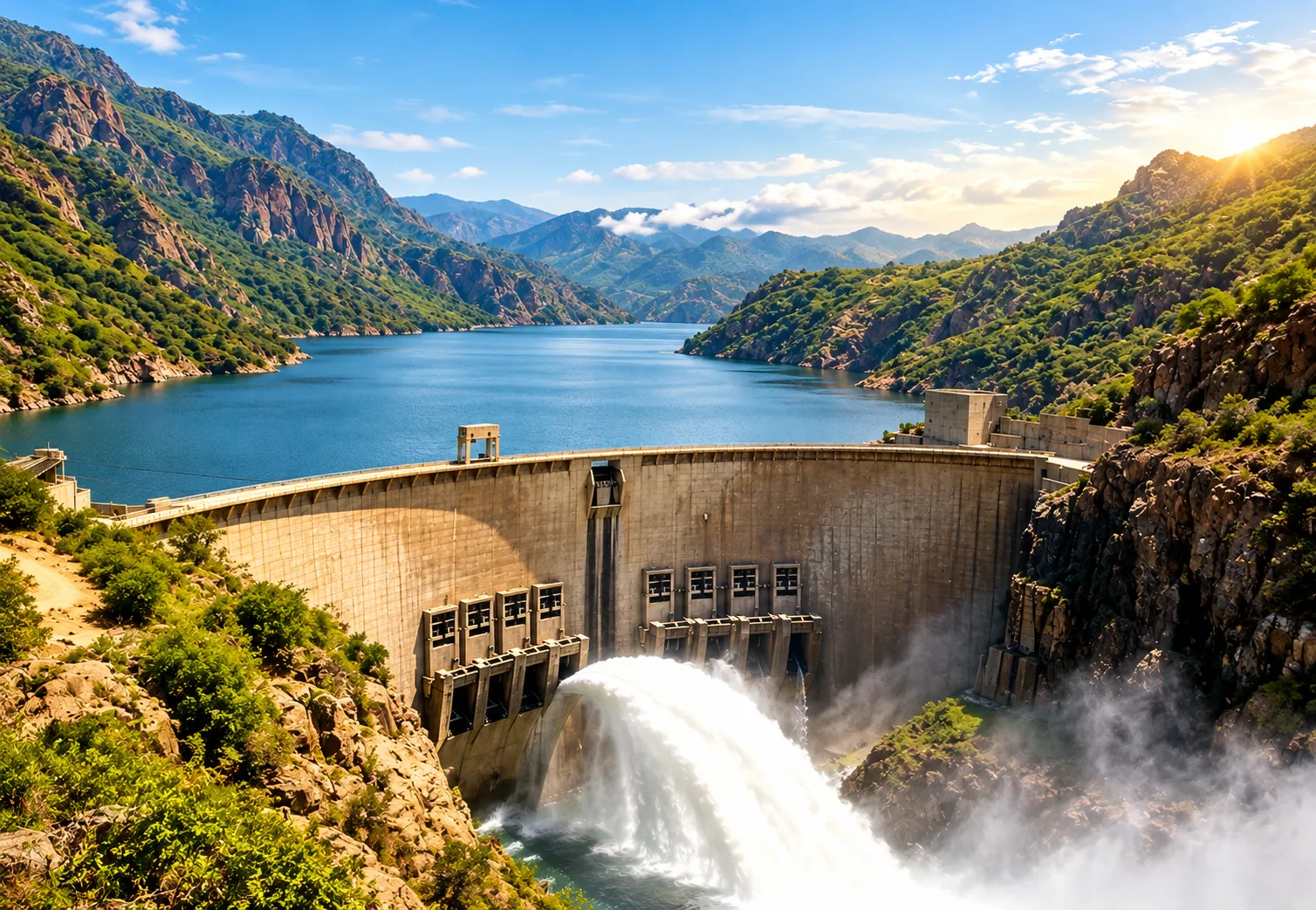
After two years marked by severe drought, Hidroeléctrica de Cahora Bassa (HCB) reached the end of the first half of 2026 with two indicators moving in the same direction: it produced more electricity and, at the same time, recovered the water reserves in its reservoir. The combination strengthens the plant's operating margin and its capacity to supply the markets of Mozambique and Southern Africa.
At first sight, it is production that stands out. Between January and June, HCB generated 6,399.03 gigawatt-hours (GWh) of energy, a 13% increase on the same period in 2025 and a performance around 10% above the target set for the half-year.
But the figure that helps to better understand the company's current moment lies in the reservoir itself.
While the turbines were producing above forecast, usable storage recovered from around 20% in January to 56% at the end of June. In other words, HCB managed to increase electricity generation without eating into the recovery of its water reserves. On the contrary: the water available for production also increased.
In practice, both production and the resource that sustains that production grew simultaneously. After a period of strong hydrological pressure, this combination represents a significant change for the plant's operation. According to the company, the performance reflects a balanced management between exploiting the water resource and conserving it, in a region affected in recent years by one of the most severe droughts in its recent history.
Water that can become electricity
Usable storage is one of the central indicators for assessing the operational capacity of a hydroelectric dam. It corresponds to the portion of water actually available to pass through the turbines and be converted into electricity. It is thus distinguished from so-called dead storage, which is made up of the water lying below the level at which it can be drawn off for generation.
The rise from around 20% to 56% means a recovery of 36 percentage points over the half-year. Helped by improved hydrological conditions in the Zambezi basin, inflows into the reservoir made it possible to rebuild reserves even in a period when electricity production increased.
The recovery of reserves gives HCB greater room to get through the dry season, reduce limits on production and respond to demand for electricity in Mozambique and in export markets.
It is precisely this margin that gains importance in the coming months. A fuller reservoir reduces the pressure on the management of available water and improves the plant's capacity to respond to variations in demand, both in the domestic market and in the external destinations for the energy produced at Cahora Bassa.
The operating performance was also reflected in the accounts. Figures still subject to audit point to revenues of approximately 263 million dollars and a net profit of more than 115 million dollars in the first half.
Shares hit a high of three meticais
The company's progress was also reflected in the capital market. During the half-year, HCB shares reached a peak price of three meticais on the Mozambique Stock Exchange (BVM).
In the same period, 27,538,315 of the company's shares were traded, corresponding to a financial volume of around 80.5 million meticais.
Despite the relatively low levels of liquidity that characterise the Mozambican stock market, HCB remains among the BVM's leading companies. Beyond the half-year results, the company has a track record of generating profits and distributing dividends that forms part of the context for trading in its shares.
A strategic supplier for the region
The importance of Cahora Bassa's water recovery does not end at Mozambique's borders.
With an installed capacity of 2,075 megawatts (MW), HCB is one of the major electricity producers in Southern Africa and supplies three main markets: Mozambique, South Africa and Zimbabwe. The company also makes occasional sales through the Southern African Power Pool (SAPP), the regional market that allows electricity transactions between countries of the Southern African Development Community (SADC).
In firm-power contracts, South Africa remains the main destination, absorbing around 66% of contracted capacity. Mozambique accounts for approximately 30% and Zimbabwe the remaining 4%.
Together, these contracts correspond to a firm power of around 1,450 MW. Supply is ensured through the continuous operation of four of the plant's five generating units, while the fifth remains in reserve, contributing to the reliability of operations.
That is why the rise in storage level has a dimension that goes beyond the company's half-year performance. Every point recovered in the reservoir widens the margin for managing a resource on which depend not only the plant's output but also a share of regional electricity supply.
After two years of severe drought, the figures for the first six months of 2026 show, above all, the recovery of the asset that lies at the origin of HCB's entire value chain: water.
With 56% usable storage at the end of June and production 13% higher than in the same period of 2025, Cahora Bassa entered the second half of the year with more robust reserves. How hydrological conditions evolve will determine to what extent this margin can be preserved, but the first half left a clear change in the operating picture: while producing more electricity, the dam also resumed accumulating the water needed to keep producing it.


