
Gwaza Muthine
The great celebration of the Battle of Marracuene
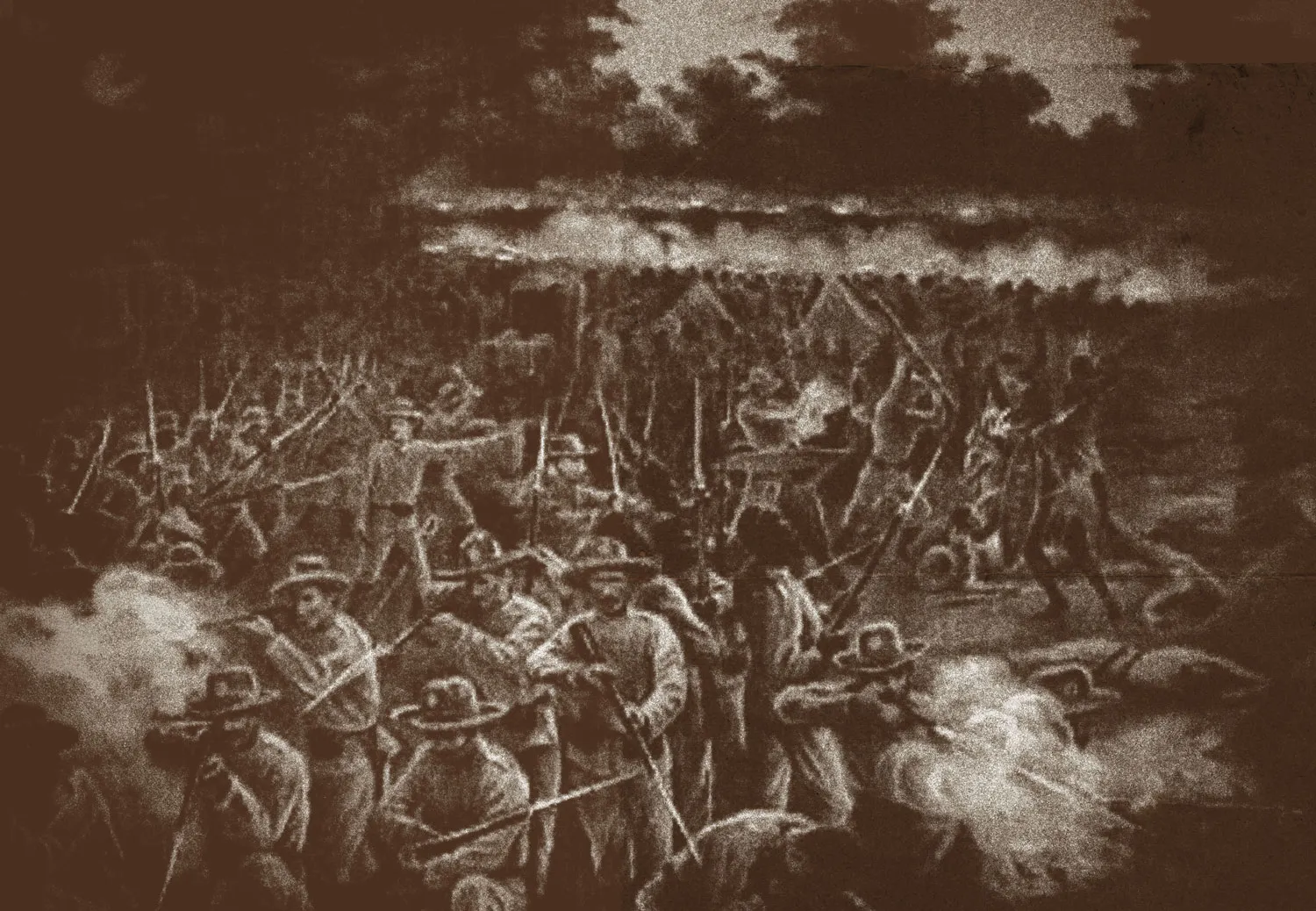
The Battle of Marracuene was a combat that took place on 2 February 1895, on the banks of the Nkomati River, between Ronga forces and the Portuguese army, which comprised 37 officers and 800 soldiers, commanded by Major Alfredo Augusto Caldas Xavier. Owing to the latter's superiority, afforded by the possession of firearms, the local forces, said to have numbered three or four thousand warriors, led by Nwamatibyana, Zihlahla, Mahazule and Mulungu and armed with spears and arrows, in defence of their lands in the Gaza Empire, lost the contest.
The battle became known as “Gwaza Muthine”, an expression in the Ronga language that can be translated as “place of piercing with the spear”. Countless African warriors fell on their own territory, but the defeat has little significance for Mozambique in general, and for the natives of Marracuene in particular, who make a point of extolling the heroic spirit of their ancestors. Every year, the battle is traditionally and officially celebrated in a festive atmosphere, since what is remembered is the warriors' capacity for organisation and their spirit of resistance, which in a way served as an incentive for the struggle for national independence.
Every year the battle is traditionally and officially celebrated in a festive atmosphere, since what is remembered is the organisational capacity and the spirit of resistance of the warriors who defended their lands in Marracuene
The festivities include the customary “kuphahla” (invocation of the spirits of the ancestors), drinking canhu, a traditional drink made from a wild fruit that abounds in the region, typical dances, among them the Xigubo warrior dance, and eating hippopotamus meat, a symbol of abundance and prosperity, hunted in the Nkomati River. As the hippopotamus population has fallen considerably, goats are often used in its place.
In recent times, this celebration, which takes place on the eve of Mozambican Heroes' Day, a national holiday, has been associated with the great “Marrabenta Festival”, held in Maputo and Marracuene.
This year the one hundred and twenty-sixth anniversary of the battle was celebrated in an atypical way, without an audience, in perfect contrast to the great crowd that usually flocks to the site. The hippopotamus was, however, guaranteed, and the meat was distributed among some chiefdoms.


