
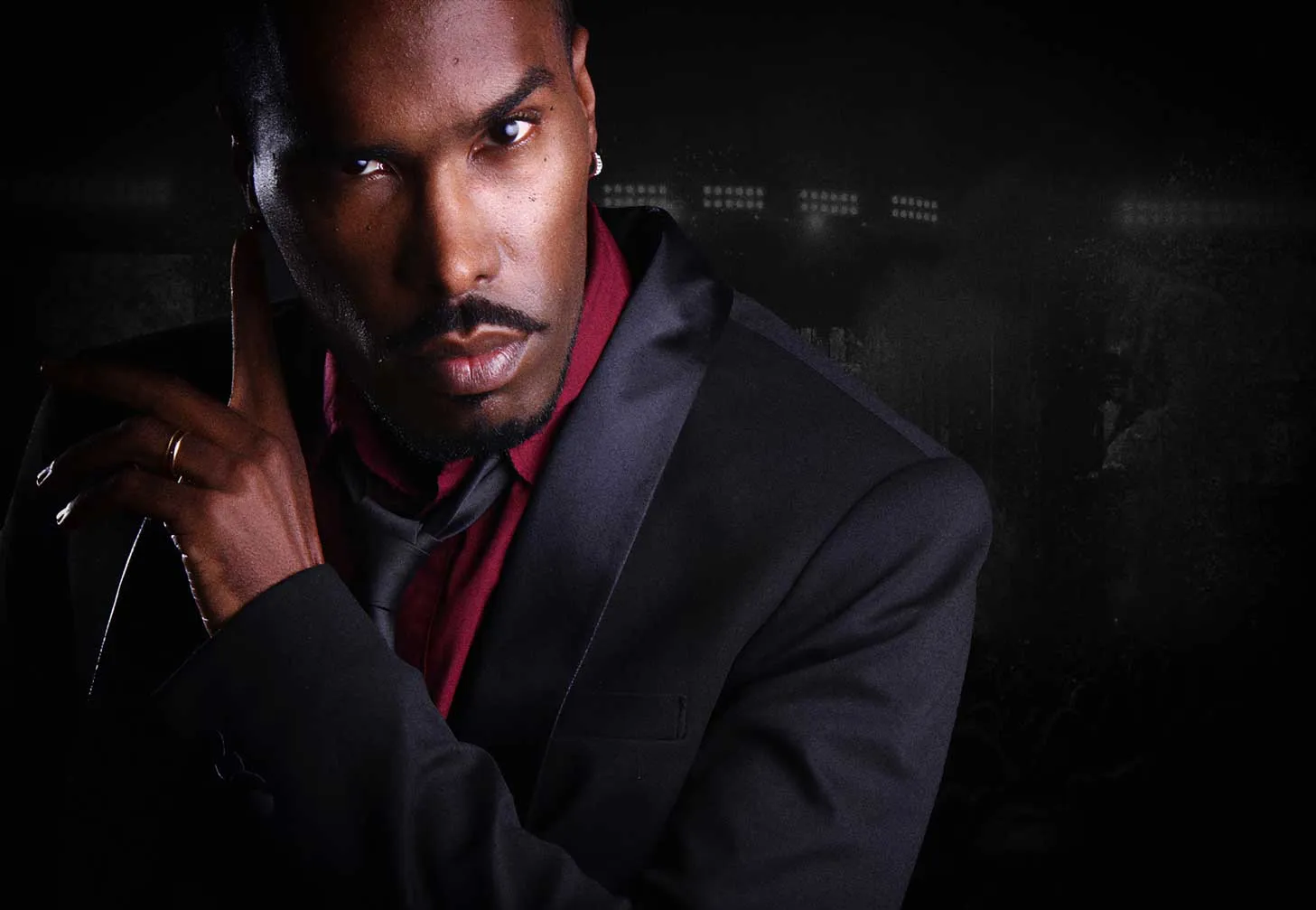
There are voices that cross generations and borders without fanfare. Gutto is one of them. He grew up on the south bank of the Tagus in Lisbon, but his voice found an echo throughout the Lusophone world — and in Mozambique, especially, it has never stopped being heard. With Black Company, he helped build Portuguese-language hip-hop, giving names to pain and strength to identities. Later, with Private Show, he cleared new ground in R&B sung in Portuguese, with the same commitment as someone who understands art as an act of healing. Today, far from the stage and closer to the land, Gutto lives between music, reflection and chosen silence. But he remains attentive, present, active — as a trainer, as a father, as a citizen.
In this intimate conversation with Xonguila, we look back over the milestones of a pioneering career, revisit old struggles and listen to what remains unsaid. We talk about belonging, identity, his relationship with Mozambique, encounters that never happened — such as with Azagaia, whom he admires — and the freedom of sometimes choosing to stay silent.
Gutto, when you think of the boy who grew up on the south bank and dreamed of music, what surprises you most about the journey you have made to get here?
What surprised me most was how quickly everything passes and how, sometimes, what isn't planned is what works out best for us. In truth, the best thing I ever did was always to listen to my instinct and make choices based on what was best for me at the time.
For years you sang against prejudice and for the dignity of Black people in Portugal. Do you think the country has really changed since then?
The country has changed, of course it has. It is impossible for a country not to change in some way. The question is whether it has changed for the better or for the worse. In truth, issues of prejudice and dignity are human and are not confined to one country or one border. There will always be a battle between ways of seeing, ways of living, ways of understanding others, and I think it depends on the generations. Our hope is that the actions that follow will be better than the previous ones, but that is not always the case. As the saying goes, history repeats itself.
Black Company was a collective cry. When you look back at those early days, do you remember moments that marked you with joy or pain, and were you aware, back then, of the impact you were having on the Lusophone world, especially in the PALOP countries? In Mozambique, for example, you were an enormous reference.
We had no idea what our impact would be or how important what we were doing was. In truth, our intention was not to give a collective cry, but simply to find our essence, to find our roots, to find a sense of belonging that, at the time, we did not have. We were confused, torn between our Africanness and our Portugueseness, and hip-hop was like the remedy, the instrument that allowed us to find other people in the same situation and to find meaning in what we were searching for. The truth is that we were simply trying to be happy and, fortunately, other people also found happiness in what we did.
To what extent was your move into R&B liberating, and in what ways was it lonely or challenging?
Anyone who followed me in Black Company could see that I already had a tendency to sing melodies and was already trying to put R&B into everything I did. My musicality always went far beyond being an MC or a rapper — I am a producer, I write, I am a rapper — and, at that time, as soon as I gained confidence in my voice and in my ability, I also began to sing. It was only a surprise to those who didn't know me. It was liberating, yes, because it allowed me to explore all of my musicality and not be stuck in a box, limited to one genre.
The song “Ser Negro” marked a generation. Today, with so many debates about representation, would you write it the same way again?
I believe that work is closed, and, if I had to write it at this point, I would write the same thing. What might happen, probably, is that I would do a part 2. “Ser Negro” makes sense in that moment, at that time and at that stage of my life.
You said that moving to live in the countryside was one of the best decisions of your life. What lessons have you taken from the land, from the silence, from the distance, and what do you have there today that you feel you could never have had living in the city?
Without a doubt. It is a calmer life, more focused on what really matters, with a greater connection to people and to the land, and, above all, simpler. It allows you to remember what is truly most important and what makes us more human. I haven't stopped being urban at heart, but we are talking about a life in the countryside that has all the benefits of urban living in terms of facilities and services. The best of both worlds.
What led you to coaching and training — and what have you been learning from the young people you meet in those settings?
I began my work as a trainer through institutional programmes of “Education for Citizenship through Music”, aimed at young people. I shared that experience with Boss AC in the “Rap Workshops”. Since then, I have refined and developed my instruction in the field of professional training. What I concluded is that formal education concentrates almost exclusively on the technical-cognitive side, ignoring what I consider most important: emotional intelligence and assertive communication. That is where much of the secret of professional and personal success lies.
You recently celebrated 20 years of Private Show with concerts and new songs. Did you feel there is still a lot left to say?
I never made music because I thought I had a lot to say. I simply react to the stimuli and impulses that inspire me. As I said earlier, I have learned to listen to my instinct. And, above all, I do what brings me happiness.
Songs are often born of pain or urgency — today, what makes you want to sing?
At the moment, my activity as a musician is very limited to isolated events, purely in order to scratch the itch of missing it. My professional path in music has already come full circle. That doesn't mean that, in the future, I won't feel inspired to create again. There is no ideal time or age to create art.
What space do you see today for R&B sung in Portuguese? Is there a new generation ready to carry it forward?
It still seems to me an underdeveloped and underexplored area. That is normal, because it is a very specific genre of American culture. But I believe that, soon, we will see the development of an R&B with a Luso-African soul, more genuine, and I hope I have made a modest contribution to that end.
Azagaia was one of the most intense voices of protest music in Mozambique — and in the Lusophone world. You never got to collaborate, but, if he were still among us, and you had the chance to share with him a song, a lyric or even just a silence, how do you imagine that moment would be?
I think it would be a very interesting experience. It is good to share the creative process with intelligent people, with knowledge and a broad, deep vision of the world. I am sorry I never had the opportunity.
In Mozambique you remain a living reference — there are people who still know your lyrics by heart and are moved by your voice. What words would you like to leave for those people who, even from afar, have never stopped listening to you?
Thank you very much for the affection and for sharing the same frequencies with me, partaking of the same vibrations.
Finally, what legacy do you want to leave? Not only as a musician, but as a man, father and citizen?
I don't insist on leaving any legacy. As a father, I hope I have left my daughter the tools to have a full, happy and fulfilled life. As a citizen, I hope I have set a good example of compliance, but also of dissent and activism. As a man, my hope is to have done more good than harm, and that my influence has brought happiness. But, all things considered, we are just a grain of sand in the grand scheme of the universe.


