
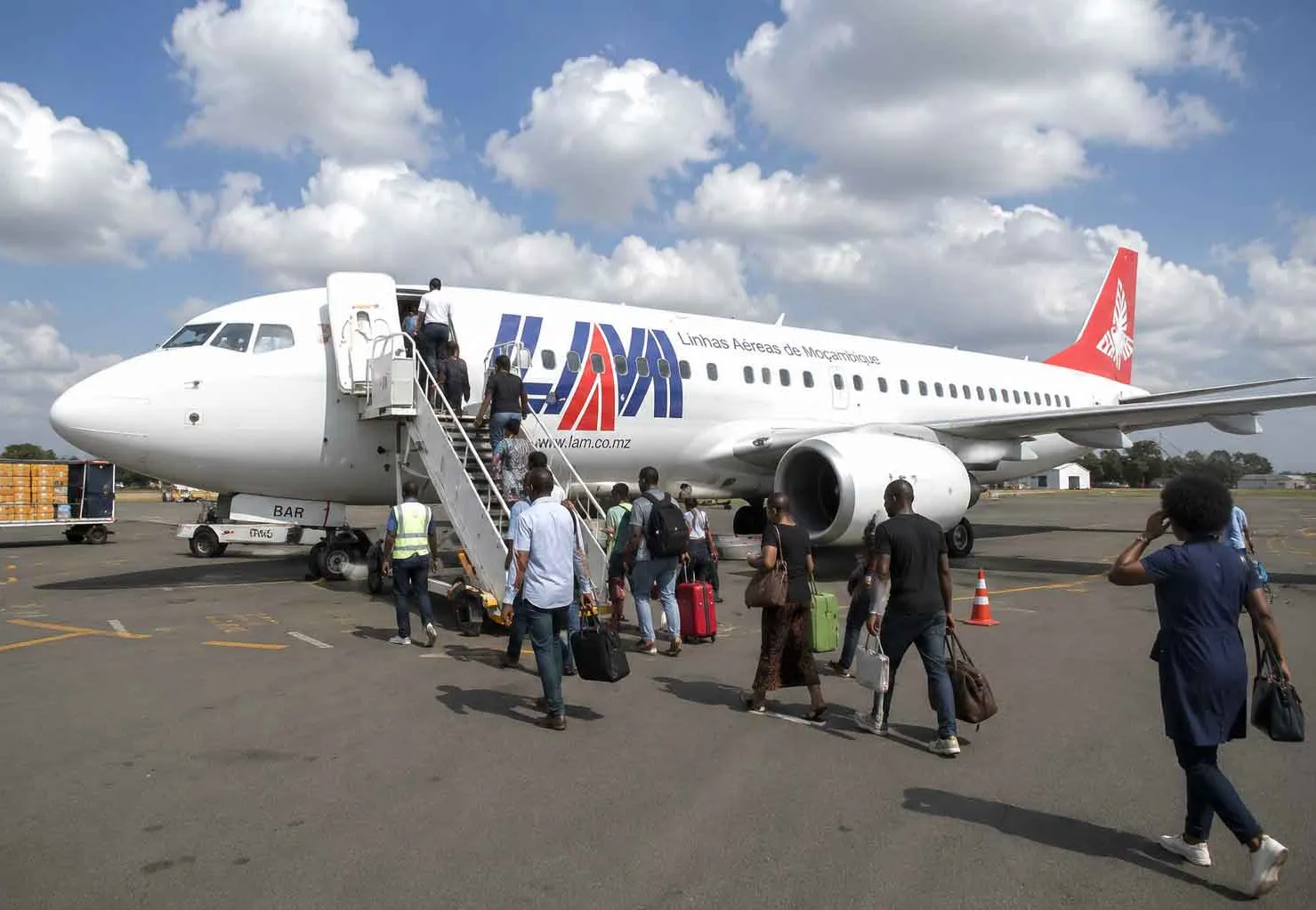
The arrival of new aircraft has strengthened the fleet, but also raised the bar. The Mozambican Government now wants concrete results from Linhas Aéreas de Moçambique (LAM): more aircraft available to operate, greater punctuality and an effective reduction in flight cancellations, in an effort to regain passengers' trust.
“The Government is closely following LAM's recovery process. The arrival of these aircraft does not end the transformation process. On the contrary, it increases the responsibility. Now, it is necessary to show that this investment produces results. It is necessary to increase the operational availability of the fleet, improve punctuality and reduce cancellations,” said the Secretary of State for Transport and Logistics, Chinguane Mabote.
The official was speaking at Beira International Airport, in Sofala province, in the centre of the country, after the inaugural flight of the second Embraer 190 aircraft, named “Zambeze”. The aircraft entered service today, raising the number of operational aircraft of the state carrier to 10.
The moment represents another step in the profound restructuring of LAM, an airline that has gone through several years of operational difficulties, constrained by its small fleet and lack of investment. The carrier has also been the target of recurring criticism over delays and flight cancellations for operational reasons.
With the fleet now strengthened, Mabote made it clear that the responsibility shifts to the airline's ability to turn the available resources into better service for passengers.
The Secretary of State therefore urged LAM's management to “increase passenger confidence and ensure that the company moves towards a more sustainable financial position”.
“This is what we expect from LAM's management and workers,” he added.
For the Government, the carrier's new phase should be marked by competent management geared towards concrete results. Mabote stressed that bringing another aircraft into service should help improve connectivity within the national territory and facilitate the movement of people and goods.
The official nevertheless sought to place the impact of aviation beyond airport operations and fleet numbers.
“When we talk about air transport we are not just talking about aeroplanes. We are talking about a student who needs to get to a university in another province, a businessman who needs to visit a client, a company that needs to move its technicians, a family that needs to travel, an investor who needs to reach a new region and a tourist who wants to explore our country,” he said.
With the second Embraer 190 entering service, LAM's fleet today came to have 10 operational aircraft, at a time when the carrier is also moving ahead with the rollout of the Air Mozambique brand.
The first of the two new aircraft, both with a capacity of 100 passengers, began operating on Friday. The aircraft made its inaugural flight between Maputo and Nacala, in Nampula province, already under the new commercial name Air Mozambique.
The Government had previously explained that the introduction of the new brand and the strengthening of the fleet form part of LAM's restructuring and recovery plan. The strategy aims to increase operational efficiency, ensure the company's financial sustainability and improve the quality and regularity of the services provided to passengers.
Under the name Air Mozambique, the carrier also adopts a new visual identity, forming part of the airline's transformation strategy, launched a year ago as one of the priorities of the President of the Republic, Daniel Chapo.
The process is set to continue in the coming months. On Tuesday, the chairman of LAM's management committee, Dane Kondic, said the company expects to end the year with 12 aircraft in operation. When the current management took up its duties, in May 2025, the airline had only three aircraft.
The restructuring also involves changes to the carrier's shareholder structure. In 2025, Hidroeléctrica de Cahora Bassa (HCB) acquired a 25.2% stake in LAM's capital. Empresa Moçambicana de Seguros (Emose) and Caminhos de Ferro de Moçambique (CFM), for their part, came to hold 15.4% each.
With more aircraft available and a new commercial identity, the challenge set by the Government now lies in turning the strengthened fleet into visible results for those who travel: fewer cancellations, greater punctuality and a financially more sustainable airline.


