
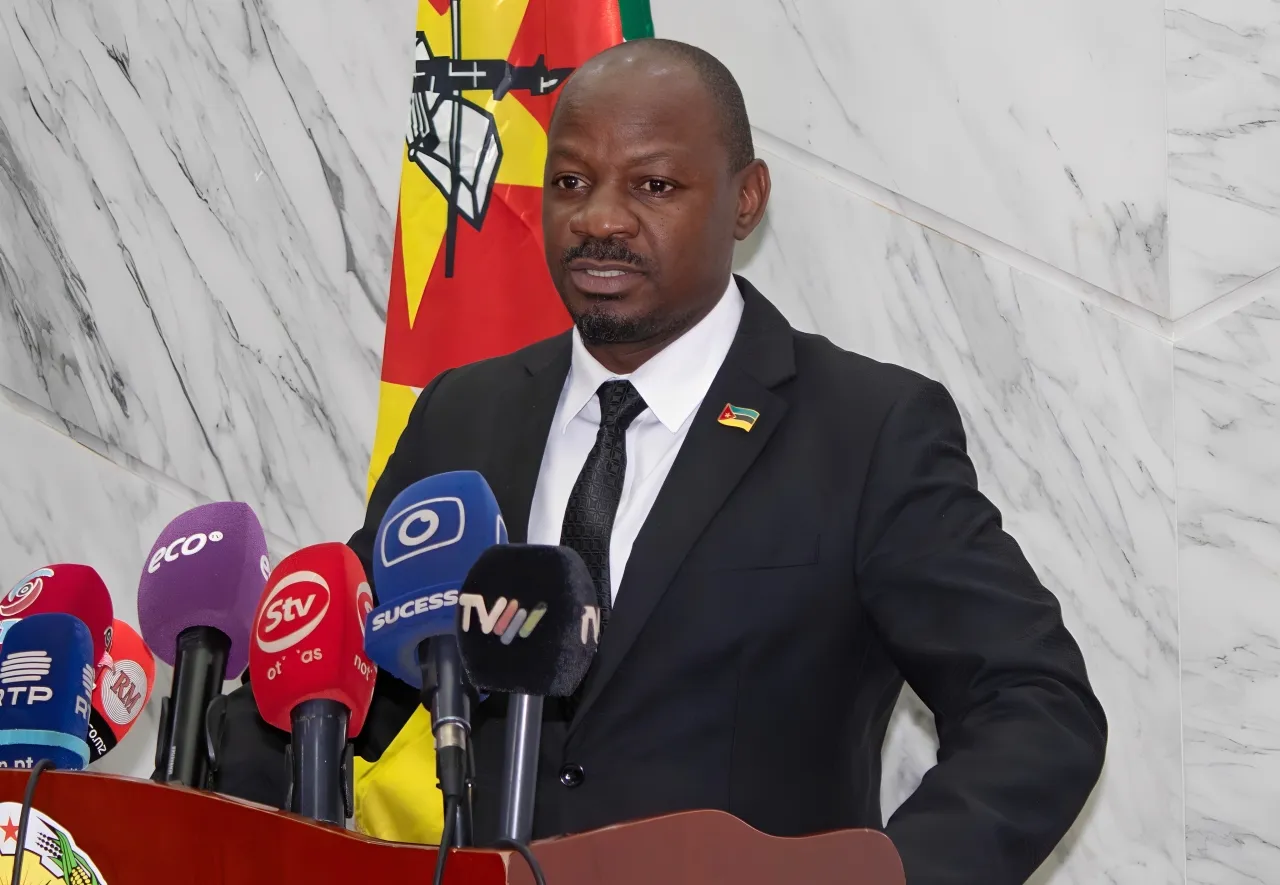
In a session that set the pace of national economic policy, the Council of Ministers met on 2 December 2025, in its 41st Ordinary Session, and approved a broad package of legislative proposals aimed at modernising, simplifying and harmonising the Mozambican Tax System. The measures, to be submitted to the Assembly of the Republic, aim to respond to the challenges of an economy in transition, promoting greater tax inclusion, tax fairness and adaptation to new digital dynamics. The Council's spokesperson, Inocência Impissa, informed the media of the deliberations.
On the international front, the Executive considered the reports of recent diplomatic missions, including the State Visit of the President of Zimbabwe, Emmerson Mnangagwa (19–20 November), the official visit of Brazilian President Luiz Inácio Lula da Silva (23–24 November) and the participation of the Head of State, Daniel Francisco Chapo, in the 7th AU–EU Summit, held in Luanda on 24 and 25 November.
Among the approved instruments, the proposal to amend articles 21, 22 and 27 of the Preliminary Instructions of the Customs Tariff stands out, incorporating tariff dismantling measures under the African Continental Free Trade Area. The proposal also harmonises the Tariff with the VAT Code, introduces specific codes for electric vehicles and creates a tax regime aimed at high-value goods.
Another significant advance is the proposal to revise the Simplified Tax Law for Small Taxpayers, with the aim of broadening the tax base, simplifying procedures, defining rate bands and promoting economic formalisation, while also combating tax evasion.
As regards the Excise Duty, the Government approved the extension of the rates for the 2026–2027 biennium, with a focus on eliminating tax exemptions considered inappropriate. The proposal also provides incentives for sustainable mobility, reducing the tax burden on electric vehicles and public transport.
For VAT, the amendments now approved extend the tax base to the digital economy, correct distortions between assessment and deduction, strengthen electronic invoice submission and reorganise the applicable regimes.
In the field of Income Tax, amendments were introduced to the Personal Income Tax (IRPS) Code, including the taxation of income from digital services, redefinition of tax residence criteria, application of specific rates to capital gains and stricter reporting obligations. The Corporate Income Tax (IRPC) Code, for its part, will now incorporate digital taxation, shortening the permanent establishment period to 90 days and correcting asymmetries between regimes.
Another highlight is the approval of the new Decree revising the VAT Refund Regulations, creating a Special Regime for companies in the mining and oil sectors, with the aim of ensuring greater robustness, transparency and sustainability in tax management.
In the field of regional cooperation, Bilateral Agreements with Tanzania and Zambia were ratified, providing for the installation of One-Stop Border Posts at Negomano/Mtambaswala and Cassacatiza/Chanida, strengthening cross-border integration and mobility.
At institutional level, the dismissal of Élio Manuel Jonasse from the post of Chairman of the Board of Directors of Televisão de Moçambique – Empresa Pública was approved, with Victor Filipe Sinai Nhatitima appointed to the post.
The session closed with the review of two strategic reports: the Assessment of Impacts and Needs Following Cyclones and Demonstrations (2019–2025) and the Review of the 1st National Meeting of Heads of Administrative Posts, in a clear demonstration of attention to local realities and climate resilience.


