
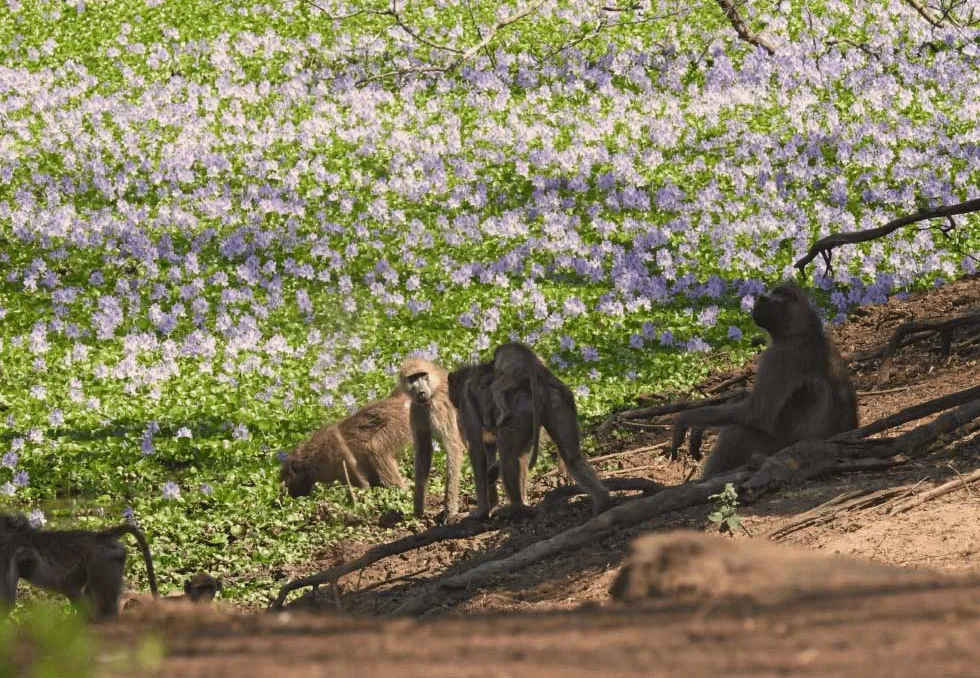
In an African foothill where science and nature intertwine, the latest research conducted in Gorongosa National Park offers an unprecedented view of the behaviour, ecology and evolution of primates, large herbivores and bats. This work crosses disciplines and demands the patience of years of fieldwork, exploring everything from locomotion and tool use to genetic dynamics and animal communication.
Among the highlights is the study of object manipulation by wild chacma baboons, revealing creative behaviours: from opening rubbish bins to reach food, to extracting sap from trees and using branches as a display of dominance. The frequency of these acts varies with age, habitat and, possibly, creativity – a glimpse of the roots of tool use and complex thought.
Another study questions the linear narrative about the evolution of bipedalism, suggesting multiple origins and contexts for walking upright. Fossils, ecology and the current behaviour of primates are combined to understand how risks and “landscapes of fear” may have encouraged some hominids to explore the ground.
GPS data analysed by Lynn Lewis-Bevan show that baboons plan daily routes with a logic of their own, balancing distance, efficiency and the need to stop. The impact of Cyclone Idai in 2019, meanwhile, revealed the resilience of Gorongosa’s primates, which quickly resumed their behaviours and stable populations.
On another front, it was observed that only some troops of baboons strip the bark from “Acacia robusta” – a regional habit that could be a cultural trait, not a simple response to the environment.
At the scale of the ecosystem, an award-winning study showed how fire and large herbivores interact to shape tropical savannas, rapidly altering the composition of plants and animals.
On the nocturnal side, Cesária Huó is trying to decipher the “language” of bats, collecting and analysing vocalisations to understand how they evolve.
In genetics, research points to high diversity and population connectivity among Gorongosa’s baboons, with males dispersing between groups. And a recent study exposed a history of hybridisation between chacma, yellow and even kinda baboons, positioning Mozambique as a key point in the evolution of African primates.
From behavioural biology to genetics, these discoveries not only enrich scientific knowledge, but reinforce Gorongosa as a living laboratory for understanding wildlife and the evolutionary history we share with it.


