
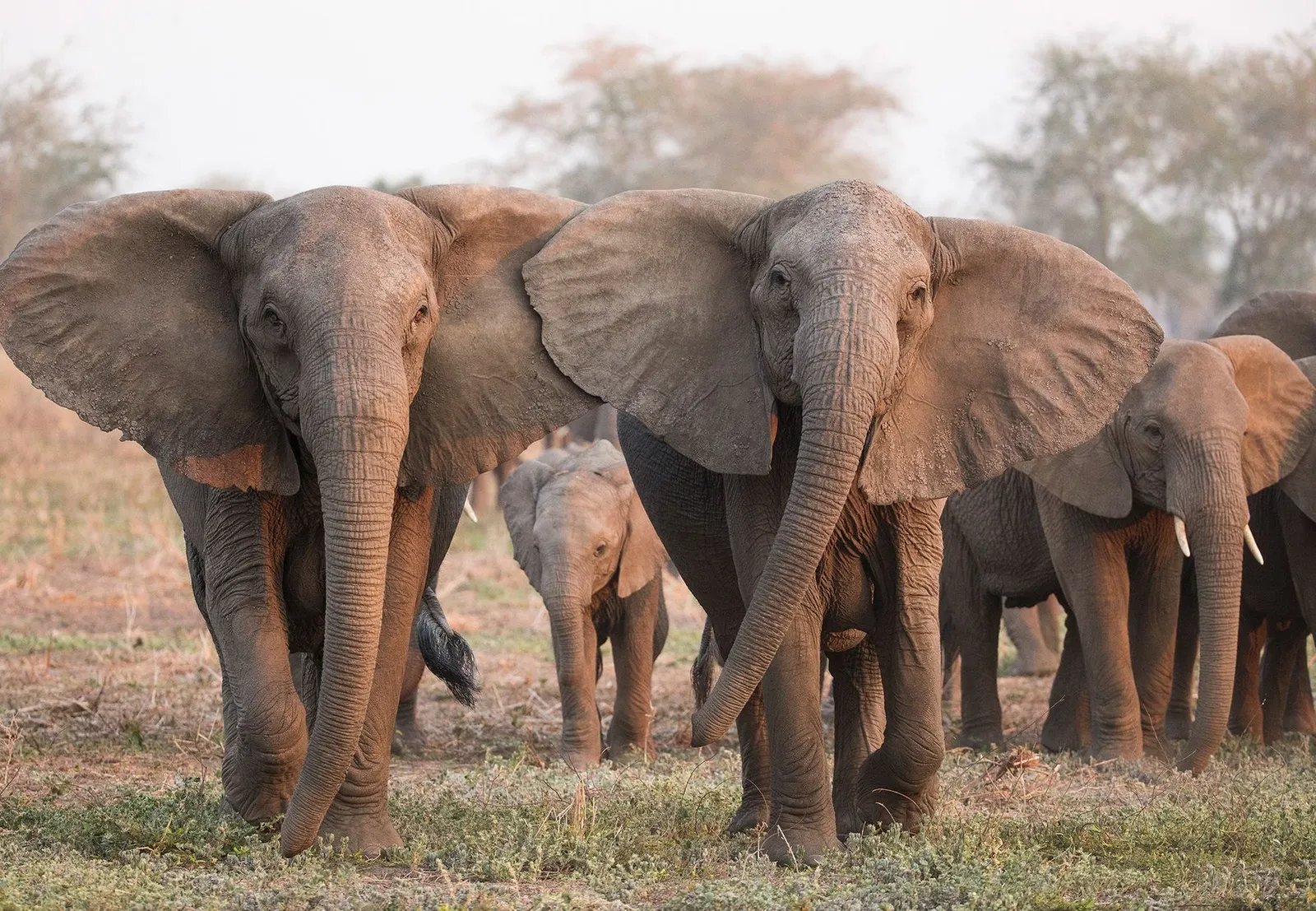
In Maputo National Park, the number of elephants, which only a few years ago was in decline, has recovered significantly, now reaching an estimate of more than 500 individuals. This population increase is causing conflicts with local communities because of the negative impact on vegetation and on the sustainability of the habitat.
Miguel Gonçalves, the park's administrator, said the park, located about 70 kilometres south of Mozambique's capital, is evaluating several solutions to control the growing elephant population. Among the options being considered are contraception, to reduce the birth rate, and the translocation of some individuals to other parks or conservation areas.
The idea of using contraception is being evaluated in the field, with the aim of obtaining more precise data to understand the investment needed to implement this measure. At the same time, the technical team is reviewing the methods used to count the elephant population, since the current estimate exceeds the capacity officially recorded in the last census.
Maputo National Park has a long history with these majestic animals. It was originally established as the Maputo Elephant Reserve in 1932 to protect a subspecies that was then believed to be unique. Despite the severe challenges faced during the 16 years of civil war after Mozambique's independence, conservation and enforcement efforts helped the elephant population to recover.
Besides contraception and translocation, the park authorities are also considering expanding community conservation areas. This would not only help ease the pressure on the park caused by too many elephants but also provide direct benefits to local communities, through community conservation.


