
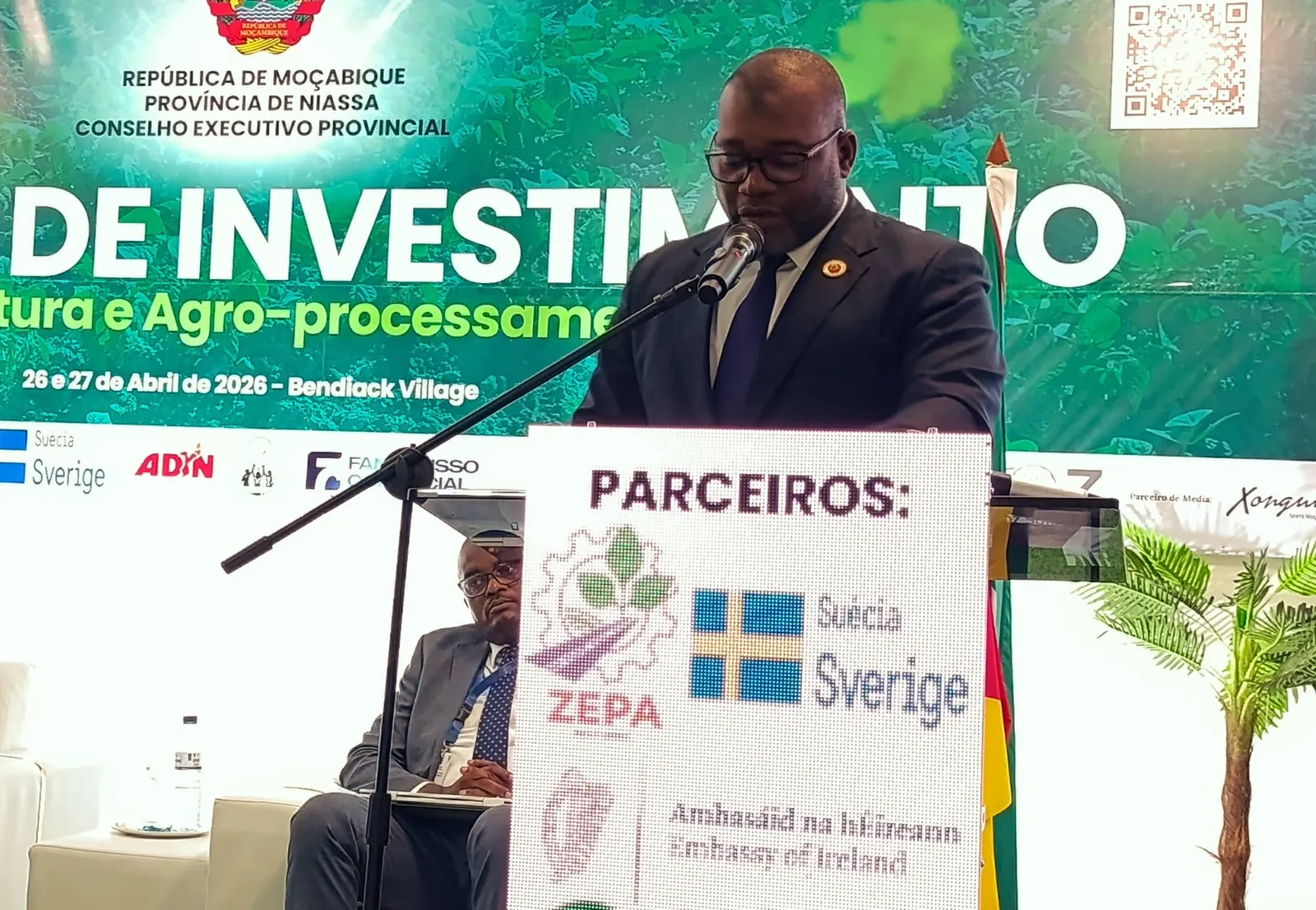
The Government acknowledged that access to credit remains one of the biggest obstacles to agricultural development in Mozambique, but assured that several financial programmes are being mobilised to reverse this situation and boost national production.
The assurance was given during FORIN 2026, held in Lichinga, in Niassa province, where the Ministry of Agriculture, Environment and Fisheries (MAAP) revealed that only 0.6% of Mozambican farmers currently have access to formal bank credit.
Faced with this challenge, the Executive presented a set of funds, programmes and financing mechanisms aimed at supporting farmers, small rural businesses and agribusinesses, in a strategy intended to increase financial inclusion and accelerate the modernisation of the sector.
Among the main initiatives highlighted is FECOP, valued at 13 million dollars, which provides financing for small and medium-sized enterprises linked to agro-industry. The programme offers loans of up to 500,000 dollars, subsidised interest rates and guarantees that can reach 80%, reducing risks for producers and financial institutions.
The Government also said that the Food Security Fund (FSA) will continue to support microfinance and small agribusinesses, with financing of up to 2.5 million meticais, aimed at stimulating production and strengthening the rural economy.
Another highlight presented at the forum was the Private Sector Relaunch Programme (PRSP), estimated at around 1.5 billion dollars, considered one of the main bets for revitalising productive sectors and stimulating investment.
The authorities also announced programmes targeting innovation and agribusiness development through the FCID, combining subsidised credit, grants and revolving funds to make access to financing easier and reduce costs for producers.
At the meeting, several international and regional programmes already being implemented were also presented, among them Southern Africa Connectivity Trade, Mais Oportunidades, MozRural and Conecta Negócios, all geared towards strengthening agricultural value chains and supporting small businesses.
GAPI SA and other microfinance institutions also announced new credit lines for rural micro, small and medium-sized enterprises, with differentiated rates, technical assistance and guarantee mechanisms to make access to capital easier.
The Executive also highlighted three major programmes planned for 2026: MozAgribus, financed by the World Bank with 500 million dollars; RIVACREP, supported by the African Development Bank; and PROCAVA, projected to run to 2030, focusing on food production, climate resilience and the economic inclusion of young people and women.
According to MAAP, the aim is to turn agricultural financing into a central instrument for increasing production, boosting agro-processing and strengthening food security in the country.
The forum ended on a message of confidence and commitment to the country's productive potential: “Produce to Feed Mozambique.”


