
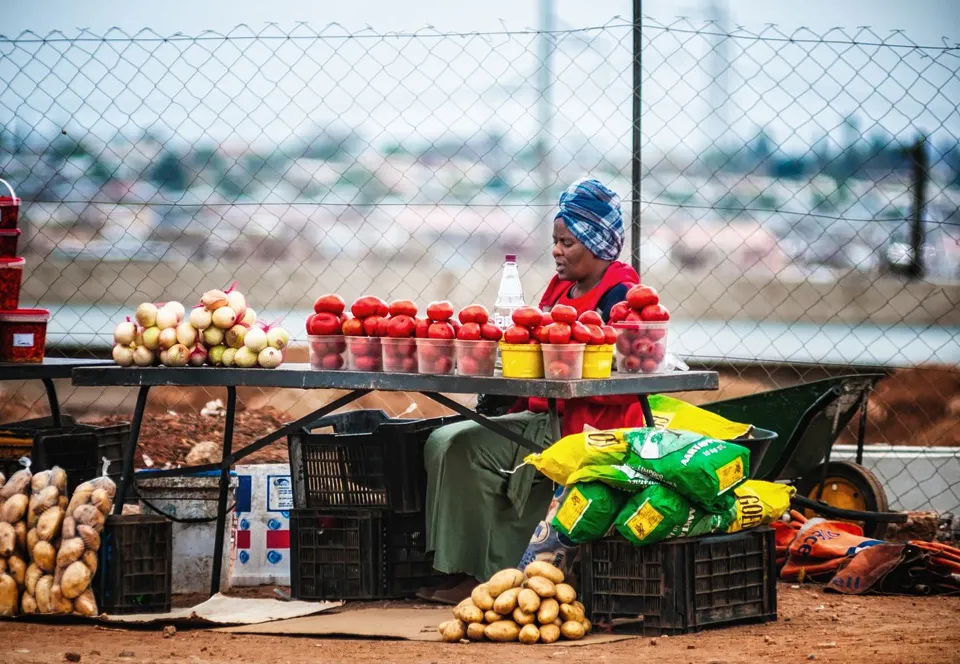
The Government of Mozambique has outlined an ambitious plan to bring around 190 thousand informal vendors into the formal economy. This measure is part of the new Trade Policy and Strategy (PEC), which sets out the guidelines for trade in the country from 2023 to 2032.
According to the new PEC, informal trade represents a vital sector for the Mozambican economy and is therefore one of the main focuses of government intervention. The strategy involves creating a legal framework that clearly defines what informal trade is, the criteria for assessing it and the uniform regulation to be applied by local and municipal authorities. This regulatory framework will also include a requirement for proof of origin for the products sold.
The plan is not limited to regulation, also aiming at building the capacity of informal traders. The intention is for them to be integrated into sectors with growth potential, through development programmes that provide them with appropriate training. The aim is to formalise the activity of 188,847 economic operators over the next decade.
In addition to training and integrating informal vendors, the Mozambican government plans to create infrastructure and business parks suited to small-scale trade. This effort will be supported by a national programme that will promote investment on several fronts: public, private, cooperative and public-private partnerships.
This initiative represents a significant step in structuring the Mozambican economy, seeking not only to regularise a large share of economic activity that until now operated outside the law, but also to boost the development of small businesses, with a positive impact on economic growth and job creation.


