
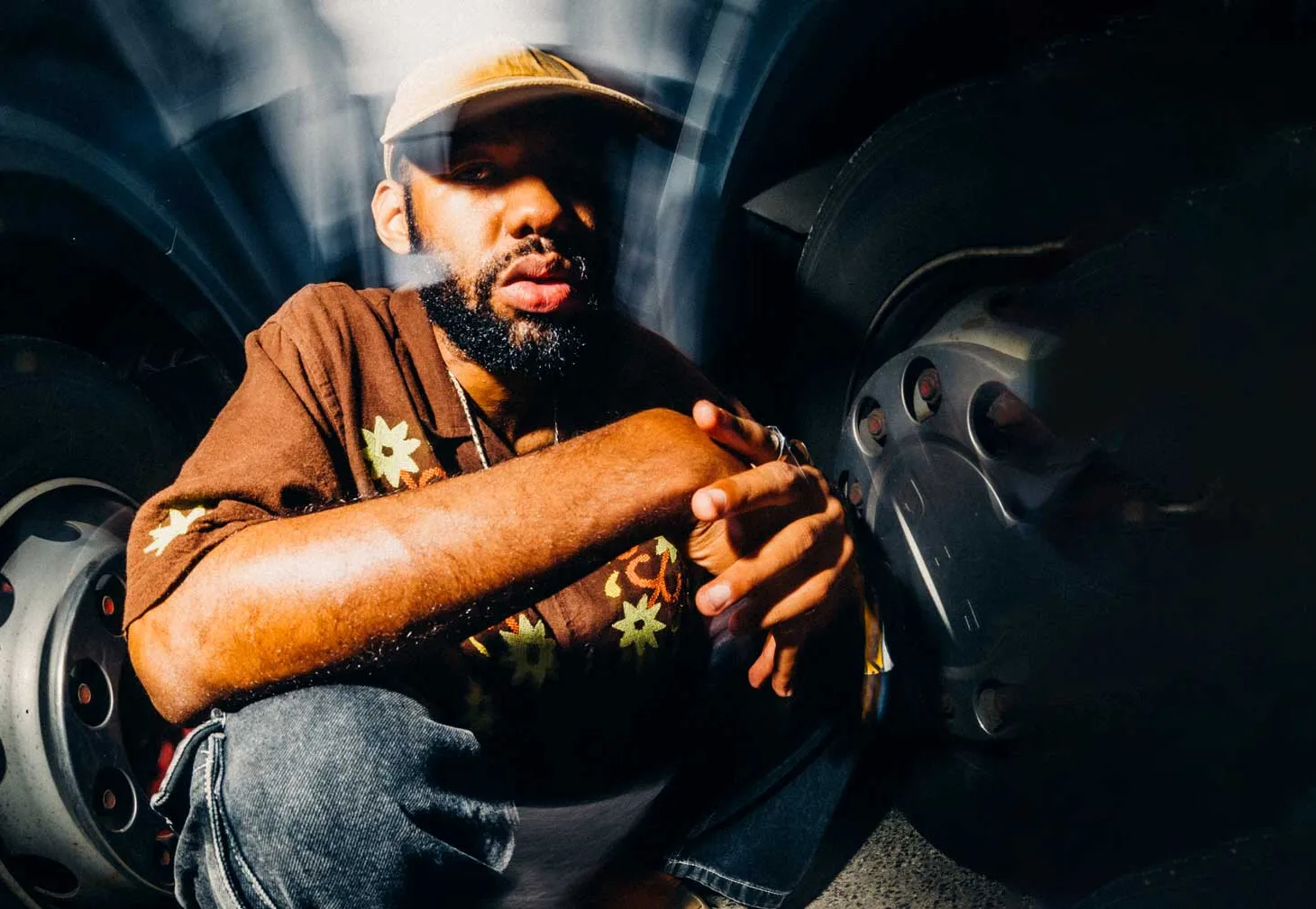
How do the melodies of Cape Verde, the rhythms of Portugal and the art of France intertwine and reflect your musical identity? And in what ways are spirituality and the Church reflected in your compositions and lyrics?
My musical identity is a natural fusion of Cape Verdean rhythms, owing to my father’s heritage and the music I always heard at home, with the influence of my training in Portugal, where I grew up and studied music, and of my time in Paris, where I worked with French musicians and groups. These influences intertwine intuitively in my art, reflecting an unconscious blend of each culture. My spirituality and my upbringing in the Church, grounded in biblical values, profoundly shape who I am and, consequently, my compositions and lyrics. This influence is particularly evident in my latest album, “Declive”, which is inspired by parables, with stories that range from the personal to the invented and the real. The music also bears traces of gospel, the result of my exposure to the genre and of my Christian convictions, and it becomes an expression of spirituality and, at times, an outpouring to God.
How do metaphors and symbols seep into and resonate in your lyrics, and how do you navigate and blend different musical genres to sculpt a sound that is unmistakably your own?
The inclusion of metaphors and symbols in my lyrics is largely down to Tota, the main lyricist. Through an intensive collaborative process, full of conversations and personal exchanges, we spend a great deal of time crafting the lyrics, especially in the careful incorporation of metaphors and symbols that fit the concept of the album. Tota’s meticulous work, focused on preserving my musical identity while enriching the album’s imagery with varied references, is fundamental to creating a distinctive and unmistakable sound.
How do you feel your work is received in Portuguese-speaking countries such as Mozambique?
Through social media, I can sense interest in my work in Portuguese-speaking countries such as Mozambique, although I have an ambivalent relationship with Spotify statistics. I value direct messages from Mozambican fans more. The reality of the impact of my music becomes tangible at concerts, which makes me want to visit Mozambique to better understand how my work is received. I don’t yet have concrete plans for a tour or concerts in Mozambique, but I am excited about the possibility of scheduling dates. Mozambican fans can expect a vibrant experience that combines organic elements such as percussion, classical and electric guitar, keyboards and vocals with electronic aspects, including synthesisers and various effects. It is an interesting fusion that reflects the union of two of my worlds, the organic and the electronic, and promises a varied and engaging performance.
Tell us about your journey through the conservatoire. How has your classical training influenced your current style?
My classical training took me through the Aveiro and Coimbra conservatoires, where I built close relationships with influential teachers such as Miguel Lélis, Graciano Pinto and André Madeira. Those experiences and my participation in guitar competitions shaped not only my musical ability but also my personal character. Classical education instilled in me the importance of sound, precision and control, principles that I apply rigorously, including in music production and mixing. It also developed my musical flexibility, teaching me to explore varied dynamics and tonalities, linking expression and technique from an early age. This educational foundation strengthened my conviction about the importance of music education, something I strongly recommend to parents for their children, and I am deeply grateful for the encouragement I received from my own to follow this path.
Can you share the creative process behind your album “Declive” and what you wanted to convey with this work?
The album “Declive” was created with Pedro da Linha on production and Tota on writing, and we faced logistical challenges because of the distance between Lisbon, Albergaria and Paris. The production involved intensive digital collaboration and artistic residencies in places such as Madeira and Póvoa de Varzim, culminating in a process of sonic discovery that exceeded my expectations. The album deals with themes of mental health, which made it a therapeutic process both in the musical creation and in the writing of the lyrics. I hoped that “Declive” would have a therapeutic effect on listeners, reflecting its sensitive nature and the shifts between calm and intense moments, and fortunately that was shared by many who found comfort in listening to it.
In recent years, you have received a series of significant accolades. How do you manage all these emotions and expectations in such a short time?
Honestly, it’s a very strange feeling at times, because I feel that my project is sometimes so close to me and at other times so far away. For example, I go to Portugal to play and then I come home to Paris, and I’m out of it. I also try to switch off quite a lot from the work that stays in Portugal, and that ends up creating a feeling that I appreciate. I don’t hear my music on the radio here, I don’t see much going on, so it ends up being a funny sensation. And I think that, thanks to this as well, I manage to handle all of this much more easily. Not that I’m very famous, but for me, managing exposure has always been very complicated. Isn’t it? Showing my project to lots of people, exposing myself a little musically, and this ends up protecting me a bit. When I’m at home, I go back to walking my little dog, I skateboard, I make music, so I switch off a little.
Are you interested in exploring traditional Mozambican music or collaborating with local artists?
I am very interested in exploring traditional music, including Mozambican music, and in collaborating with local artists, as I find it enriching. Music reflects cultural DNA, and my curiosity about different cultures is endless. I would like to visit Mozambique to establish a direct connection with the country and its artists before starting any collaborations.
Does literature play a part in your musical creation? Which authors or works have particularly influenced you?
Literature significantly influences my musical creation, largely thanks to Tota’s work, as he prepares by reading a variety of books in order to write the lyrics. Works and films by Tarkovsky, the Bible, and references to Zeca Afonso, as in “Venham mais cinco”, are examples of literary influences on our themes. Literature therefore plays a crucial role in inspiring and shaping our songs.
As an emerging artist, what have been the main challenges you have faced so far in the music industry?
Moving to a music project of my own meant giving up financial security, which was a significant challenge in a context of scarce support for emerging artists. Initially, I struggled to build connections in the music industry, guarding my project so zealously that I may at times have inadvertently been unpleasant to those who wanted to help, the result of a mistrust fuelled by negative stories about the industry. However, experience over time has helped me to discern genuine intentions, improving my ability to engage with colleagues and professionals in the sector and leading to greater peace of mind and resolution in these matters.
Where do you see yourself in five years? Is there a specific goal or dream you wish to achieve?
In five years, I hope to still be devoted to music, despite its challenges. I aspire to match the intensity of the creative process and of live performance, with the aim of continuing to reach and touch audiences. My dream is for music to allow me to live sustainably, providing me with a home, food and the chance to travel, while keeping the passion for sharing my art live with people.


