
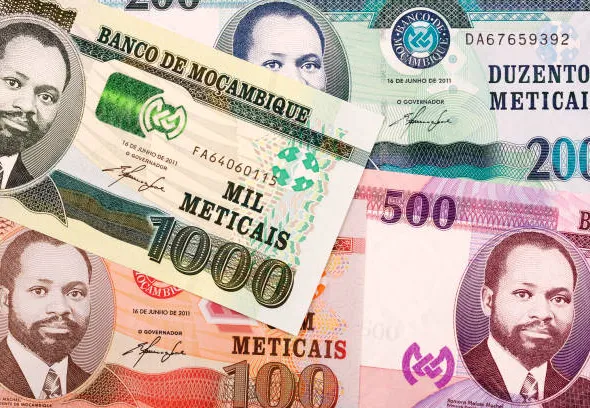
Mozambique's Central Asset Recovery Office (GCRA) announced on Monday that it has recovered assets valued at 27,185,894,667.44 meticais since it began operating in 2020. The amount, determined through asset and financial investigations, is, according to the office's management, revealing of the existence of citizens whose wealth is manifestly disproportionate to their declared lawful income.
During the GCRA's national meeting in Maputo, director Ana Sheila Marrengula highlighted the progress made by the structure, which started with only nine staff and had grown to 50 by 2025, owing to the growing demand for asset and financial investigations. “The training of our technicians has made it possible to conclude more cases and to identify ever larger volumes of unexplained wealth”, she said.
However, significant challenges remain. Marrengula pointed to the urgent need for a larger budget to allow provincial offices to be opened and thus decentralise and deepen asset investigations. She added that, internally, the office faces technological limitations, dependence on formal requests to access data and a staff that is still insufficient.
Externally, the obstacles include delays in obtaining information, weak public and private registries, the predominance of cash use and the informal economy, as well as the use of opaque jurisdictions and the growing use of crypto assets.
Attorney General Américo Letela argued that asset recovery should be seen as a central pillar in the fight against economic crime. “International experience shows that it is not enough to investigate, prosecute and convict. It is essential to strip criminals of the economic benefits that sustain their activity”, he stressed.
Letela acknowledged the important role of the GCRA, which has ensured national coordination and encouraged cross-sector cooperation, but stressed that the challenges are still considerable. He highlighted the need to keep pace with organised crime, which is increasingly sophisticated and digital, to strengthen international cooperation and to guarantee the traceability of assets.
“The office's work must be increasingly technical, swift and aligned with international best practice, using the most advanced technologies and with a harmonised and effective legal framework”, the prosecutor concluded.
Mozambique has thus consolidated its capacity to respond to economic crime, although the situation continues to demand firmness, innovation and continuous institutional coordination.
Advertisement


