
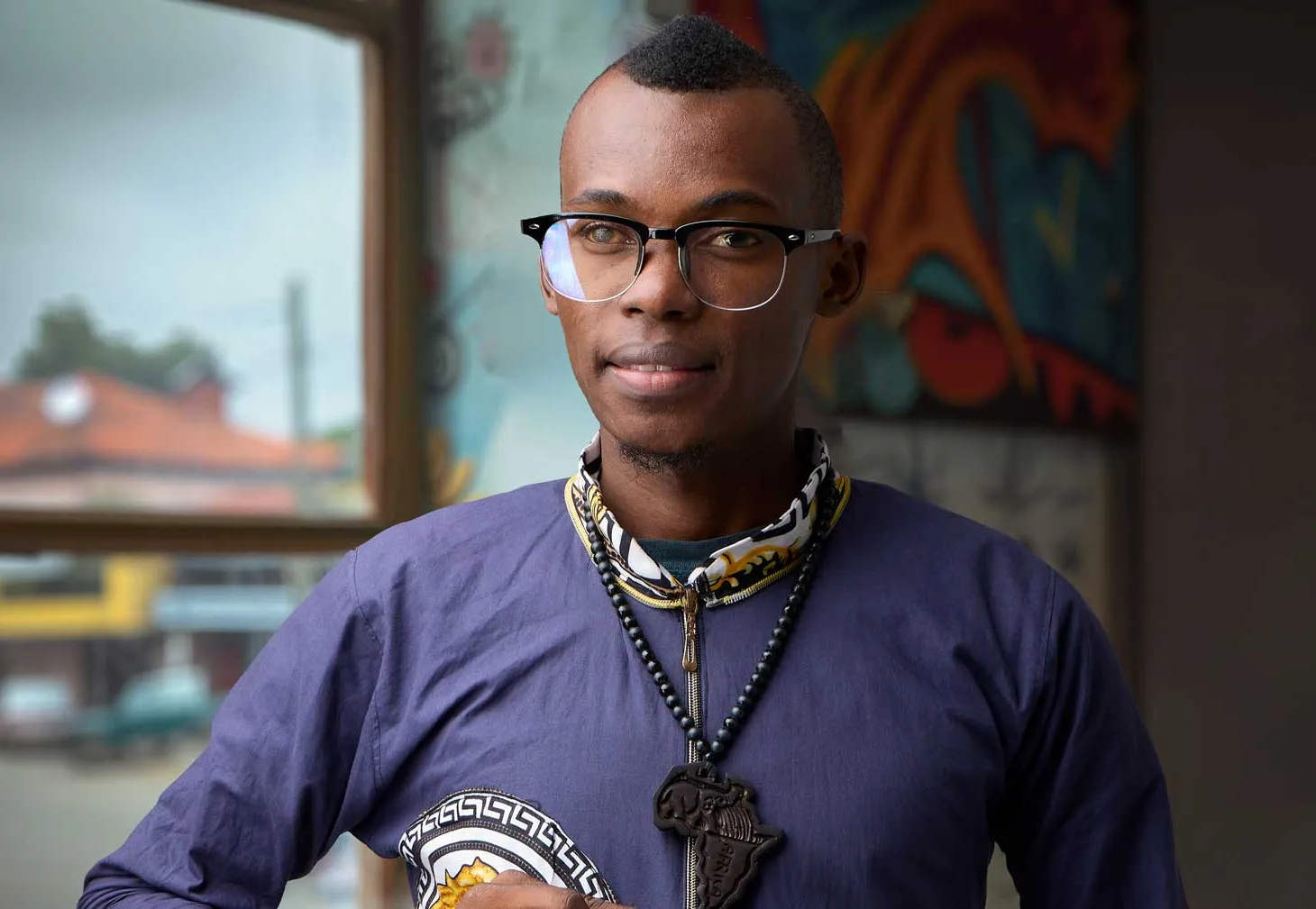
Ernesto, throughout your literary career, you have always remained faithful to your commitment to African culture, which has even earned you the nickname “Son of Africa”. How does this commitment influence the creative process behind your books?
In a context where literature and culture are not valued, it is always rewarding to be chosen by destiny to write and to address themes that touch society deeply. This is particularly significant when embarking on a literary path in an environment of uncertainty and scarce support. I have stressed that the failure of our dreams often stems from a lack of commitment and humility, a problem I never faced, even at the start of my career. I see poetry as therapy, a way of healing the wounds of the past and facing adversity with renewed hope. I consider the provocation of the question important, as it offers the author a space to express his feelings. For anyone who follows my journey, it is clear that my African roots and my commitment to social, cultural and linguistic causes are deeply ingrained in my poetic work. I cannot, and do not wish to, distance myself from these influences, as they form an essential link between my poetic self and the world around me. Reclaiming and celebrating our identity is fundamental to me, reflecting the essence of human suffering and the quest for dignity that defines my voice and my soul. Above all, I am a son of Africa, committed to giving voice to the truth and to the spirit of our people.
Your book “Liberta-te, Mãe África” was received with great enthusiasm by both the public and the critics. Can you share with us what inspired you to write this work?
From the beginning, I identified myself as a born writer, proudly a son of Mother Africa, even though I felt she had been forgotten by many. I grew up in a humble family, without great means. The story of my grandmother Albertina, who was imprisoned and forced into slavery during the 16-year war in Mozambique, marked me deeply, awakening in me feelings of shock, anger and revolt against the atrocities committed against my people. Writing became my means of fighting for justice, a way of expressing, protesting and drawing attention to injustice, showing that the battle can be won not only with weapons but also through the power of words and literature.
You have been awarded prizes, including first place in the Prémio Segundo Varal Literário and third place in the Prémio Machado de Assis. How do you see the importance of this recognition for Mozambican and African literature on the international stage?
In my interviews, I tend to say that a writer is not defined by prizes, although I acknowledge that they add value to our work. At the beginning of my career, my focus was not on winning titles but on highlighting the richness and relevance of the African continent, so often forgotten. The arrival of the prizes significantly boosted the dissemination of my work abroad, so that my literature, initially little known, gained recognition and reached readers of several generations. That recognition opened doors for the publication of my titles in various countries, including the United States, Colombia, Mexico, Portugal, Brazil and Italy, in poetry, prose and children’s and young adult literature.
Your literature is a bridge for intercultural dialogue. What are the greatest challenges you face in addressing such sensitive and profound themes?
Being a writer in Mozambique, addressing critical social themes, is a challenge that demands great resilience. There is the risk of having texts left unpublished or rejected by publishers, often not for lack of quality but out of fear or reluctance on the part of editors to confront sensitive themes that the elite prefer to silence. In addition, we face uncertainty and hesitation in recognising new authors, among other obstacles. These difficulties motivated me to seek out international publishers, partly to get around the lack of support from local institutions, such as the Ministry of Culture.
Your works have been translated into several languages, widening the global reach of your message. How does it feel to know that your work has an impact on readers from different cultures?
Publishing books is, for me, more than a passion; it is a responsibility that demands resilience. The aim is always to bring out impactful works, especially in a region where reading is still not a common habit. Being recognised internationally motivates me to keep exploring the nuances of the world through writing. As for the advantages of publishing abroad, they include not only the possibility of selling the work but also the opportunity to connect with a global network of writers, forge productive partnerships, promote cultural exchanges and, crucially, gain experiences and knowledge that enrich my poetry.
Can you share with us any literary project you are currently working on and what we can expect from it?
The analogy of the song by Leandro Borges, who advises keeping your dreams secret, reflects well the influence that outside opinions can have on us, something I hope will not affect me. I compare the process of literary creation to gestation: after releasing a work, the need to begin another soon arises. So I promise readers more publications in the genres of poetry and children’s and young adult literature this year. While new releases are on their way, I invite everyone to explore my works available on Amazon and in local bookshops. I would like to take this opportunity to thank the team at Xonguila magazine for the opportunity and collaboration, as well as my editors, translators and loyal readers.


