
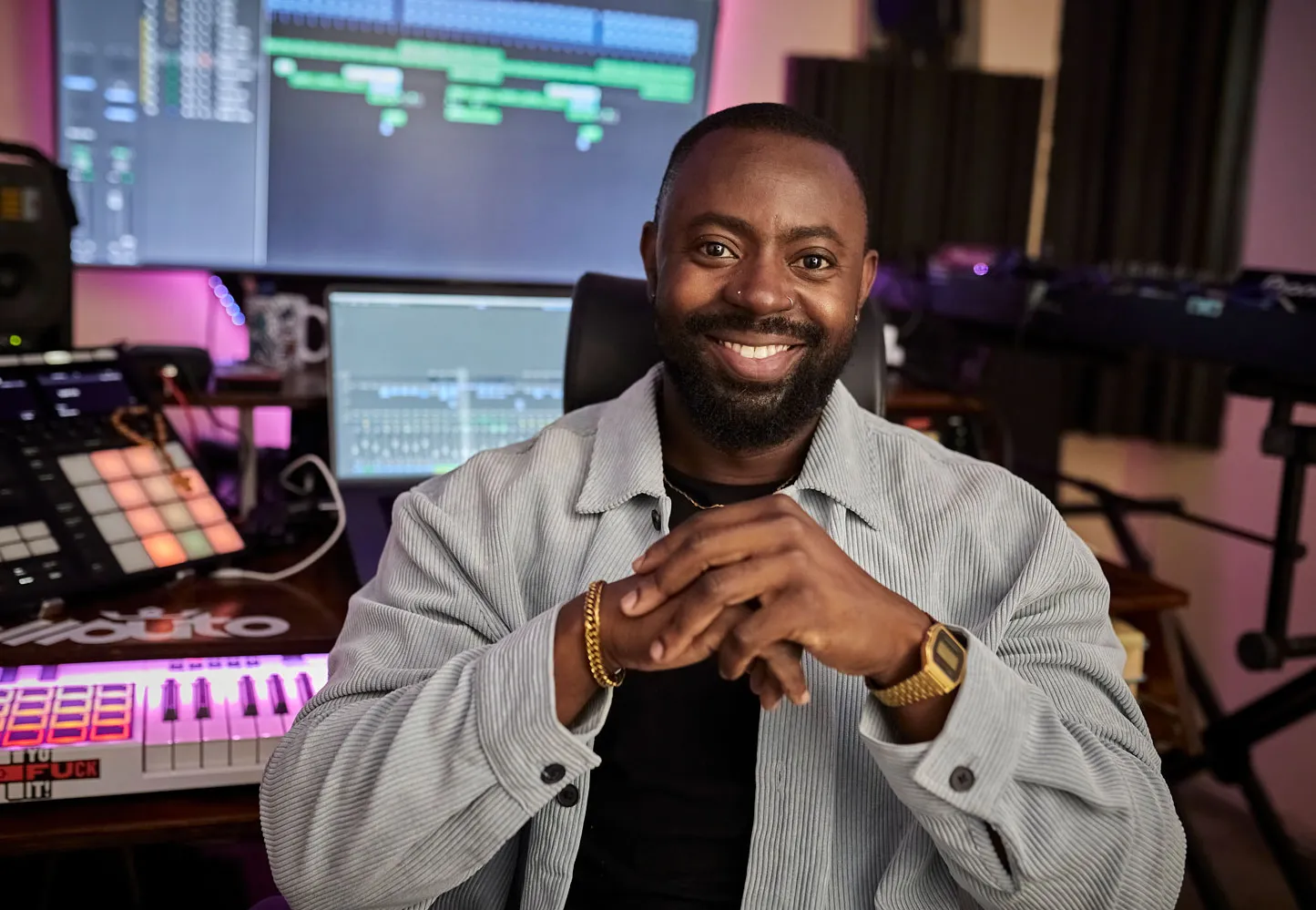
Let's start by looking back. How did your interest in music begin?
My interest in music began in 2000, when I watched my older brother, Mic B, working with some local artists at my home. I started tinkering with production software as a pastime and, for some reason, picked up the techniques quite quickly and, in less than a year, I was already producing music for a few people. In 2001 the rapper Kloro, of Trio Fam, gave me the name Ellputo, precisely because I had learned and developed the talent so quickly and kept on evolving. At the time, I was only 12 and was just having fun; I was far from imagining that it would become my profession. I invested so much time in the craft that I inevitably ended up becoming good at what I did, but never with the intention of becoming a professional. It reached a point where there was no turning back, and the name Ellputo had already been launched on the market. One of the songs that marked my entry into the market was “Dynomite está com gana”.
How do you define your work and what you do?
If I had to define it in one word, it would probably be “fantastic”. It is interesting to be able to conceive a work from scratch and imagine how it will be received by the consumer. The creative process can sometimes be complex, but the result is always satisfying. And, best of all, there is no limit to creativity.
What sources most influence your form of artistic expression?
Well, various sources, from artists to footballers and businesspeople. I am very moved by life stories. My references, or sources of inspiration, are people who in some way serve as examples in different areas of life. For example, Jay-Z, Gary Vee, Napoleon Hill, Timbaland, Pharrell, Dr Dre, Bob Proctor, David Guetta, Black Coffee, among others.
How does your creative process unfold?
My creative process depends a lot on my state of mind. There are days when I like to work on ideas that have been stored in my brain for some time, and other days when I opt for something more experimental, with no commitment at all. Apart from these two options, there is also the scenario in which I receive a script that I must use as a basis for creating. My exercise is to work out what state of mind I am in, and I try to capitalise on the moment.
Is there a musical genre you particularly like working with?
These days, my favourite genre is amapiano, but, taking a macro view, I have never had a preference; I simply like music, and I embrace everything that sounds good and pleases me, not least because I like challenges, stepping out of my comfort zone and exploring the unknown.
The Ellputo Music Experience has been a success. Can you tell us the secret behind this success?
I believe it all comes down to good preparation. The concept of the Experience has lived in my head since 2015, but it was only in 2021 that I really felt prepared and confident enough to go ahead with the idea, and fortunately it went well. Over the years, I developed the idea slowly and down to the smallest detail and, fortunately, the execution and the reaction exceeded my expectations. Combining the DJ side with music production makes complete sense, especially because I have the privilege of regularly producing exclusive content for my audience.
Who do you consider to be the greatest references in Mozambique at present? Did you particularly enjoy collaborating with anyone?
Hot Blaze, Hernâni da Silva, MR BOW, Laylizzy and many others. I recently had a good experience with Mano Tsotsi, who is a very talented and very dedicated artist, which makes my work easier.
The world today is shaped by technology. In your view, how do the tools it provides influence music and culture in general?
For me, personally, technology is essential. Music production has evolved so much in recent years thanks to technological advances! Today there are tools that speed up and ease our work. In the past, to produce a song, we depended 100% on large, super-equipped studios, and today we can have equipment of the same quality in more affordable versions, which allow us to work from home and get fantastic results. Hence the rise of so-called bedroom producers, who, from their homes, manage to produce huge worldwide hits. Thanks to technology, culture can reach a larger audience, and we no longer suffer from geographical limitations because we have the world in our hands.
What are your plans for the future?
At the moment, the priority is to break into new markets, and that is already happening. I believe that in a few months I will be sharing major international stages with big international names. In recent years I have made significant progress in this direction, which encourages me and reinforces the vision.
Many consider you one of the greatest Mozambican music producers. What responsibilities does this carry?
I am happy about this affection, and I feel a responsibility to educate through my art. It means I have to be a role model for many people; and, at the end of the day, I do everything I can to be a good example to follow, because in a few years' time I would like to see other young people carrying on the work I have been doing for the last 22 years, inspired by my work ethic, and with the self-esteem to believe in their dreams. Every day I must be careful about what I say and do, because there are people replicating my steps.


