
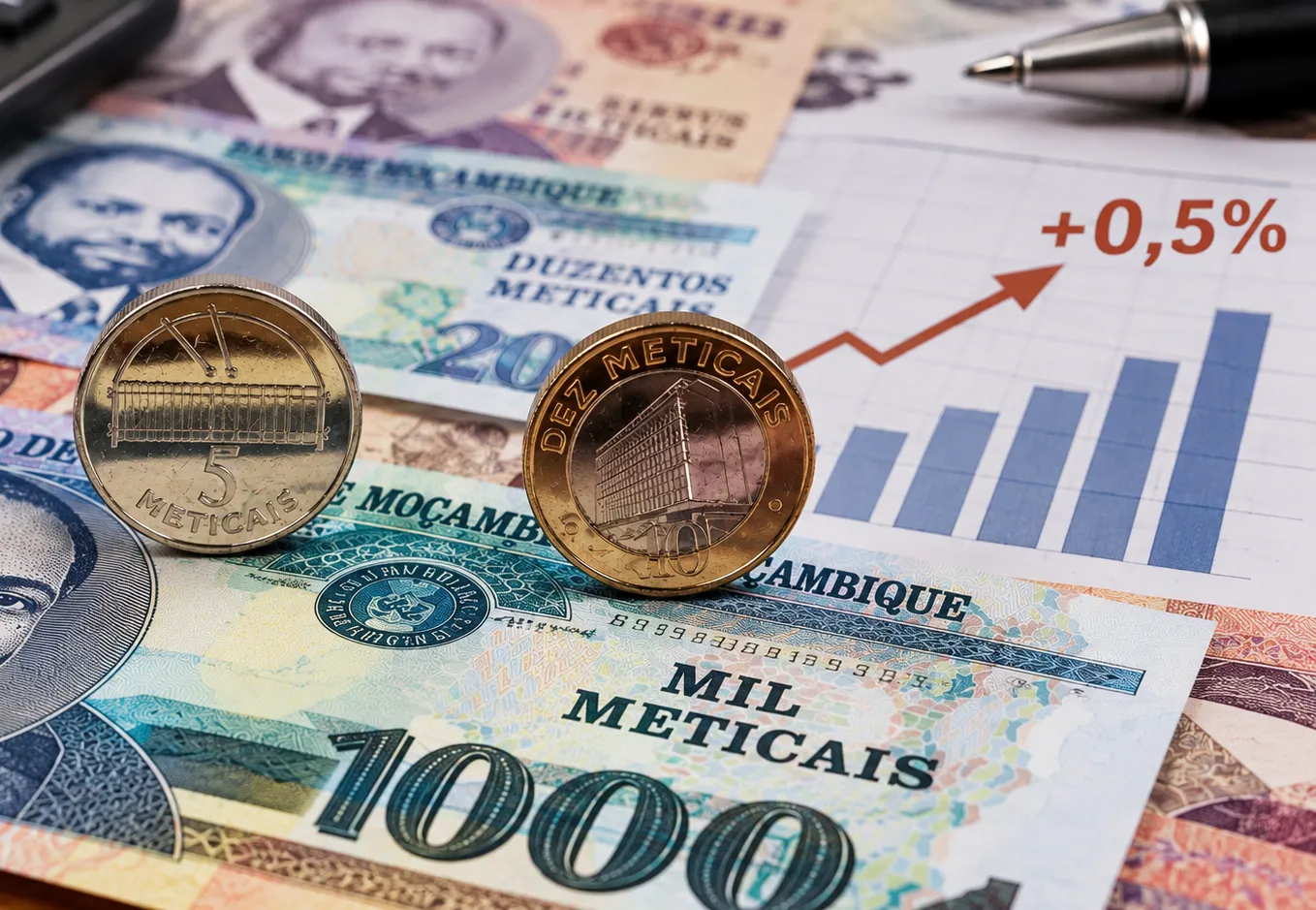
Physical money in circulation in Mozambique grew again in July, approaching 77 billion meticais (1.04 billion euros) and setting a new high. The monthly increase was 0.5% and extended, for the fourth consecutive month, an upward trajectory that began in April, after the falls recorded throughout the first quarter.
The latest statistical data from the Bank of Mozambique (BdM), cited by Lusa, show a clear change in the behaviour of cash since the start of the year. In December 2025, there were around 75 billion meticais (1,022 million euros) in circulation, an amount that fell to 69 billion meticais (942 million euros) in January.
The contraction continued over the following two months. In February, money in circulation fell to approximately 67.6 billion meticais and, in March, fell again, albeit slightly, to 67.4 billion.
April marked the reversal of the trend. The volume of cash then rose to 70.8 billion meticais (966 million euros), starting a sequence of increases that ran through May and June and was repeated in July, the month in which the indicator reached a new high.
The evolution of money in circulation is one of the indicators monitored by central banks to assess liquidity conditions in the economy. A reduction in cash tends to limit available liquidity, while its growth may reflect greater availability of currency and, depending on the economic context, contribute to pressure on prices.
The increase comes at a time when the Bank of Mozambique is seeking to contain liquidity in the financial system. On 29 July, the central bank held its monetary policy interest rate, the MIMO, at 9.25%, acknowledging the reduction in liquidity in the national currency and anticipating a rise in inflation in the short term. For the medium term, however, the institution projected a return of inflation to single-digit levels.
“This decision is underpinned by the reduction in national-currency liquidity in the banking system, resulting from the increase in the reserve requirement ratio last May, notwithstanding the prevalence of high risks and uncertainties associated with inflation projections,” said the then governor of the Bank of Mozambique, Rogério Zandamela, on the occasion.
The decision came out of the meeting of the Monetary Policy Committee (CPMO), held in Maputo. The body meets every two months and in July left the MIMO rate unchanged for the third consecutive meeting, repeating the decisions taken in March and May.
The stability of the rate has, meanwhile, interrupted the monetary easing that had been under way since January 2024. Before the successive holds, the Bank of Mozambique had carried out a cycle of 12 consecutive cuts to the benchmark rate.
In May, the CPMO also introduced a measure aimed directly at absorbing the liquidity in the market. The reserve requirement ratio on national-currency liabilities was raised from 29% to 39%, in an attempt to withdraw excess liquidity from the system and reduce potential inflationary pressures.
For liabilities denominated in foreign currency, the reserve requirement ratio remained unchanged at 29.5%.
The evolution of cash in the coming months will thus be monitored in a context in which the monetary authority is seeking to balance available liquidity against the risks to price stability. The next meeting of the Monetary Policy Committee is scheduled for 30 September.


