
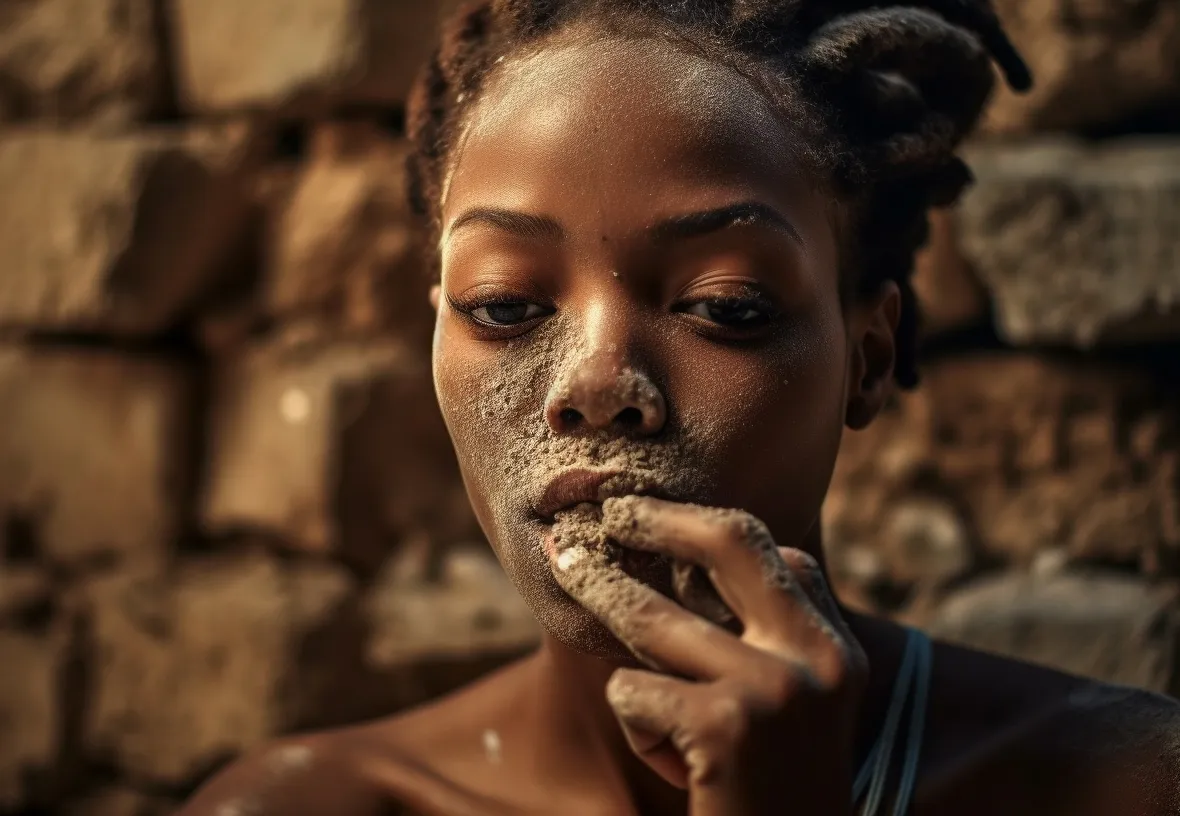
In certain regions of Mozambique, it is not uncommon to come across people eating sand, mainly women. A few years ago, it was even considered a growing fashion, with the sand sold in sacks or small paper cones in markets and other places. It is said that, for the capital, it comes from Marracuene. It is normally washed, sieved to remove the coarsest part, and reduced to powder.
Some followers of the practice believe that it serves to satisfy cravings which sometimes become addictions. Interestingly, it is mainly pregnant women who express the specific craving to eat sand. There are also those who maintain that sand can aid digestion or offer a cure for certain illnesses, or ease hunger, among other benefits.
But eating this sand is not without dangers, and it is therefore discouraged by health professionals. It may contain impurities and heavy metals that are extremely harmful to health, and swallowing it can encourage the development of parasites and trigger intestinal complications such as blockages and perforations, as well as other serious illnesses.
Despite growing awareness of these risks, many Mozambicans remain faithful to this custom. For various communities, especially in rural areas, it is a practice that is passed down from generation to generation.
Also known as geophagy, the practice of eating sand is not exclusive to Mozambique. It may be related to an eating disorder called pica, characterised by an abnormal need to consume non-food substances, the cause of which has been sought from various perspectives. The most frequently cited nutritional theories attribute it to specific mineral deficiencies in the body. As well as being observed in African populations, pica is noted in other parts of the world.
In an era of growing globalisation and cultural exchange, it is crucial to seek to respect and understand popular customs, while promoting well-being and awareness of the associated risks.


