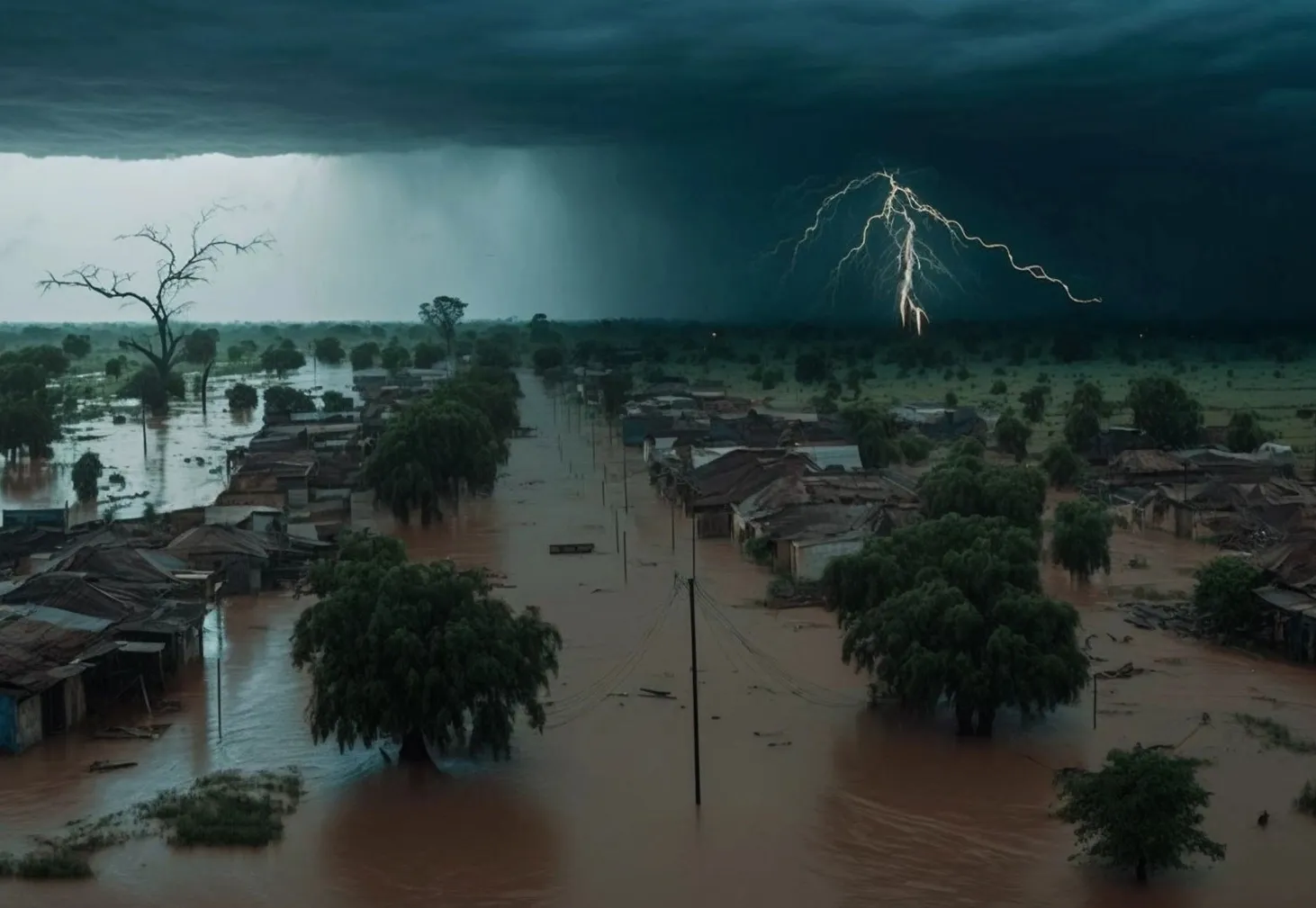
In recent years, cyclones, floods and other environmental catastrophes have been hitting Mozambique with alarming frequency, leaving a trail of destruction and pain. The consequences are devastating: thousands of people lose their homes, their land and their belongings, while others are forced to leave their communities in search of shelter. The impact on infrastructure is also significant, leaving many roads and bridges unusable. As a result, access to essential services, such as hospitals, schools and health centres, can be severely compromised. The emotional impact on affected communities is equally devastating. People lose friends, relatives and loved ones. Normal life is interrupted and, often, people find themselves stranded in makeshift shelters, without access to food, water or adequate basic sanitation.
In 2000, Mozambique faced one of the worst floods in its history. Torrential rain caused widespread flooding, affecting around 2 million people and causing countless deaths. It is believed that about 75% of the country's total area was affected at the time, with damage estimated at more than 500 million US dollars. Besides destroying homes and infrastructure, the floods caused serious public health problems, such as the spread of diseases like cholera and malaria. In the time that followed, we were hit by other disasters: in 2019, the Sofala region was struck by two devastating cyclones, Idai and Kenneth, weather events that left an enormous trail of destruction in their wake. Cyclone Idai was the first to hit the region, in March 2019, with damage estimated at more than 2 billion US dollars. It was considered one of the worst natural disasters in the country's history, having killed more than 1,000 people and affected around 3 million. Cyclone Kenneth hit the same region in April of the same year, causing further damage and leaving more than 40,000 people homeless. Very recently, in early 2023, the east coast of Africa was hit once again by a cyclone, Freddy, which brought devastating winds of up to 200 km/h and intense rain that caused floods and landslides in Mozambique, Madagascar and Malawi. Statistical data show that this cyclone was one of the strongest in recent history. It lasted more than 31 days (the record until then), which makes it the longest-lived. As in the other countries it passed through, it caused deaths and countless damage in Mozambique, here in several provinces, with the greatest impact in Zambézia province.
Despite the sadness that accompanies all these catastrophes, a sense of hope and unity emerges. People join together to help rebuild what was lost and to support those in need. It is a powerful reminder of how vulnerable we are in the face of nature and that, even in the darkest moments, human kindness can shine brightly. Although it is hard to predict when the next “Cyclone Freddy” will occur, it is important that the government and local communities are prepared to deal with extreme weather events. The changes the world is currently undergoing may increase the frequency and intensity of these events, and it is essential that adaptation measures are taken to minimise the damage caused.
Environment & conservation
Cyclone Freddy
Yet another environmental catastrophe
Xonguila29 March 20233 min readTime well invested.
Time well invested.


