
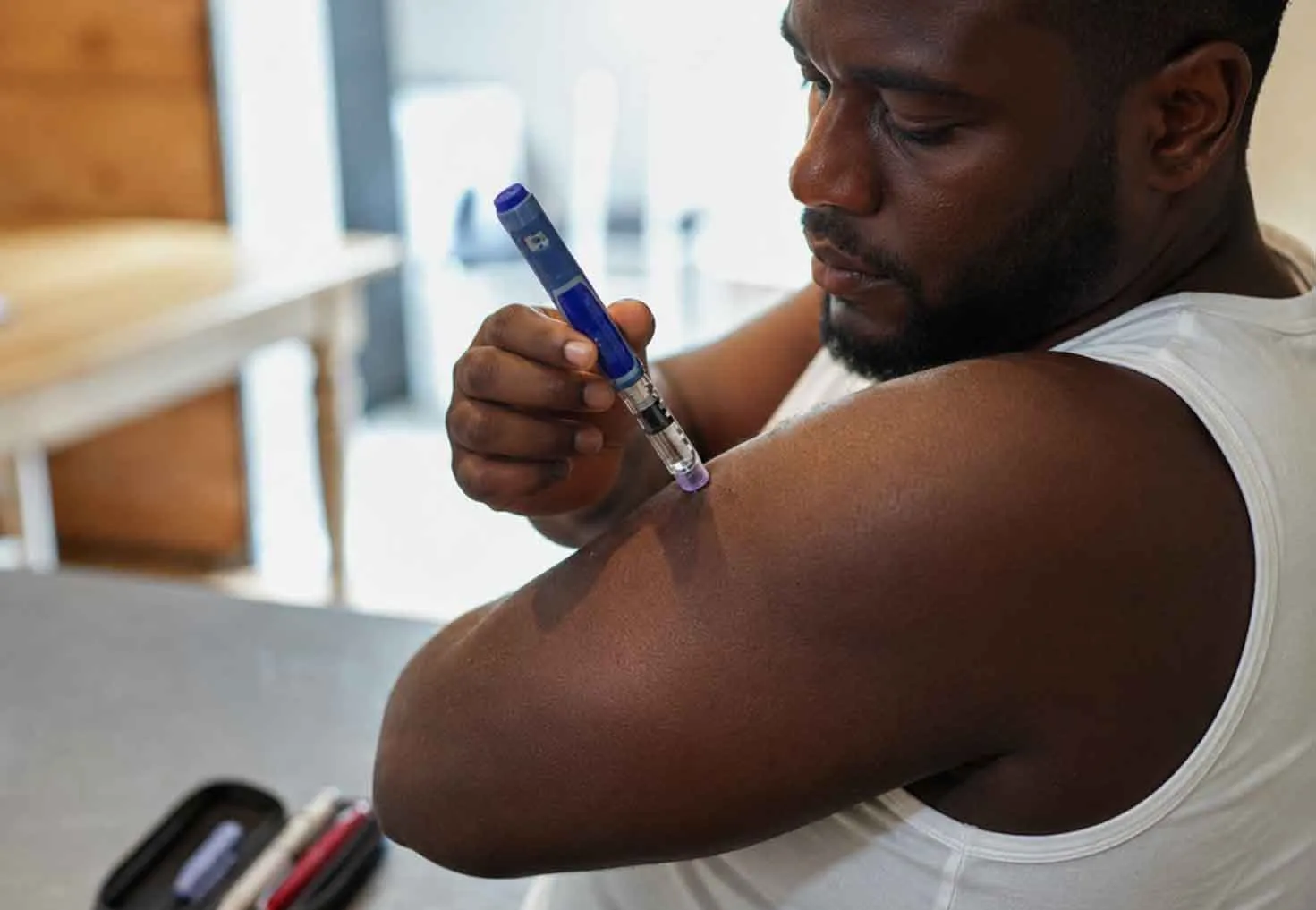
They began as medicines intended mainly for controlling diabetes and obesity. Now, the so-called “weight-loss pens” are producing effects that go far beyond the scales — and are beginning to reach supermarkets, restaurants, alcoholic drinks, airlines and even the worldwide debate on inequality in access to healthcare.
Medicines such as Wegovy, which is semaglutide-based, and Mounjaro, which contains tirzepatide, are part of a new generation of therapies that act on mechanisms involved in regulating blood sugar, appetite and the feeling of fullness. Demand soared as the results in reducing body weight became known.
The scale of the phenomenon is proportionate to the problem these medicines seek to tackle.
More than a billion people worldwide currently live with obesity and, according to the World Health Organization (WHO), the disease was associated with around 3.7 million deaths in 2024. Without an effective response, the organisation estimates that the number of people affected could double by 2030.
It is in this context that drugs of the GLP-1 family have begun to change the way obesity is viewed. The WHO considers that these therapies can be used in the long-term treatment of adults with obesity, although the recommendation is conditional owing, among other factors, to the lingering doubts about long-term effects, the high costs and inequalities of access.
But the transformation is beginning to be felt far beyond hospitals.
In the United States, research by Cornell University found significant changes in household spending habits after these treatments began. In the first six months, households with at least one user of GLP-1 medicines cut their grocery spending by 5.3% on average. Among higher-income families, the fall exceeded 8%.
The most affected products also help to explain what is happening inside the body.
Spending on salty snacks fell by around 10%, while sweets, biscuits and other calorie-dense foods also recorded significant reductions. At quick-service restaurants, including fast-food outlets and cafés, spending fell by around 8%.
In other words, medicines designed to act on metabolic mechanisms are also starting to influence the decisions made in front of supermarket shelves.
And the effects may not end with food.
There are scientific signs that semaglutide may influence alcohol consumption. A clinical trial published in 2025 found a reduction in the desire to drink and in the amount consumed per occasion among participants treated with low doses of semaglutide, although not all indicators of consumption declined.
In 2026, another clinical trial, carried out with people with obesity and alcohol use disorder, reinforced this possibility: participants treated with semaglutide showed a significantly greater reduction in heavy drinking days than those who received a placebo. The researchers, however, continue to call for larger studies before these medicines can be regarded as an established treatment for alcohol dependence.
The wave of transformation has even reached aviation.
An analysis by Jefferies calculated that, if widespread use of these medicines leads to a 10% reduction in the average weight of passengers, the four largest US airlines could save up to 580 million dollars a year in fuel.
The explanation is purely physical: lighter passengers mean slightly lighter aircraft and, consequently, lower fuel consumption. The estimate points to a reduction of around 1.5% in the fuel costs of the airlines analysed.
That does not mean, however, that air fares will automatically become cheaper. For now, this is an economic projection of the carriers' possible savings, not a guarantee that they will be passed on to passengers.
Behind the euphoria, meanwhile, lies a far more worrying side.
Worldwide demand for these medicines has opened the door to counterfeits, smuggling, sales through informal channels and use without medical supervision. In July 2026, the WHO again warned of the growth in purchases of GLP-1 agonists over the Internet and from other unregulated sources, often by people without obesity and without a clinical indication.
The problem has already reached considerable proportions in some markets.
In Brazil, for example, seizures of illegal weight-loss medicines rose from 609 units in 2024 to more than 60,000 in 2025, in a black market fuelled by high prices, growing demand and the difficulty of obtaining legally approved products.
Since 2022, the WHO had already detected an increase in reports of counterfeit semaglutide in different regions of the world. In some counterfeit products, the active substance may simply not be present; in others, ingredients different from those advertised may appear, including insulin, creating unpredictable risks for consumers.
And it is precisely here that one of the greatest contradictions of this pharmacological revolution arises.
The medicines capable of transforming the treatment of a disease that affects more than a billion people remain out of reach for a large part of that population.
The WHO itself acknowledges that the availability of these therapies is significantly lower in low- and middle-income countries. Even with the expected increase in world production, the organisation estimates that, by 2030, fewer than 10% of the people who could benefit from GLP-1 medicines will have access to them.
The risk is clear: an innovation created to tackle a worldwide epidemic could, without appropriate access and pricing policies, deepen the gap between those who can afford to treat obesity and those who will continue to have practically no alternatives.
That is why the WHO insists that these pens are not, on their own, a solution to obesity. Healthy eating, physical activity, clinical follow-up and public policies remain fundamental components of treatment and prevention.
Even so, few recent medicines have produced such rapid repercussions in sectors that seem so far removed from one another.
From the scales to the supermarket shop, from the glass of alcohol to an aircraft's fuel tank, the economic and social effects are beginning to become measurable.
The so-called weight-loss pens are no longer just changing bodies.
They are, little by little, forcing markets, health systems and governments to prepare for a world in which the treatment of obesity may have far greater consequences than anyone ever imagined.


