
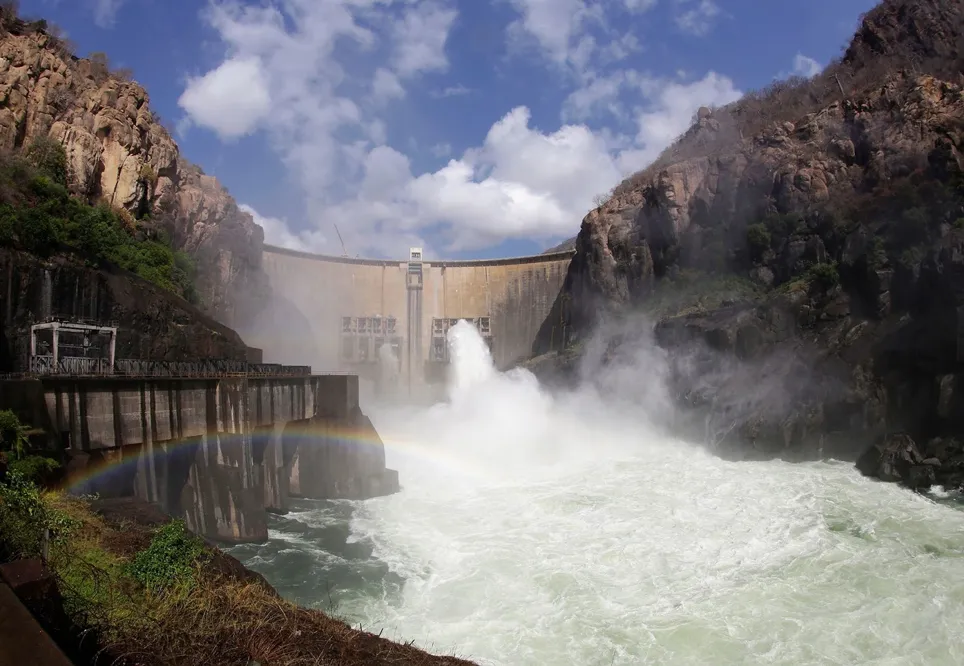
Hidroeléctrica de Cahora Bassa (HCB), in Mozambique, is on its way to a historic milestone in its energy production. According to recent data, the company exceeded production expectations in the first nine months of the year, with a recorded 12,120.4 gigawatt-hours (GWh), surpassing forecasts for the period by 14.3%. With this performance, HCB projects annual production that could reach 15,488 GWh, thus reinforcing Mozambique's position as a leading energy hub in southern Africa.
Tomás Matola, chairman of the board of directors of HCB, stressed that the company not only achieved, by the end of the third quarter, billings of more than half the revenue expected for the year, but also successfully concluded the negotiations on adjusting the energy export tariff. These developments are seen as significant steps for HCB and for the country, as the revenue generated will allow essential investment in maintaining and expanding the company's production capacity.
HCB, which already has plans to increase its generating capacity to 4,000 MW by 2032, revealed that, at the start of the 2023/2024 rainy season, the Cahora Bassa reservoir had a water storage level reaching 87% of its usable capacity. This water reserve, combined with efficient management and the use of advanced technology, is considered more than sufficient to guarantee energy production until the end of the year.
The Cahora Bassa dam, one of the largest in Africa, is a central element in Mozambique's energy development strategy. The company recognises the growing demand for electricity in the region and, in response, has admitted the possibility of "reactivating" the project for the new power station, Cahora Bassa North, which could add significant power generation capacity.
The Cahora Bassa North project, which was presented in 2012 but subsequently put on hold, could, according to studies, add a capacity of 1,250 MW to the country's energy grid. This new power station would be built on the opposite bank from the Cahora Bassa South Power Station, which currently has a maximum capacity of 2,075 MW.
With these advances, Mozambique reinforces its role as one of the main energy producers in the region, contributing to stability and economic development, not only nationally but also for neighbouring countries that depend on its energy.


